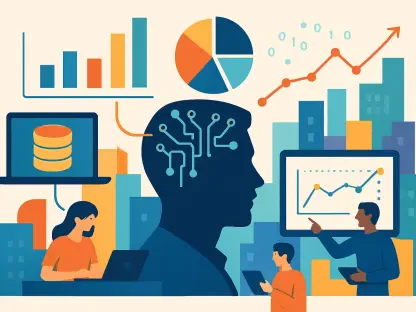

The traditional Integrated Development Environment, long considered the indispensable cockpit of the modern software engineer, is currently facing a decline that was once deemed unthinkable by industry veterans. As 2026 progresses, the paradigm of writing code character by character in a visual editor is being replaced by autonomous agentic systems that operate with a level of independence previously reserved for senior human developers. This shift is not merely a change in tooling but a fundamental reordering of how digital products are conceived, constructed, and maintained across the global technology sector. While the early 2020s focused on AI-assisted autocompletion, the current environment prioritizes agents that possess the reasoning capabilities to manage complex, multi-file architectures without constant human oversight. Consequently, the workspace is evolving from a place of manual labor into a command center for high-level orchestration where the primary task is no longer syntax but the strategic direction of intelligent, self-correcting systems.
The Economic and Structural Transition
Subsidized Growth: The Battle for Developer Mindshare
The financial dynamics driving the adoption of agentic AI are characterized by an unprecedented level of market intervention from major laboratories seeking to establish dominant ecosystems. Companies like Anthropic have implemented aggressive pricing models where the actual cost of inference for a single developer session frequently exceeds the monthly subscription fee by a factor of twenty or more. In early 2026, it is common for a professional-tier user to consume thousands of dollars in compute resources while paying a nominal flat rate, a disparity that highlights the intensity of the current “land grab.” This massive subsidy is designed to lower the barrier to entry for autonomous agents, making them an economically irresistible alternative to traditional development environments. By bearing these astronomical operational costs, AI providers are effectively buying the loyalty of the engineering community and ensuring that their specific models become the foundational infrastructure upon which future software is built.
Terminal-First Workflows: Bypassing the Graphical Interface
Technically, the move toward agentic autonomy is manifesting as a resurgence of the command-line interface as the primary environment for high-stakes software production. Modern agents like Claude Code operate most efficiently when they have direct access to the underlying system tools, such as version control systems, containerization platforms, and automated testing suites. By bypassing the traditional graphical user interface of an IDE, these agents can execute complex sequences of actions—such as refactoring a legacy codebase and validating the changes across multiple environments—with a speed and precision that a human using a mouse and keyboard cannot match. This terminal-centric approach treats the AI not as a plugin within a text editor, but as a virtual teammate that lives within the operating system itself. Consequently, the visual representation of code is becoming secondary to the execution and verification of logic handled by the agent.
Redefining the Engineering Workforce
Strategic Industry Pivots: Beyond the Wrapper Model
In response to these tectonic shifts, the landscape of AI-integrated development tools is undergoing a consolidation that industry analysts have termed a “war time” transition. Organizations that initially succeeded by building sophisticated “wrappers” around third-party models, such as the early iterations of the Cursor editor, are finding that a superior user interface is no longer a sustainable competitive advantage. To avoid obsolescence, these companies are aggressively pivoting toward the development of their own proprietary frontier models and specialized inference hardware. This strategic move reflects a growing consensus that the future of the industry lies in owning the core intelligence rather than the delivery mechanism. By integrating deep reasoning capabilities directly into their stack, these firms hope to provide a level of autonomy that generic models cannot replicate, thereby securing their place in an increasingly agent-centric world.
The Supervisory ErEngineering as Orchestration
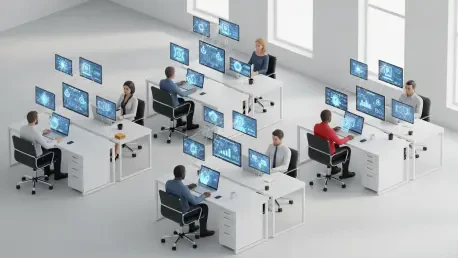
The role of the human software engineer is being fundamentally redefined as the profession moves away from the tactile act of programming and toward a model of high-level supervision. In this new supervisory era, engineers function more as architects or directors who define the parameters of a project and then manage a fleet of agents to execute the vision. This change necessitates a different skill set, focusing on system design, risk management, and the ability to provide clear, unambiguous direction to non-human entities. The value of an engineer is no longer measured by their proficiency in a specific language’s syntax, but by their ability to maintain the integrity of a product’s overarching goal while delegating the technical implementation to autonomous systems. This transition is creating a new hierarchy in tech organizations, where the most successful individuals are those who can effectively orchestrate the work of multiple AI agents simultaneously.
Implementing Strategic Oversight: Actions for the Modern Engineer
The industry recognized that the transition to agentic workflows required a significant departure from established education and hiring practices. Forward-thinking organizations began prioritizing candidates who demonstrated excellence in prompt engineering, system-level debugging, and the oversight of automated deployment pipelines over those with traditional manual coding experience. To prepare for this future, engineering teams established rigorous standards for AI auditing and developed internal frameworks to ensure that autonomous agents remained aligned with long-term business objectives. Developers who embraced these changes found themselves in high demand, serving as the critical human link between complex requirements and machine-led execution. By shifting the focus to strategic orchestration and the implementation of robust verification protocols, the technology sector successfully navigated the obsolescence of the traditional editor, paving the way for a more efficient and scalable model of software creation.