
In the world of enterprise software development, it is a common scenario for an architecture team to deliver a detailed design document to the development team as a cumbersome fifty-page Word file or, even worse, a massive Excel spreadsheet with numerous tabs defining Java classes, fields, and validation rules. This traditional approach creates an immediate and persistent problem: by the time the first line of code is written, the document is already drifting into obsolescence. Binary files like these are notoriously difficult to version control, making it impractical to diff changes, and the manual process of copy-pasting definitions into Javadoc is both tedious and prone to error. At enterprise scale, this “Code Drift,” where the implementation diverges from the original design, becomes a significant source of technical debt. By shifting design documentation to structured Markdown and leveraging generative AI, it is possible to treat documentation exactly like source code, creating a resilient and automated bridge between the architect’s intent and the developer’s integrated development environment.
1. The Inefficiency of the Binary Wall
The fundamental challenge in traditional waterfall or hybrid development environments lies in the incompatibility between the tools used for design and those used for implementation. Design specifications typically reside in binary Office documents such as Word or Excel, while the actual code lives in text-based formats like Java and YAML. This disparity creates what can be described as a “Binary Wall,” a barrier that breaks automation and prevents a seamless workflow between design and coding. It is impossible to effectively “compile” an Excel sheet into a Java POJO, and one certainly cannot run unit tests against a Word document. This disconnect forces developers into a manual translation process, a painstaking task where nuanced business rules are often misinterpreted or lost. The effort required to maintain synchronization between a sprawling design document and an evolving codebase is so substantial that teams frequently abandon the documentation, leaving it as a fossilized record of initial intentions rather than a living, reliable guide to the system’s architecture.
This systemic disconnect directly fosters “Code Drift,” a primary contributor to technical debt in large-scale enterprise projects. When the implementation inevitably deviates from the outdated design document, new developers joining the team are left without a reliable source of truth. The official documentation may prescribe one behavior, but the codebase executes another, creating a confusing and hazardous environment for maintenance and feature development. This ambiguity not only slows down the onboarding process but also significantly increases the risk of introducing critical bugs. The problem is rooted in the nature of binary files, which are inherently hostile to modern development practices. They discourage the kind of incremental, collaborative updates that are standard in version control systems like Git. A subtle but critical change to a validation rule, buried deep within a spreadsheet tab, can be easily overlooked during a review. In contrast, an equivalent change in a version-controlled text file is explicit, reviewable, and traceable to a specific commit and author, establishing a clear line of accountability and fostering project-wide clarity.
2. Adopting Markdown as a Structured Data Source
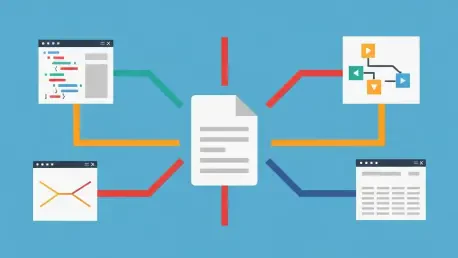
The solution to bridging this divide involves redefining the role of Markdown from a simple tool for formatting README files to a formal, structured specification language. The power of this approach lies in standardization. By establishing a consistent layout with specific, predictable headers and sections—such as ## Class Summary or ## Members—a Markdown file is transformed from a static document into a dynamic, machine-friendly data source. This structure provides clear hooks for automation tools and generative AI, enabling them to parse the document with a high degree of fidelity. The objective shifts from merely writing documentation to creating a parsable artifact that can actively drive the generation of boilerplate code, architectural diagrams, and even the legacy Excel reports that business stakeholders often require. This methodology elevates the design document to an active participant in the development lifecycle, ensuring it remains relevant and useful, rather than becoming a passive and frequently ignored attachment to the project.
Putting this pattern into practice begins with aligning the project’s directory structure to create an unbreakable link between the specification and its implementation. To achieve this, design documents must be co-located with the code they describe, residing within the same repository and mirroring the Java package structure. For example, the specification for a RegisteredUser.java class would be contained in a corresponding RegisteredUser.md file located in the same source directory. This colocation strategy ensures that the design evolves in lockstep with the code. When a developer checks out a feature branch, they receive not only the updated source code but also the updated design specification that accompanies it. This makes the design an integral and natural part of the standard code review and versioning process. The specification is no longer an external artifact that needs to be separately managed and synchronized; it is an inseparable component of the codebase itself, subject to the same rigorous controls and collaborative workflows.
3. Automating Implementation From Text to Java
Once the design is meticulously captured in a well-defined Markdown format, generative AI serves as a powerful conduit to translate this specification into functional Java code. This automated workflow was effectively demonstrated in an analyzed case study where a VS Code extension, connected to the OpenAI API, was tasked with reading these structured specifications to generate initial class scaffolding. This process is not limited to a specific toolset and can be replicated with a wide array of modern GenAI coding assistants. Critically, the AI is not required to invent logic from a vague prompt; instead, it is translating a formal, highly structured document. By providing such a rigid and predictable context, the rate of AI hallucination drops significantly. The generated code, therefore, aligns precisely with the architect’s specified intent, ensuring a faithful and accurate transition from design to implementation without the manual errors that plague traditional workflows.
The output generated by this AI-driven process extends far beyond an empty class shell. Guided by the structured Markdown, the AI can produce a complete Java class populated with Javadoc comments extracted directly from the design descriptions, declare fields with the correct data types, and even implement the complex validation logic detailed within a “Methods” or “Business Rules” section of the specification. For instance, if the Markdown explicitly states that a password field must have a minimum length of eight characters and contain at least one uppercase letter, the AI can generate the corresponding validation annotation or method to enforce this rule. This creates a highly efficient development cycle. If the design requirements change—for example, the minimum password length is increased to twelve characters—the developer simply updates that single line in the Markdown file and regenerates the code. This ensures perfect consistency between the specification and the implementation while saving a significant amount of manual coding and refactoring effort.
4. Reimagining Architecture Visualization and Reporting
A common objection to migrating away from dedicated visual modeling tools like Visio is the perceived loss of the ability to create and share architectural diagrams. However, the Markdown-first approach effectively addresses this concern by enabling the automated generation of these visualizations. Since the entire system design now exists as structured, machine-readable text, it can be compiled into various visual representations on demand. By creating a script to parse the standardized headers across multiple Markdown files—such as a ## Dependencies section that lists class relationships—it becomes possible to automatically generate up-to-date Mermaid.js class diagrams or other graphical artifacts. This establishes a powerful and dynamic feedback loop where architecture diagrams are no longer static drawings that quickly become outdated. Instead, they are dynamic views that always reflect the current, version-controlled state of the design documents, ensuring that the visual representation of the architecture is as reliable as the code itself.
This paradigm also elegantly handles the persistent enterprise requirement for Excel files, which are often necessary for official sign-offs or for review by non-technical stakeholders. In this new workflow, the spreadsheet is transformed from the source of truth into a generated report. The traditional model, where an Excel file serves as the master document from which developers manually transcribe code, is completely inverted. With the Markdown-first approach, the collection of structured .md files becomes the single, authoritative source of truth for the entire project. From this master source, a simple script or even a well-crafted AI prompt can parse the headers and content to automatically populate a CSV or XLSX template. This process satisfies organizational reporting requirements without compromising the integrity of the developer workflow or reintroducing the risk of data drift. Management receives the familiar format they need, while the engineering team benefits from a clean, version-controlled, and fully automated pipeline that extends from design all the way to code.
A New Foundation for Design Integrity
The shift to a Markdown-first approach yielded clear and measurable productivity gains for the teams that adopted it. Development velocity was observed to increase by as much as 55%, a direct result of eliminating tedious manual work by generating boilerplate classes and their corresponding tests directly from the design specification. The communication overhead between architects and developers was also significantly reduced. The AI-assisted translation of structured Markdown proved to be both faster and more accurate than the error-prone process of deciphering complex business rules scattered across disconnected Excel cells. Perhaps most importantly, this method introduced true diff-ability into the design process. The project’s Git history now provided a clear, auditable trail of every design decision, showing precisely who changed a business rule and when. This embedded the evolution of the system’s design directly into the project’s commit log, making it as transparent and accountable as the code itself.
Ultimately, the chronic separation between the tools used for design and those used for development has long relegated documentation to a secondary, and often neglected, role in the software lifecycle. By embracing Markdown as a formal specification language, organizations successfully pulled design work out of isolated silos and integrated it directly into the modern DevOps pipeline. The next time a detailed design was required, the solution was not to open a spreadsheet and begin a cycle of manual translation and inevitable drift. It was to open a fresh .md file, define a clear and parsable structure, and let the code, diagrams, and reports flow seamlessly from a single, verifiable, and version-controlled source of truth. This fundamental shift established a new and more resilient foundation for building robust and maintainable enterprise systems.