
The cascade of alerts begins subtly, a flicker on a monitoring dashboard, before escalating into a full-blown system meltdown as a production PostgreSQL cluster buckles under the weight of thousands of concurrent connections. For many growing multi-tenant platforms, this scenario is not a hypothetical exercise but a painful reality where the database, the heart of the application, spends more resources managing connections than executing queries. This situation highlights a critical inflection point in a system’s lifecycle, where scaling strategies must evolve beyond simply provisioning larger servers. The common reflex to deploy a connection pooler like PgBouncer often proves insufficient, as a naive implementation fails to address the underlying architectural challenges of high-concurrency workloads. Successfully navigating this bottleneck requires a deeper understanding of both PostgreSQL’s limitations and the specific demands of a multi-tenant environment, transforming a reactive fix into a proactive, resilient architecture capable of handling immense scale.
Beyond the Connection Limit When Your Production Postgres Melts Down
A real-world crisis often serves as the most potent catalyst for architectural evolution. Consider a production cluster failing catastrophically upon reaching 8,000 concurrent connections. At this threshold, memory usage skyrockets, and carefully tuned database indexes become functionally irrelevant. The server enters a state of thrash, where the overhead of managing thousands of individual processes consumes the vast majority of CPU cycles, leaving little capacity for actual query processing. This is the moment when a system’s theoretical capacity collides with its practical breaking point, forcing an immediate and often painful reevaluation of its core design.
A frequent misstep in resolving such a crisis is treating connection pooling as a panacea. The simple act of installing PgBouncer is not a magic bullet for high-concurrency workloads. Many engineering teams implement it with default configurations, only to discover that the database still chokes under load. This is because a generic setup fails to account for the specific transaction patterns, session requirements, and isolation needs inherent to a complex multi-tenant application. Without a nuanced configuration, the pooler can become another bottleneck rather than a solution.
The path from a failing system to one that reliably handles over 10,000 concurrent connections is paved with hard-won lessons. It involves moving beyond simplistic fixes to architect a comprehensive pooling strategy tailored to the unique demands of serving hundreds or thousands of distinct tenants. This journey requires a deep dive into the mechanics of connection management, an honest assessment of multi-tenancy models, and a commitment to rigorous monitoring to build a system that is not just functional but truly resilient at scale.
The Hidden Costs of Concurrency in PostgreSQL
Understanding the connection crisis begins with acknowledging the fundamental design of PostgreSQL. Its robust process-per-connection model provides excellent isolation and stability but carries a significant resource toll at scale. Each new connection spawns a dedicated backend process, which consumes a non-trivial amount of memory—typically 2MB or more. A simple calculation reveals the staggering overhead: 10,000 connections can easily consume over 20GB of RAM before a single row of data is even cached, starving the database of memory needed for query planning and execution.
While the memory overhead is substantial, the true performance killer in high-concurrency scenarios is CPU context switching. When a server’s processor must constantly juggle thousands of active processes, the operating system spends an inordinate amount of time and energy swapping them in and out of the CPU. This overhead, which can consume the majority of CPU cycles in extreme cases, is pure waste, as the processor is busy managing tasks rather than executing them. Consequently, even a powerful server can be brought to its knees not by complex queries, but by the sheer volume of connections it is forced to manage.
The multi-tenancy model acts as a powerful amplification factor for these underlying issues. A typical SaaS platform contends with wildly varying tenant workloads, from enterprise clients running long, complex analytical queries to smaller users firing off hundreds of rapid-fire inserts per second. In a shared-schema or Row-Level Security (RLS) model, a single misbehaving or high-demand tenant can easily monopolize database resources, degrading performance for everyone on the platform. This lack of workload isolation means that traditional multi-tenancy approaches often fail to provide the necessary performance predictability under the pressure of high connection counts.
Architecting a Resilient Pooling Strategy
A PgBouncer configuration that truly works at scale often defies conventional wisdom. One critical insight lies in the default_pool_size parameter. The intuitive approach of increasing the pool size to match growing demand is counterproductive. Extensive production testing reveals that performance tends to peak with a relatively small pool size and degrades significantly as the number of concurrent queries running inside PostgreSQL increases. The optimal configuration balances the availability of pooled connections with the database’s ability to execute queries efficiently, preventing it from thrashing under excessive parallel load.
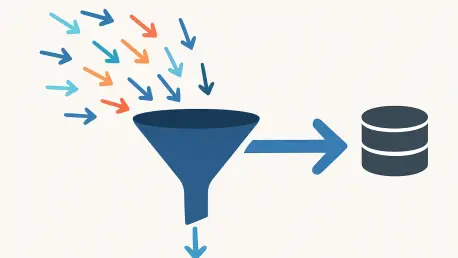
Transaction pooling is the key to achieving dramatic connection reduction ratios, often as high as 99:1. Unlike session pooling, where a connection remains tied to a client for its entire lifecycle, transaction pooling returns a connection to the general pool immediately after a transaction completes. This aggressive reuse is incredibly efficient for short, frequent queries typical of web applications. However, this efficiency comes with significant trade-offs. Features that rely on a persistent session state, such as prepared statements, temporary tables, and session-level variables, are incompatible with transaction pooling and will cause application errors.
Navigating these limitations requires a practical, hybrid approach. For most application workloads, a primary pool configured in transaction mode provides maximum scalability. For specific use cases that cannot be refactored, such as complex reporting features that rely on temporary tables, a separate, smaller pool can be configured in session mode. This dual-pool strategy allows the bulk of the application to benefit from aggressive pooling while gracefully accommodating legacy or specialized code that requires a dedicated session, providing a pragmatic path to migration and scalability.
Multi Tenant Pooling Strategies a Reality Check
The choice of multi-tenant architecture fundamentally dictates the effectiveness of any pooling strategy. A database-per-tenant model offers the strongest isolation but is often operationally complex and cost-prohibitive, as managing thousands of individual databases is a significant burden. In contrast, a schema-per-tenant architecture strikes a compelling balance. It provides strong logical isolation using PostgreSQL’s native namespace mechanism while allowing all tenants to share a single database instance, which is far more efficient to manage and pool connections for.
For most SaaS applications, the schema-per-tenant model offers the best synthesis of isolation, performance, and operational simplicity. With this approach, PgBouncer does not need to be aware of individual tenants; it simply manages a highly efficient pool of connections to the single underlying database. The responsibility for directing queries to the correct schema shifts to the application layer, which can implement this logic far more effectively than a generic pooling layer. This separation of concerns is critical for building a scalable and maintainable system.
The secret to making schema-per-tenant work seamlessly with aggressive transaction pooling lies in how the application manages the database search path. Instead of setting the path once per session, the application must execute SET LOCAL search_path at the beginning of every transaction. The LOCAL keyword is crucial, as it scopes the change only to the current transaction. This stateless approach aligns perfectly with the principles of transaction pooling, ensuring that each transaction is correctly routed to its tenant’s schema without relying on persistent session state, thereby unlocking the full performance benefits of the architecture.
Production War Stories Unforeseen Challenges and Their Solutions
Even with a well-designed architecture, production environments present unforeseen challenges. A common issue arises during application deployments, where rolling restarts of service instances can trigger a “connection storm.” As dozens or hundreds of application pods restart simultaneously, they all attempt to establish new database connections at once. While PgBouncer can absorb this spike, the overhead of rapid connection establishment can still cause a brief but noticeable latency spike. The solution involves implementing staggered deployments, introducing a small delay between pod restarts, and pre-warming connection pools by setting a min_pool_size to ensure a baseline of ready connections is always available.
Another pernicious problem is the tenant-specific connection leak, where buggy code within a single tenant’s workflow holds a transaction open for an extended period. In a shared pool, this single errant process can consume a valuable connection slot, effectively reducing the pool’s capacity for all other tenants. To mitigate this, a multi-layered defense is necessary. Application-level limits can be implemented to cap the number of concurrent connections per tenant, and an aggressive, server-side query timeout (e.g., query_timeout in PgBouncer) can be configured to automatically terminate long-running queries, preventing them from monopolizing shared resources indefinitely.
Finally, at extreme scale, even the authentication mechanism can become a performance bottleneck. When PgBouncer is configured to use a simple auth_file, every new connection requires parsing this file sequentially, which can become slow when managing thousands of users. A more scalable solution is to switch to auth_query, which allows PgBouncer to authenticate users against a table in the database itself. This leverages the database’s efficient indexing for faster lookups but introduces a chicken-and-egg problem: PgBouncer needs a connection to authenticate users for other connections. This is resolved by creating a small, dedicated pool used exclusively for running these authentication queries, isolating them from the main application pools.
A Practical Blueprint for Migration and Monitoring
Effective monitoring is not a luxury but a necessity for operating a pooled database environment at scale. The administrative SHOW commands within PgBouncer are a lifeline for visibility into the system’s health. Key metrics from commands like SHOW POOLS and SHOW STATS should be scraped continuously and visualized on dashboards. The single most critical indicator of pool health is the average wait time for a connection. A consistently rising wait time is a clear signal that the pool is undersized for the current workload or that transactions are holding connections for too long, indicating an impending performance degradation.
Migrating a live application to a new connection pooling architecture requires a phased approach to ensure zero downtime. The process begins with canary testing, where PgBouncer is deployed in its safest configuration (session mode) and a small fraction of traffic is routed through it. This initial phase validates the network connectivity and basic setup. The next phase involves a meticulous audit of the application code to identify and refactor any logic, such as the use of prepared statements or temporary tables, that is incompatible with the more aggressive transaction pooling mode.
Once the application is deemed compatible, traffic can be gradually ramped up to the new transaction pool while the old direct connections are phased out. Throughout this process, obsessive monitoring of key metrics—including wait times, error rates, and query latency—is paramount. The final phase involves the full cutover, where all application traffic flows through PgBouncer. Only after a sustained period of stable performance under full load can the migration be considered complete, with the direct database access fully decommissioned.
Beyond Connection Pooling The Next Frontier
While highly effective, it is important to recognize the inherent limitations of PgBouncer. As a single-threaded process, a single instance can become a bottleneck on modern multi-core servers, typically maxing out around 15,000 queries per second. When workloads exceed this threshold, the pooling layer itself must be scaled horizontally. A common and effective architectural pattern for this is the sidecar model, where a PgBouncer instance is deployed on each application server or in each application container. This distributes the pooling load, and by connecting to the local PgBouncer via a Unix domain socket, applications benefit from lower-latency communication.
Ultimately, it is worth asking a more controversial question: is connection pooling merely a band-aid for deeper architectural issues? In many ways, the need for tens of thousands of concurrent database connections suggests an application design that is overly reliant on a synchronous, request-response model with its central database. Modern, highly scalable systems often embrace asynchronous patterns, event-driven architectures, and patterns like Command Query Responsibility Segregation (CQRS) to decouple components and reduce direct database load.
Connection pooling, in this context, should be viewed as a powerful tactical tool rather than a final strategic destination. It provides the necessary breathing room to scale the system that currently exists, averting immediate crises and buying invaluable time. This stability allows engineering teams to undertake more strategic, long-term refactoring toward a more modern, scalable architecture, rather than being forced into a panic-driven rewrite. It is a bridge from the present to the future, enabling continued growth while laying the groundwork for the next evolution of the system.