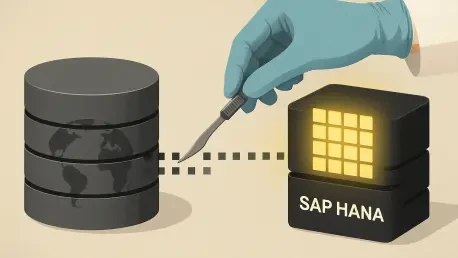

The successful transition of a global enterprise from a legacy database to a modern environment requires more than just a software update; it demands a surgical precision that redefines how corporate intelligence is stored and accessed. As organizations move toward the high-speed, in-memory processing capabilities of SAP S/4HANA, the role of data migration has shifted from a back-office technical task to a strategic imperative. This evolution reflects a broader trend in the enterprise resource planning sector, where the focus has moved away from mere data storage toward active data orchestration and real-time utility. The migration process acts as the ultimate gatekeeper, determining whether the new system will be fueled by high-quality, actionable insights or burdened by the digital debt of decades-old legacy errors.
The migration technology under review represents a departure from the fragmented tools of the past, offering a unified framework designed to handle the massive volumes of data typical of modern commerce. At its core, the technology is built to bridge the gap between rigid legacy structures and the flexible, simplified architecture of the HANA database. This involves not only moving tables and records but also reimagining how business objects—such as customers, materials, and financial documents—interact within a more integrated ecosystem. By centralizing these processes, the system aims to reduce the risk of data silos and ensure that every byte transferred contributes to a cohesive digital core.
The relevance of this technology in the current landscape cannot be overstated, as businesses face increasing pressure to adopt cloud-native and hybrid infrastructure. In an era where data is frequently described as the new oil, the ability to refine and transport that data efficiently determines the competitive edge of an organization. This review explores the nuances of the migration toolset, examining how it balances the need for standardization with the necessity of deep customization, while ultimately evaluating its impact on the efficiency of modern business operations.
Introduction to SAP S/4HANA Migration Technology
The technological foundation of SAP S/4HANA migration is built upon the principle of a “Clean Core,” a philosophy that encourages organizations to move away from heavy customizations in favor of standard, scalable processes. This shift is facilitated by a sophisticated extraction, transformation, and loading framework that operates directly within the S/4HANA environment. Unlike previous generations of ERP systems that relied heavily on external middleware or manual batch-input recordings, the current technology utilizes standardized application programming interfaces to ensure that every piece of data adheres to the strict business logic of the target system. This architectural choice minimizes the risk of database corruption and ensures that the migrated data is immediately functional upon arrival.
The emergence of this technology coincides with a period of intense digital transformation across industries, where the ability to process large datasets in real time has become a baseline requirement. By integrating the migration tools directly into the Fiori-based user experience, the system lowers the barrier to entry for functional consultants and business users, allowing them to take a more active role in the data governance process. This democratization of data migration is a key component of its evolution, reflecting a broader movement toward user-centric enterprise software. Moreover, the framework is designed to be agnostic regarding the source of the data, whether it originates from an older SAP instance, a non-SAP legacy system, or a distributed cloud environment.
In the broader technological landscape, these migration tools serve as a critical link between the legacy past and the autonomous future. As companies look toward implementing advanced analytics and machine learning, the integrity of the underlying data becomes paramount. The migration framework provides the necessary cleansing and validation steps to ensure that these advanced technologies are built on a solid foundation. Consequently, the technology is not just a transport mechanism; it is a foundational layer for the next decade of enterprise intelligence, enabling a seamless transition to a world where data-driven decision-making is the norm rather than the exception.
Core Migration Framework and Toolset
SAP S/4HANA Migration Cockpit: The Central Nervous System
The SAP S/4HANA Migration Cockpit, often referred to as the Data Migration Cockpit, serves as the primary interface for managing the entire lifecycle of a migration project. It provides a guided, step-by-step methodology that leads the user through the phases of data selection, mapping, simulation, and execution. One of the most significant advantages of the cockpit is its move away from the traditional, transaction-based Legacy System Migration Workbench toward a modern, web-based application. This shift allows for better collaboration between team members and provides real-time visibility into the status of various migration objects. The performance of the cockpit is optimized for large-scale transfers, utilizing the parallel processing capabilities of the HANA database to reduce downtime during the critical cutover phase.
Functionally, the cockpit operates by using predefined migration objects that represent business entities. These objects contain the necessary metadata and mapping logic to translate legacy data into the specific requirements of S/4HANA. The significance of this approach lies in its ability to enforce data integrity automatically; the system will not allow a record to be posted if it violates the target system’s configuration. This creates a rigorous validation environment that identifies errors early in the process, long before the data reaches the production environment. While competitors may offer standalone ETL tools, the cockpit’s deep integration with SAP’s internal business logic provides a level of security and accuracy that is difficult to replicate with third-party solutions.
Migration Object Modeler: The Engine of Customization
While the Migration Cockpit provides the standard framework, the Migration Object Modeler serves as the sophisticated environment where developers and architects can tailor the migration to meet specific project needs. Often accessed via the transaction code LTMOM, this component allows for the modification of delivered migration objects or the creation of entirely new ones from scratch. This flexibility is essential for businesses that have unique data requirements or custom-developed fields that fall outside the scope of standard SAP content. The modeler provides a technical workspace where source structures can be defined and mapped to target structures through a visual and logic-based interface, ensuring that complex data relationships are maintained across systems.
The performance characteristics of the modeler are defined by its ability to generate optimized ABAP code based on the user’s definitions. When a developer creates a transformation rule or adds a new field mapping, the modeler compiles these instructions into a high-performance routine that the cockpit then executes. This ensures that even highly customized migrations benefit from the speed of the underlying SAP platform. In real-world usage, the modeler is often the site of the most intense technical labor, where legacy data quirks are resolved through custom code snippets and sophisticated mapping logic. It represents the “expert mode” of the migration framework, providing the granular control necessary to handle the most challenging data landscapes without compromising the integrity of the core system.
Innovations in Data Transformation and Modeling
Recent advancements in the field of data migration have focused heavily on reducing the reliance on flat-file templates and manual data entry. A significant innovation is the shift toward the Direct Transfer approach, which allows the migration framework to connect directly to the database of a legacy SAP system. This method bypasses the need for intermediate storage files, significantly reducing the risk of data manipulation errors and accelerating the overall extraction process. By pulling data directly from the source tables and mapping it into the S/4HANA structures in a single, fluid motion, organizations can achieve a higher degree of automation and accuracy. This trend reflects a broader industry move toward “live” data integration, where the boundaries between migration and continuous synchronization begin to blur.
Furthermore, there is an emerging trend toward the use of intelligent mapping suggestions powered by historical data and predefined patterns. While the technology is still evolving, the inclusion of more sophisticated validation scripts and automated reconciliation reports has transformed the way teams approach data cleansing. Instead of waiting until the end of the project to identify discrepancies, modern migration frameworks allow for continuous validation throughout the development cycle. This iterative approach to modeling ensures that the data is “born clean” in the new system. These innovations are largely driven by a shift in consumer behavior within the corporate sector, where IT departments are increasingly expected to deliver complex transitions with minimal impact on daily operations.
Another notable shift is the increased support for hybrid cloud scenarios, where data must be orchestrated across on-premise legacy systems and various cloud-based SAP solutions. The migration framework has evolved to handle these multi-layered environments, offering tools that can manage the complexities of data residency and regulatory compliance. This trajectory suggests a future where data migration is not a one-time event but a persistent capability that allows businesses to remain agile in a constantly changing technological landscape. The focus is no longer just on moving data from point A to point B, but on ensuring that the data remains a dynamic asset that can be easily reconfigured as the business model evolves.
Real-World Implementation and Sector Applications
The deployment of S/4HANA migration technology is most visible in heavy industries like manufacturing and automotive, where the complexity of material requirements planning and supply chain logistics necessitates a flawless data transition. In these sectors, the migration of Bill of Materials, equipment masters, and maintenance logs is a massive undertaking that involves millions of records. Successful implementations in these areas often rely on the Migration Cockpit’s ability to handle deep hierarchical data structures, ensuring that every component part is correctly linked to its parent assembly. This precision is critical for maintaining the continuity of production schedules and ensuring that the digital twin of the manufacturing floor remains accurate after the transition.
In the retail and consumer goods sector, the technology is frequently used to manage the explosion of SKU data and customer master records. Here, the unique use case often involves the consolidation of multiple legacy systems into a single, global S/4HANA instance. The migration tools allow retail giants to harmonize their data, eliminating duplicate customer profiles and standardizing product categories across different regions. This consolidation is a prerequisite for effective omni-channel retailing, where a single view of the customer and inventory is essential for success. The ability of the migration framework to perform these complex reconciliations at scale has made it a cornerstone of digital strategy for large-scale retailers looking to modernize their operations.
Public sector and healthcare implementations present another set of unique challenges, primarily around data privacy and long-term record retention. In these environments, the migration technology is often paired with rigorous masking and anonymization scripts to ensure that sensitive personal information is handled according to legal requirements. The use of the Migration Object Modeler to build custom validation checks ensures that health records or citizen data remain consistent and secure during the move. These notable implementations demonstrate the versatility of the toolset, proving that it can be adapted to the specific regulatory and operational demands of virtually any industry, regardless of the complexity or sensitivity of the data involved.
Technical Hurdles and Adoption Challenges
Despite the sophistication of the migration framework, several technical hurdles remain that can complicate widespread adoption. One of the primary obstacles is the quality of legacy data itself; the “garbage in, garbage out” principle remains a persistent challenge for migration teams. While the cockpit provides validation tools, it cannot automatically fix fundamental logic errors or missing information in the source systems. This often leads to extensive manual cleansing efforts that can delay project timelines. Furthermore, the steep learning curve associated with LTMOM and the underlying ABAP requirements means that organizations still require highly specialized talent to execute complex migrations, creating a bottleneck in the market for skilled consultants.
Regulatory issues and data sovereignty laws also pose significant challenges, particularly for multinational corporations moving data across borders into cloud environments. Ensuring that the migration process complies with localized versions of GDPR or other data protection acts requires careful planning and often limits the use of automated cloud-based migration tools. Additionally, some organizations struggle with the transition from the older, more familiar LSMW tool to the new migration cockpit. This resistance to change is often rooted in the perceived loss of control, as the new tools prioritize standardized APIs over the direct table updates that were common in the past. While this shift is necessary for system stability, it requires a cultural adjustment within IT departments.
Ongoing development efforts are focused on mitigating these limitations through the introduction of more intuitive user interfaces and better integration with third-party data quality tools. SAP continues to expand the library of standard migration objects, reducing the need for custom development in LTMOM for common scenarios. However, the inherent complexity of mapping decades of legacy business logic into a modern, streamlined architecture means that data migration will likely remain one of the most resource-intensive phases of any ERP project. Addressing these challenges requires a combination of better technology, improved data governance practices, and a realistic understanding of the effort involved in transforming raw data into business intelligence.
Future Outlook and Strategic Trajectory
Looking ahead, the strategic trajectory of migration technology is clearly pointed toward greater automation and the integration of artificial intelligence. Future developments will likely include self-healing data pipelines that can automatically identify and correct common data errors based on historical patterns. This would drastically reduce the time spent on manual cleansing and allow teams to focus on the more strategic aspects of the transition. We can also expect to see a move toward “near-zero downtime” migration methodologies, where data is synchronized in the background while legacy systems remain active, allowing for a seamless switchover that lasts minutes rather than days. This breakthrough would be a game-changer for 24/7 operations that cannot afford significant disruptions.
The long-term impact of these advancements will be a lowering of the total cost of ownership for enterprise systems, as the barriers to upgrading and migrating data are gradually dismantled. As the technology becomes more accessible, even smaller enterprises will be able to leverage the power of S/4HANA without the prohibitive costs traditionally associated with data migration. Furthermore, the shift toward a more modular and service-oriented architecture in S/4HANA will likely influence the migration tools to become more granular, allowing for the migration of specific business processes or departments rather than requiring a “big bang” approach. This flexibility will enable organizations to evolve at their own pace, rather than being forced into massive, risky upgrades.
Ultimately, the goal of the migration framework is to become an invisible part of the enterprise lifecycle. In a world where business models are constantly shifting, the ability to reorganize and move data effortlessly will be a core requirement for survival. The technology is heading toward a state where data is truly portable, and the transition between different versions of a system or between different deployment models is a routine task rather than a monumental project. This evolution will empower businesses to be more responsive to market changes, ensuring that their digital core is always aligned with their strategic vision and capable of supporting the next wave of industrial innovation.
Summary and Final Assessment
The review of SAP S/4HANA data migration technology revealed a robust and highly capable ecosystem that has successfully modernized the way enterprises handle their most valuable assets. The transition from the manual, error-prone methods of the past to the API-driven, standardized framework of the Migration Cockpit marked a significant milestone in ERP development. By prioritizing data integrity and system stability, the toolset ensured that organizations could move to the HANA platform with confidence, knowing that their business logic remained intact. The Migration Object Modeler further complemented this by providing the necessary depth for customization, striking a balance between out-of-the-box functionality and the flexibility required by complex global entities.
The analysis highlighted that while the technology was powerful, it was not a magic solution for poor data governance. The technical hurdles and the need for significant pre-migration cleansing underscored the reality that data migration remained a human-centric process supported by advanced tools. However, the innovations in direct transfer and intelligent mapping suggested a promising future where these burdens would be significantly lessened. The real-world applications across various sectors demonstrated that the technology was versatile enough to handle the unique demands of everything from retail consolidation to high-precision manufacturing. This adaptability proved to be one of the strongest selling points for the SAP migration framework over its competitors.
In the final assessment, the technology proved to be a critical enabler for the digital transformation of the modern enterprise. It successfully bridged the gap between legacy constraints and future possibilities, providing a clear path toward the “Clean Core” objective. While challenges regarding complexity and the need for specialized skills persisted, the strategic trajectory toward AI-driven automation offered a clear vision for how these obstacles would be overcome. The impact on relevant industries was profound, as it allowed businesses to unlock the true potential of their data in a real-time environment. As organizations continued to navigate the complexities of the digital age, this migration framework established itself as an indispensable component of the corporate technological landscape.