
The integrity of the judicial system currently rests upon cryptographic foundations that are effectively ticking time bombs in the face of rapidly maturing quantum computing capabilities. As quantum processors move from theoretical curiosities to functional tools, the traditional methods used to secure digital evidence are becoming increasingly vulnerable, necessitating a paradigm shift toward more resilient cryptographic frameworks. Post-quantum digital forensics has emerged as a critical discipline to ensure that evidence collected today remains admissible and untampered in a future where classical encryption can be trivialized by Shor’s algorithm.
This review explores the evolution of this technology, focusing on the integration of post-quantum algorithms and distributed ledger technologies to safeguard the integrity of digital evidence. The transition from classical to quantum-resistant methodologies is not merely a technical upgrade but a fundamental requirement for maintaining a verifiable chain of custody. By analyzing the current architectural shifts, this article outlines how forensic investigators can adapt to a landscape where historical data is at risk of retroactive decryption.
Introduction to Post-Quantum Digital Forensics
Digital forensics centers on the preservation and validation of electronic data to prove its authenticity in a court of law. Historically, this has relied on a Chain of Custody secured by hashing functions and asymmetric encryption, such as RSA or Elliptic Curve Cryptography. These mathematical shields ensure that any modification to a file is detectable. However, the emergence of quantum computing threatens this bedrock of trust. The core principle of post-quantum forensics is to implement algorithms that are computationally infeasible for both classical and quantum computers to solve.
The relevance of this shift is underscored by the “Harvest Now, Decrypt Later” strategy employed by sophisticated adversaries. In this scenario, encrypted forensic data is intercepted and stored today with the intent of decrypting it once quantum hardware becomes sufficiently powerful. Consequently, the forensic community must move beyond the immediate horizon of security and adopt long-term preservation strategies that account for the eventual obsolescence of current standards.
Core Architectural Components of Quantum-Resistant Pipelines
Post-Quantum Cryptographic Algorithms (ML-DSA)
The primary defense in a quantum-resistant forensic pipeline is the transition toward lattice-based signatures, specifically the Module-Lattice-Based Digital Signature Algorithm. Unlike RSA, which relies on the difficulty of factoring large integers, ML-DSA uses complex geometric structures in high-dimensional spaces that remain resistant to quantum-specific attacks. This transition ensures that even if a quantum computer can derive classical private keys, the signatures protecting forensic logs remain mathematically sound.
Implementing these algorithms provides a layer of durability to the evidence. When an investigator signs a forensic image using a lattice-based approach, they are essentially future-proofing the proof of integrity. This shift is significant because it addresses the vulnerability of digital signatures, which are the most common point of failure in maintaining a verifiable history of data handling over several years.
Merkle Tree Data Aggregation
To handle the high-velocity data generated in modern enterprise environments, Merkle Trees are utilized to batch forensic logs into a single verifiable root. This architectural component is vital for reducing the computational overhead that would otherwise result from signing every individual log entry with resource-intensive post-quantum signatures. By hashing thousands of data points into a single root, the system can maintain high-speed collection without sacrificing the depth of the security.
This hierarchical data structure allows for scalable forensic collection across vast networks of endpoints. If a single log entry within a batch is altered, the resulting change cascades up the tree, invalidating the Merkle root. This mechanism provides a highly efficient way to prove that large datasets have not been tampered with, making it an ideal solution for forensic pipelines that must process gigabytes of telemetry in real time.
Immutable Ledger Integration
The synergy between cryptographic signing and distributed ledgers creates a decentralized witness for forensic metadata. By recording the Merkle root and its post-quantum signature on a blockchain, organizations remove the single point of failure inherent in traditional database-driven audit trails. This prevents internal administrative tampering, as no single user, regardless of their privilege level, can retroactively alter a timestamped entry once it has been committed to the ledger.
Moreover, the integration of an immutable ledger provides a permanent, public, or semi-public record of when evidence was collected and by whom. This decentralization is the ultimate check against corruption within the chain of custody. When combined with post-quantum signatures, the ledger ensures that the forensic record is not only tamper-proof against today’s administrators but also resilient against tomorrow’s quantum-equipped attackers.
Emerging Trends in Forensic Security
The landscape of forensic security is currently defined by the NIST-led standardization of post-quantum algorithms. Regulatory requirements are shifting toward “Quantum-Safe” mandates, forcing organizations to audit their data preservation policies. This regulatory pressure has accelerated the adoption of hybrid cryptographic models, which combine the proven reliability of classical algorithms with the forward-looking security of post-quantum methods during the current transition period.
Simultaneously, Remote Monitoring and Management tools are increasingly integrating automated, quantum-resistant forensic snapshots. This trend toward “forensics-by-design” means that systems are no longer just recording logs; they are creating cryptographic proofs of state as part of their standard operation. This automation ensures that high-fidelity evidence is captured at the moment of an incident, rather than relying on reactive collection methods that may be prone to error.
Real-World Applications and Industry Implementation
In sectors like finance and healthcare, where data admissibility is critical for regulatory compliance and litigation, post-quantum forensics has become a non-negotiable requirement. For instance, in large-scale enterprise environments, protecting Endpoint Detection and Response logs is essential for reconstructing the steps of a breach years after the event. By applying quantum-resistant signatures to these logs, companies protect themselves against future legal challenges regarding the validity of their internal investigations.
Government agencies have also begun implementing these pipelines to secure classified forensic data. Notable implementations have utilized immutable ledgers to validate evidence for international court proceedings, where the integrity of digital history must be beyond reproach. These real-world applications demonstrate that the technology is moving out of the laboratory and into the field, providing a necessary layer of trust for global digital infrastructure.
Technical Hurdles and Adoption Challenges
Despite its necessity, the technology faces significant technical hurdles, primarily concerning the increased computational requirements and larger signature sizes of post-quantum algorithms. Compared to the compact signatures of classical methods, lattice-based signatures require more storage and bandwidth, which can strain lightweight endpoint agents. Optimizing these libraries for resource-constrained environments remains a primary focus for developers seeking to maintain system performance.
Furthermore, regulatory and legal obstacles persist, as judicial systems are often slow to recognize new cryptographic standards. There is a critical need for education within the legal community to ensure that PQC-validated evidence is accepted with the same weight as traditional signatures. Without widespread judicial recognition, the technical superiority of post-quantum forensics remains a dormant advantage in the eyes of the law.
Future Outlook and Technological Trajectory
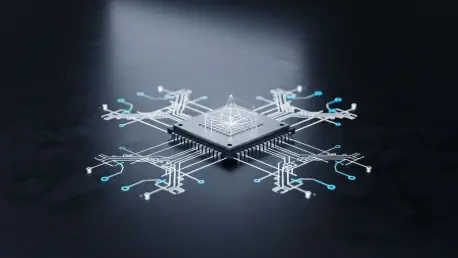
The trajectory of digital forensics points toward the full-scale adoption of hardware-accelerated post-quantum signing. As the National Cybersecurity Strategy’s mandates take full effect, specialized chips will likely be integrated into endpoints to handle the heavy lifting of PQC calculations. This evolution will make quantum-safe forensic collection the default state for all digital devices, effectively neutralizing the threat of retroactive decryption.
Looking further ahead, the integration of AI-driven forensic analysis within these pipelines will allow for real-time detection of tampering patterns. While PQC ensures the integrity of the data, AI can interpret the context of the forensic evidence, providing investigators with deeper insights while maintaining a solid, quantum-safe foundation. This combination of security and intelligence will redefine how global legal standards approach the preservation of digital history.
Summary and Final Assessment
The shift toward post-quantum digital forensics represented a proactive response to an inevitable technological disruption. While the most significant threats from quantum computing remained on the horizon, the forensic community recognized that the data collected today must be protected with tomorrow’s security standards. The integration of ML-DSA signatures and Merkle Tree aggregation successfully addressed the dual needs of scalability and long-term cryptographic durability.
The overall assessment of the technology showed that the implementation of quantum-resistant pipelines was essential for the survival of the digital justice system. By moving away from vulnerable classical architectures, organizations established a framework that prioritized the longevity of evidence integrity. Ultimately, the adoption of these advanced methodologies secured the global digital infrastructure, ensuring that the chain of custody remained unbroken in an increasingly complex and threatening technological era.