
The Model Context Protocol (MCP) is rapidly emerging as the open standard for connecting Large Language Model applications with external tools and data, promising to streamline development and foster a rich ecosystem of integrations. While this standardization offers significant convenience, its most profound impact within an enterprise setting is the establishment of a new, critical security boundary that demands immediate attention. The protocol effectively transforms what were once ad-hoc, isolated tool integrations into a standardized, interconnected infrastructure. This shift introduces scalable security risks by creating a predictable attack surface, yet it also presents a unique and powerful opportunity for implementing centralized governance and control over agentic systems. Consequently, organizations must approach MCP not as a simple plugin architecture or a developer convenience, but as a core piece of enterprise infrastructure that fundamentally requires a security-first mindset from its inception to deployment and beyond.
The Nature of the MCP Security Challenge
Standardization as a Double-Edged Sword
By creating a uniform method for how Large Language Model agents access external tools and data sources, the Model Context Protocol makes the most powerful—and potentially most dangerous—part of an agentic system highly predictable. This predictability serves as a classic double-edged sword for enterprise security. On one side, it dramatically simplifies the development process and encourages interoperability, allowing a vibrant and innovative ecosystem of third-party tools and services to flourish. This fosters rapid application development and enhances the capabilities of AI agents. On the other side, however, this very consistency creates a well-defined and uniform attack surface. Adversaries can now meticulously study this standardized interface, developing exploits with the knowledge that a single successful technique can be replicated across any enterprise system that has adopted the protocol. This transforms a feature designed for convenience into a potential systemic vulnerability, scaling risk across the entire organization.
The Model Context Protocol does not necessarily invent entirely new categories of security threats; rather, its true danger lies in its function as a pipeline that aggregates and amplifies a multitude of well-known vulnerabilities. It acts as a convergence point, bringing together the distinct challenges of natural language manipulation, such as prompt injection, with the risks of insecure code execution inherent in tool use, the complexities of sensitive data handling, and the pervasive dangers of third-party software supply chain risks. All these threats are funneled into a single, interconnected system where a weakness in one area can be exploited to compromise another. By mapping directly to established threats outlined in frameworks like the OWASP LLM Top 10, MCP makes these once-theoretical dangers intensely practical and dangerously scalable. It effectively consolidates a wide array of disparate risks into one cohesive and highly attractive attack surface for malicious actors.
A Practical Enterprise Threat Model
Within an enterprise context, one of the most immediate and critical dangers introduced by MCP is the problem of “permission confusion,” where the identity of the actor—the model—becomes dangerously ambiguous. A common but hazardous anti-pattern is configuring the agent to operate under a single, highly privileged service account. This architectural flaw inadvertently creates a “natural-language privilege escalation” vulnerability, where any user capable of influencing the model’s behavior can indirectly command its powerful, system-wide permissions. Such a setup fundamentally violates the foundational security principles of least privilege and non-repudiation. This risk is compounded by “tool scoping failure,” a vulnerability where an agent is granted access to an ever-expanding catalog of tools without sufficient controls. As more tools are added, the agent’s potential for causing harm—whether through accidental data exfiltration or the execution of destructive commands—grows exponentially, creating a state of excessive and unmanaged agency.
The most insidious and unique security problem amplified by the Model Context Protocol is that of indirect prompt injection. This advanced threat moves beyond manipulating the initial user input and instead occurs when malicious instructions are subtly embedded within the data returned by an external tool call. An attack could unfold as follows: a tool retrieves information from an external source, such as a customer support ticket or a comment in a code repository, which contains hidden commands. The model, processing this data as trusted information, then follows these malicious instructions and leverages another available tool to exfiltrate sensitive data or perform an unauthorized, destructive action. The only fundamental defense against this sophisticated attack vector is to break a common and naive assumption of early agent development: all outputs from all tool calls must be treated as untrusted, potentially hostile input. This problem is further exacerbated by the infrastructural blind spots that MCP can create. In a distributed environment with numerous hosts and servers, the absence of a unified logging and tracing mechanism results in critical audit log gaps, rendering incident response and forensic analysis nearly impossible.
The Strategic Governance Opportunity
From Ad-Hoc Integration to Centralized Control
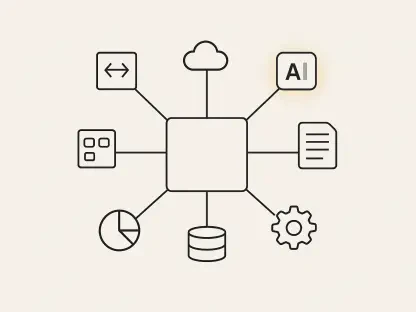
Despite the considerable security risks it introduces, the very standardization that makes the Model Context Protocol a target also presents a powerful and strategic opportunity for enterprise governance. The path to a solution can be modeled after a proven and widely adopted pattern in modern enterprise architecture: the API gateway. Just as API gateways evolved to become central points of control for managing the complex web of microservices—enforcing authentication, implementing rate limiting, centralizing logging, and applying security policies—a similar “tool gateway” concept can be applied to MCP. By mandating that all tool-based interactions originating from LLM agents pass through a central chokepoint, security and governance teams can effectively regain visibility and control over these increasingly autonomous systems. This architectural approach transforms MCP from a distributed risk into a centralized control plane.
The implementation of a centralized tool gateway offers a multitude of benefits that directly address the security vulnerabilities inherent in a distributed MCP ecosystem. This single chokepoint becomes the ideal enforcement point for implementing unified authentication and authorization policies, ensuring that every tool call is rigorously tied to a specific end-user’s identity and respects their designated permissions. It enables the creation of a comprehensive and consistent logging and auditing trail for all agent activities, providing the deep visibility required for regulatory compliance, security monitoring, and effective incident response. Furthermore, a gateway allows for the application of global, organization-wide policies, such as categorizing tools by their inherent risk class—for example, distinguishing between read-only tools and those capable of performing irreversible actions. It also serves as a proactive defense layer, capable of actively detecting and blocking known threats, such as common prompt injection patterns or suspicious data exfiltration attempts, before they can cause harm.
An Actionable Playbook for the Enterprise
To effectively harness the innovative potential of the Model Context Protocol while mitigating its inherent risks, enterprises needed to adopt a clear and decisive security playbook. The foundational step in this playbook was the implementation of a “tool gateway,” which served to centralize control and policy enforcement for all agentic interactions across the organization. Following this, it became mandatory that every tool call be explicitly tied to an end-user identity, a crucial measure that eliminated the dangerous and widespread practice of using over-privileged, generic service accounts. Third, organizations systematically categorized all available tools based on their potential risk profile and applied permissions strictly adhering to the principle of least privilege. Fourth, a zero-trust policy for data was established, wherein all outputs from tool calls were treated as potentially hostile and subjected to sanitization before being processed by the language model. Finally, comprehensive logging mechanisms were put in place to ensure that incident response could be conducted effectively and swiftly, without inadvertently exposing sensitive data within the logs themselves.