
The rapid proliferation of AI agents within corporate environments has created a complex and often chaotic technological landscape, where each new LLM-driven application adds another layer of unmanaged integrations and potential security vulnerabilities. As organizations race to deploy intelligent automation, they are inadvertently building a digital labyrinth of direct connections to countless Model Context Protocol (MCP) servers and REST APIs. This decentralized approach results in a sprawling, unsecured ecosystem that lacks centralized oversight, consistent policy enforcement, and unified logging. The consequence is a significant increase in governance and operational risk, where security teams struggle to monitor agent activities and developers are forced to repeatedly solve the same integration and security challenges for each new deployment. This fragmented reality presents a formidable barrier to scaling agentic AI initiatives safely and efficiently, demanding a fundamental shift toward a more structured and manageable infrastructure.
A Unified Approach to Agent Tool Federation
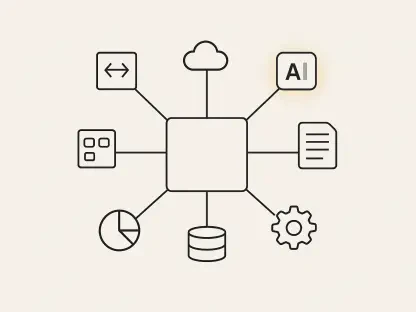
The introduction of the open-source ContextForge MCP Gateway marks a pivotal transition from bespoke, application-specific tool integrations to a standardized, platform-level strategy for managing enterprise AI agent ecosystems. This technology functions as a sophisticated enterprise proxy or router, establishing a single, governed federation point for all agent interactions. Instead of LLM-driven agents connecting directly to a disparate array of tools and data sources, they communicate exclusively through the gateway. This model effectively abstracts away the immense complexity of the underlying infrastructure, presenting a simplified and consistent interface for developers. For the enterprise, this centralization is transformative. It allows IT and security departments to consolidate control, streamline logging, enforce universal policies, and fine-tune performance for all AI agent traffic from a single vantage point. This architectural shift addresses the root cause of agent sprawl, replacing a chaotic web of connections with an orderly, manageable, and secure hub for all automated workflows.
Embedding Security and Governance by Design
A primary function of the gateway is to proactively address the security and governance deficiencies inherent in the base Model Context Protocol (MCP) specification, providing a robust security layer that is often absent in ad-hoc agent deployments. The system achieves this by terminating all incoming agent connections, rigorously authenticating each request, and then applying multiple layers of policy before intelligently routing the traffic to the appropriate backend service. A significant capability is its capacity to automatically discover and expose existing REST APIs as secure, AI-accessible tools, complete with authentication, rate limiting, and unified audit trails. This turns tool management into a scalable platform function rather than a recurring development bottleneck. The gateway is further fortified with an extensive library of over 30 built-in security plugins designed for critical tasks such as PII detection, sensitive content filtering, and custom policy enforcement. This comprehensive suite of tools effectively establishes the gateway as a dedicated and highly configurable policy engine for the entire agentic AI ecosystem, ensuring compliance and mitigating risk at every interaction point.
A Foundation for Scalable Enterprise AI
The implementation of this centralized gateway provided organizations with the critical infrastructure needed to move beyond experimental AI agent deployments and toward enterprise-wide adoption. By integrating comprehensive observability features, including a real-time dashboard for monitoring system health and performance metrics, it offered unprecedented visibility into agent traffic and behavior. The platform’s built-in optimizations, such as connection pooling and response compression, ensured that performance bottlenecks were prevented even as the volume of AI-driven traffic scaled exponentially. Ultimately, this approach established a new standard for deploying agentic AI. It supplied a clear and secure path for businesses to confidently expand their AI initiatives, knowing that a robust governance framework was in place to manage complexity, enforce security policies, and mitigate operational risks. This solid foundation was instrumental in helping enterprises unlock the full transformative potential of automated, intelligent systems within their core operational workflows.