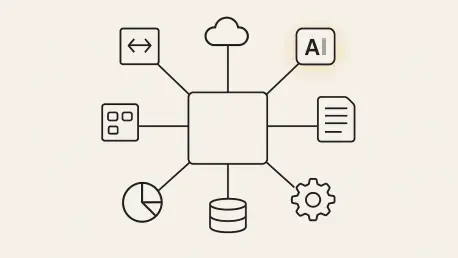

The pressure to deliver artificial intelligence capabilities often leads engineering teams to prioritize rapid feature deployment over the long-term stability of their production environments. While the allure of generative AI is undeniable, the reality of integrating these non-deterministic systems into a legacy architecture requires a disciplined strategy that preserves existing user trust and system reliability. Most modern applications are built on the foundation of predictable inputs and outputs, whereas Large Language Models introduce a layer of inherent uncertainty that can disrupt standard release cycles and monitoring practices. Successfully bridging this gap is not about rewriting the entire technology stack to accommodate a single model, but rather about building a resilient wrapper that treats the AI as a powerful yet volatile dependency. By establishing clear boundaries, strict contracts, and robust fallback mechanisms, developers can harness the creative potential of GenAI while maintaining the rigorous operational standards required for high-availability enterprise software. This approach ensures that the introduction of a new feature does not become a source of technical debt or a point of failure that compromises the core utility of the application.
1. Select a Viable Workflow: Identifying the Best Candidates
Identifying the right starting point for AI integration is the most critical step in ensuring the feature provides genuine value without introducing catastrophic risk. A shippable workflow must possess bounded inputs and reviewable outputs, allowing human operators to verify the validity of the generated content before it impacts the final system state. For example, a customer support platform might use AI to draft initial responses based on a specific ticket history rather than allowing the model to send messages directly to the client. This “human-in-the-loop” configuration provides a safety net where the AI acts as an accelerator for existing processes rather than a fully autonomous agent. If the workflow is too broad or the inputs are poorly defined, the model is significantly more likely to hallucinate or produce irrelevant data, which ultimately slows down the user instead of helping them. Selecting a task where the cost of failure is a minor inconvenience—such as a manual correction—rather than a financial or legal liability is essential for early-stage deployments in 2026.
Moreover, a successful integration must ensure that the user can complete their task manually if the AI service becomes unavailable or returns an error. This concept of manual persistence prevents the application from becoming entirely dependent on a third-party API that might suffer from latency spikes or outages. In practice, this means the user interface should always provide the traditional input fields or buttons alongside the AI-assisted options. If the generative feature fails to load or times out after several seconds, the user should be able to pivot seamlessly to the manual process without losing their current progress. Evaluating these constraints requires a thorough audit of the application’s current data flows to determine which areas have high-quality, structured data available as context. High-risk workflows, such as those involving direct financial transactions or medical advice, should generally be avoided in the initial phases of integration until the team has established a mature monitoring and safety framework.
2. Establish a Formal Feature Agreement: Defining the AI Contract
Before a single line of prompt engineering is written, the development team must define a strict contract that governs the interaction between the application and the AI layer. This agreement acts as a blueprint, specifying exactly what data the application will provide and the precise format it expects in return. By standardizing inputs—such as mandatory fields for ticket IDs or maximum character counts for conversation transcripts—teams can prevent “token bloat” and ensure the model receives only the most relevant context. Optional fields should also be clearly defined with default values to handle cases where certain data points might be missing from the database. This level of rigor prevents the common pitfall of sending unstructured “data dumps” to the model, which often results in inconsistent performance and higher operational costs. A well-defined input schema allows the backend to validate data before it ever reaches the AI service, reducing unnecessary API calls and improving overall system efficiency.
On the output side, the contract should demand structured data, preferably in JSON format, rather than plain text strings that are difficult for the application to parse reliably. This structure should include not only the primary generated content but also metadata such as confidence scores, model versions, and processing timestamps. Categorizing potential errors is equally vital; the contract must map specific HTTP status codes to predefined user experiences, ensuring that a “429 Rate Limit” error triggers a different UI response than a “504 Gateway Timeout.” Furthermore, implementing versioning for both the data schema and the model behavior is necessary to detect and mitigate silent quality shifts. If a model provider updates their underlying weights and the quality of responses degrades, having a behavior version tied to the contract allows the engineering team to pinpoint exactly when the performance changed. This formal agreement serves as the primary defense against the unpredictability of generative models, turning a “black box” into a manageable component.
3. Determine Logic Placement: Strategic Architecture Decisions
Deciding where the AI logic resides is a fundamental architectural choice that impacts the scalability and maintainability of the entire system. For smaller teams or applications with a singular, specialized AI feature, an embedded integration—where the AI logic lives directly within the existing application code—might be the most efficient path. This approach minimizes network overhead and reduces the complexity of the deployment pipeline, as the AI features are updated and released alongside the rest of the application. However, as the number of AI-driven features grows, this monolithic approach can lead to a tangled codebase where prompt logic and business logic become inseparable. In 2026, many organizations find that keeping AI logic within the app is a temporary solution that eventually gives way to a more modular structure as the complexity of model management increases.
Alternatively, isolating the AI capabilities into a dedicated service offers significant advantages for larger organizations or applications that require multiple AI features. A dedicated service allows separate teams to own the AI logic, enabling them to swap models, experiment with different embedding strategies, and optimize prompt templates without redeploying the main application. This separation of concerns ensures that the core product remains stable while the AI layer evolves at its own pace. Regardless of the chosen topology, maintaining strict boundaries is non-negotiable: the application layer must handle user permissions, interface states, and data persistence, while the AI layer focuses exclusively on prompt construction, context retrieval, and model orchestration. This clear division of labor prevents the “leaky abstraction” where the frontend becomes aware of model-specific quirks, which would otherwise make switching model providers a grueling and expensive undertaking.
4. Manage Context and External Tools: Handling Orchestration and Citations
The most effective generative features often rely on context that exists outside the immediate user input, such as internal documentation, historical records, or real-time data from external APIs. Managing this orchestration behind the AI service boundary is essential to keep the main application code clean and focused on its primary responsibilities. The AI layer should act as the brain that decides which tools to invoke and which documents to retrieve based on the user’s request. By treating these extra context sources as optional components, the system can be designed to provide a degraded but still useful response even if a particular knowledge base or tool becomes unreachable. This design philosophy, known as graceful degradation, ensures that a failure in a secondary data source doesn’t cause the entire AI feature to crash, providing a more resilient experience for the end user.
Furthermore, providing citations and source metadata in the final output is a key requirement for building user trust and ensuring auditability. When the AI generates a response based on internal knowledge base articles, the output schema should include the IDs or URLs of the specific documents referenced. This allows the application to display these sources to the user, who can then verify the information for accuracy. Citations turn a mysterious generated summary into a verifiable piece of work, which is particularly important in professional settings where the stakes for accuracy are high. By including source message IDs or record identifiers in the metadata, the engineering team also gains better visibility into how the model is utilizing the provided context, making it easier to debug issues where the AI might be pulling from irrelevant or outdated information. This transparency is the cornerstone of a professional AI integration that prioritizes reliability over mere novelty.
5. Prioritize User Experience and Latency: Designing for the Human Element
The significant latency associated with generative AI models presents a unique challenge for modern user experience design, which typically emphasizes sub-second response times. In 2026, users are more accustomed to AI interactions, but they still require clear feedback to remain engaged during a multi-second wait. Choosing the right response mode—whether it be streaming text in real-time, waiting for a full synchronous block, or processing a long-running task asynchronously—depends entirely on the specific needs of the workflow. For instance, a text-heavy drafting tool benefits greatly from a “typewriter” streaming effect that allows the user to begin reading immediately. Conversely, a data-heavy analysis that requires complex calculations might be better suited for an asynchronous background process that notifies the user once the comprehensive report is ready for review.
To manage these wait times effectively, developers must implement specific UI behaviors tied to latency thresholds. If a response takes less than two seconds, a simple loading spinner might suffice; however, if the delay extends beyond five or ten seconds, the interface should provide more detailed progress updates or even offer the user an immediate fallback to the manual path. Empowering the user is a central tenet of this design philosophy, meaning the interface must always allow for the cancellation of a pending request. Once the AI produces a draft, the user should be given intuitive tools to edit, regenerate, or discard the output entirely. By treating the AI’s contribution as a starting point rather than a final product, the application acknowledges the model’s limitations while still providing the user with a significant productivity boost. This collaborative approach between human and machine ensures that the final result always meets the user’s specific quality standards.
6. Construct a Failure Hierarchy: Planning for the Unexpected
A robust AI integration must be built on the assumption that the model will eventually fail, whether through a technical outage, a timeout, or a nonsensical response. Constructing a failure hierarchy provides a structured way to handle these events, ensuring that the user is never left with a broken interface or a confusing error message. The first level of this hierarchy involves seeking clarification: if the initial user input is too vague or lacks the necessary context, the system should prompt the user for more details before even attempting to call the AI model. This proactive step saves computational resources and prevents the generation of low-quality content. By filtering the inputs at the application layer, the system can catch many potential failures before they ever reach the expensive and slow generative stage.
If the model does return a response but the confidence score is below a certain threshold, the system should move to a state of graceful degradation. This might involve displaying the draft with a clear “low-confidence” warning or highlighting specific sections that the model was unsure about. If the primary model times out or is temporarily unavailable, the failure hierarchy might dictate a switch to a smaller, faster, and more cost-effective model as a secondary attempt. Finally, if all automated attempts to generate a response fail, the system must perform a clean manual handoff, directing the user to a standard form or input area. This “ladder” approach ensures that there is always a guaranteed path forward, transforming a potential system failure into a managed transition that preserves the user’s workflow. This level of planning is what differentiates a experimental prototype from a professional, production-ready application.
7. Execute a Multi-Stage Launch: Validating Performance at Scale
The transition from a development environment to a full-scale production release should be managed through a series of controlled phases to mitigate the risks associated with unpredictable AI behavior. An initial period of internal testing, often referred to as “dogfooding,” allows the development team to identify obvious bugs and refine prompt templates using real-world internal data. During this phase, engineers can monitor how the system handles edge cases and verify that the fallback mechanisms trigger correctly under stress. This internal feedback loop is essential for catching issues that might not be apparent during synthetic testing, such as specific phrasing that causes the model to become repetitive or unhelpful. Once the team is confident in the system’s stability, they can proceed to a limited canary release.
A canary release involves opening the AI feature to a small, controlled percentage of the user base—perhaps five to ten percent—while closely monitoring performance metrics and error rates. This phase is crucial for validating the system at scale and ensuring that the infrastructure can handle the increased load without degrading the experience for other users. If the canary phase is successful, the rollout can be broadened incrementally to larger segments of the audience. Throughout this process, developers should maintain a “kill switch” that can instantly disable the AI feature and revert the interface to the manual path if a major regression is detected. By releasing the feature in stages, the organization can gather valuable telemetry on user acceptance and discard rates, allowing them to make data-driven decisions about the feature’s general availability. This disciplined rollout strategy minimizes the “blast radius” of any potential issues and ensures a smooth introduction of new capabilities.
8. Monitor Performance and Safety: Ensuring Long-Term Reliability
Once the generative AI feature is live, the focus shifts to ongoing monitoring and the enforcement of safety standards to ensure the system remains reliable and cost-effective. Tracking essential telemetry goes beyond standard uptime metrics; it requires a deep dive into success-to-failure ratios, latency percentiles, and the specific ways users interact with the AI-generated content. For example, if users are consistently discarding drafts at a high rate, it may indicate a problem with the underlying prompt or a shift in the model’s behavior that needs to be addressed. Measuring the frequency of manual edits can also provide insight into the quality of the model’s output, helping the team decide when it might be necessary to fine-tune the prompt or switch to a more capable model. This continuous feedback loop is vital for maintaining the relevance and utility of the feature over time.
Security and compliance are equally paramount in the management of production AI systems. All interactions with the AI layer must comply with existing data privacy policies, ensuring that sensitive information—such as personally identifiable information or proprietary financial data—is not inadvertently exposed to external model providers. In 2026, robust audit logging is a standard requirement, capturing every request and response at the service boundary to provide a clear trail for troubleshooting and regulatory compliance. Furthermore, performing regular pre-release stress tests, where engineers intentionally send malformed or malicious data to the model, helps ensure that the security filters and failure hierarchies remain effective. By treating AI as a first-class citizen in the application’s security and monitoring ecosystem, developers can protect both their users and the organization from the unique risks posed by generative technologies.
The successful integration of generative AI into an existing application was achieved by adhering to a rigorous architectural pattern that prioritized stability over novelty. By isolating the AI logic, establishing a firm contract, and building a multi-layered failure hierarchy, the team ensured that the application remained functional even when the underlying models behaved unpredictably. The use of staged rollouts and detailed telemetry allowed for constant refinement of the feature based on actual user behavior, rather than mere assumptions. Ultimately, this approach demonstrated that adding advanced capabilities does not require a sacrifice in reliability; instead, it requires a more sophisticated way of managing dependencies. The final system provided a seamless blend of human oversight and machine-generated assistance, setting a new standard for how modern software should evolve. Future developments will undoubtedly build upon these foundational principles as AI continues to become an integral part of the digital landscape.