
Vijay Raina is a seasoned cloud-native architect who understands that the honeymoon phase of single-turn AI scripts is officially over. As organizations move toward autonomous agents, many development teams hit a wall of complexity where hallucinations and infinite loops threaten the stability of the entire system. Vijay has spent years mastering the nuances of enterprise SaaS technology, and today he shares a roadmap for building resilient, governed agentic workflows. We explore how the intersection of Quarkus Flow, the Model Context Protocol, and a clever markdown-based governance strategy can turn fragile AI experiments into production-grade infrastructure.
Moving from single-turn AI scripts to multi-agent loops often forces developers to choose between heavyweight external clusters and fragile hand-coded loops; how does Quarkus Flow provide a middle ground that avoids these pitfalls?
In the early days of AI experimentation, it was common to see developers hacking together “while” loops that would call an LLM repeatedly until a certain condition was met. This approach is incredibly fragile because it lacks state management, retries, and visibility, making it a nightmare to debug when an agent goes off the rails. On the other hand, bringing in a heavyweight orchestration engine like Temporal or Camunda adds significant operational overhead that many teams simply aren’t ready to manage for a single service. Quarkus Flow changes this dynamic by embedding a specification-compliant workflow engine directly into the JVM application itself. By utilizing the CNCF Serverless Workflow specification, we get the best of both worlds: a light-footprint orchestrator that lives within the idiomatic CDI environment while providing the deterministic guardrails necessary for production. It feels like having a professional-grade air traffic controller sitting right inside your microservice, ensuring every state transition is recorded and every retry is handled according to policy.
You’ve described a modern agentic stack consisting of orchestration, tool standardization, and governance—how do these three layers specifically address the common issues of hallucinations and infinite loops?
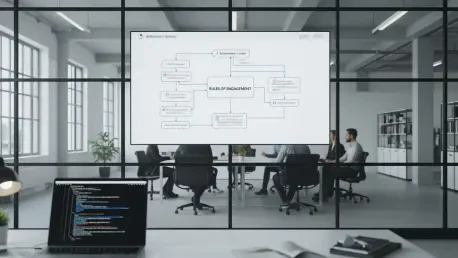
The beauty of this three-layered approach is that it creates a system of checks and balances that an LLM cannot simply ignore. Orchestration, handled by Quarkus Flow, is where we set hard limits like a 3-iteration cap on loops, which acts as a physical ceiling to prevent the agent from burning through tokens in a recursive hallucination. Tool standardization through the Model Context Protocol (MCP) ensures that the agent interacts with enterprise data through a stateless, well-defined interface rather than guessing how to use a custom API. Finally, the governance layer—manifested in the AGENTS.md file—provides the behavioral boundaries and required output formats that the agent must respect at runtime. When you see a “Critic Agent” reject a draft because it doesn’t meet the security guidelines defined in your markdown file, you realize how powerful it is to have “rules of engagement” that are decoupled from the core logic. It transforms the AI from a black box into a governed component that follows a predictable, observable path.
Why is the concept of AGENTS.md so critical for behavioral governance, and how does it change the collaboration between developers and prompt engineers?
In a traditional setup, prompt strings are often buried deep within Java classes, making it nearly impossible for a security lead or a prompt engineer to review or update them without a full re-compile and deployment. By moving these instructions to a dedicated src/main/resources/AGENTS.md file, we treat agent behavior as a first-class configuration artifact. This allows non-developers to audit the system’s boundaries and safety rules in a format they can actually read and edit. It creates a cleaner separation of concerns where the developer manages the @Agent interface and the infrastructure, while the domain expert fine-tunes the personas and output requirements in markdown. There is a palpable sense of relief when a team realizes they can tighten a security boundary or adjust a “Writer Agent’s” tone by simply editing a text file and letting the runtime pick up the new context.
Standardizing tool connectivity is often a major hurdle in AI development; can you explain how the Model Context Protocol (MCP) bridges the gap between LLMs and enterprise data?
One of the most exhausting parts of building AI agents is writing custom API adapters for every single tool or database the LLM needs to touch. The Model Context Protocol (MCP) solves this by providing a standardized transport layer—often using stdio or HTTP—that decouples the tool’s implementation from the agent’s host code. In a practical scenario, like using the Brave Search MCP server, we can spawn a subprocess using npx and connect our agent to real-time web data without writing a single line of search-specific integration code. We simply wrap the MCP client in a CDI bean, expose it as a @Tool, and the LLM gains the ability to “research” as if the tool were a native function. This modularity means you can swap out a search engine or a database backend without changing the agent’s core reasoning logic, which is a massive win for long-term maintenance.
In a multi-agent workflow like the content publisher example, how do annotations like @LoopAgent and @ExitCondition ensure that the system remains deterministic?
Deterministic behavior is the holy grail of agentic AI, and these annotations are the tools that get us there. When we use @LoopAgent, we are declaratively telling the system to run a “Writer” then a “Critic” repeatedly, but we ground that loop with an @ExitCondition that performs a simple, non-LLM string check. For instance, the workflow might only break the loop if the critic’s response starts with the exact string “APPROVED:”. This removes the ambiguity of having an LLM “decide” if it’s done, which is where many systems fail. By forcing the output through an extractArticle method marked with @Output, we ensure that the final result delivered to the user is precisely what was requested, not a collection of conversational filler. It turns a chaotic conversation between two AI agents into a structured, repeatable business process that looks and feels like any other enterprise workflow.
When moving these systems into a production cloud environment, what role do technologies like GraalVM and OpenTelemetry play in ensuring the architecture is truly enterprise-ready?
To survive in a high-scale enterprise environment, an agentic system must be fast, visible, and lean. By compiling the entire Quarkus stack—including the workflow engine and LangChain4j integrations—into a GraalVM native image, we achieve sub-10ms startup times and a minimal memory footprint. This is essential for serverless environments where you don’t want to pay for idle resources or wait for a heavy JVM to warm up just to handle one agent request. Simultaneously, OpenTelemetry provides the “black box recorder” for the agent’s brain; it passes W3C trace contexts through every LLM call and MCP request. This means when a customer asks why an agent made a specific decision, you can pull up a distributed trace and see the exact prompts, tool outputs, and workflow transitions that led to that outcome. It replaces “we think the AI did this” with “here is the exact data path the AI took,” which is the level of accountability businesses demand.
What is your forecast for the future of agentic AI in the enterprise?
I believe we are rapidly moving away from “chatbots” and toward a world of invisible, autonomous background processes that handle complex logic without human intervention until a critical gate is reached. Within the next two years, the standard for enterprise AI will not be how “smart” the LLM is, but how robust the orchestration and governance layers surrounding it are. We will see a massive surge in “Human-in-the-Loop” patterns where agents pause their own execution to wait for a manager’s approval before performing high-risk operations like database writes or financial transactions. Ultimately, the winners in this space will be the organizations that treat AI agents not as magic black boxes, but as governed, traceable, and orchestrated software components that fit seamlessly into the existing cloud-native ecosystem.