
The global manufacturing landscape is currently navigating a profound and irreversible structural transformation that fundamentally redefines the relationship between human labor and machine operation. For more than half a century, the industrial automation sector prioritized the achievement of steady, reliable control over physical equipment, relying on a linear progression of technological improvements to maximize throughput. However, as of 2026, the primary objective has pivoted sharply toward the orchestration of intelligence, where the goal is no longer just to execute a repetitive task but to understand and optimize the entire production environment in real time. This shift is fundamentally altering the economic foundations of the industry, as traditional profit centers associated with hardware-centric control layers migrate toward the extremities of the technological stack. On one end, immense value is pooling in sophisticated software, data analytics platforms, and generative artificial intelligence, while on the other, value is being reclaimed by smart field devices that utilize edge computing to process information locally. This evolution represents a definitive departure from the rigid hierarchical models of the past, moving instead toward a fluid ecosystem where connectivity and data-driven insights are the primary drivers of competitive advantage.
Evolution of the Control Paradigm: From Pyramids to Intelligence
For nearly five decades, the structural framework of industrial automation followed a rigid and predictable pyramid hierarchy, commonly defined by the ISA-95 standard. At the foundational base of this pyramid were the sensors and actuators responsible for physical interaction, while the middle layers housed the programmable logic controllers and supervisory control systems that managed the logic of the floor. The peak of this structure was occupied by manufacturing execution systems and enterprise resource planning software, which handled the high-level business logistics. In this legacy arrangement, the middle of the stack was the most lucrative and defensible segment of the market, as proprietary hardware and specialized communication protocols created high barriers to entry and locked customers into long-term vendor relationships. This model provided incumbents with a steady stream of revenue from hardware sales and service contracts, but it also created silos of information that prevented manufacturers from achieving the level of transparency required for modern, data-driven decision-making processes.
Modern market dynamics have effectively collapsed this traditional geometry into an hourglass-shaped profit distribution that prioritizes high-level analysis and local execution over centralized control. The top of the hourglass is now dominated by high-margin software and AI platforms that act as the cognitive engine of the enterprise, consolidating vast streams of data to make strategic adjustments that human operators might overlook. Conversely, the bottom of the hourglass has seen the rise of smart field devices, such as advanced machine vision systems and intelligent variable-frequency drives, which possess enough onboard processing power to make autonomous local decisions. This leaves the traditional middle layer—comprising the once-proprietary controllers and input-output modules—facing intense commoditization. As software becomes decoupled from hardware and open-source standards gain traction, the physical controller is increasingly viewed as a generic utility rather than a specialized asset, forcing established vendors to find new ways to differentiate themselves through intelligence rather than just mechanical reliability.
Market Forces Driving the Erosion of Traditional Systems
The long-standing competitive advantages that once shielded major industrial players are evaporating at an unprecedented rate due to significant demographic and structural shifts. A primary driver of this erosion is the massive labor shortage currently impacting developed markets, often referred to as the silver tsunami, where a significant portion of the skilled workforce is reaching retirement age. As these experienced engineers and technicians exit the workforce, they take with them decades of tribal knowledge that has historically been the invisible glue holding complex production lines together. This loss of human expertise is creating an urgent demand for autonomous systems that can internalize that knowledge and use it to guide less experienced workers through digital workflows. Consequently, the industry is moving away from systems that require constant manual intervention and toward self-healing, self-optimizing environments that can maintain peak efficiency without relying on the presence of a few highly specialized individuals.
Furthermore, the shift in decision-making power from the plant floor to the IT department is fundamentally changing what buyers value in an automation partner. In previous decades, a purchasing decision might be based entirely on the ruggedness of a controller or the speed of a specific communication bus, but today’s buyers are focused on interoperability and data utility. Modern factory managers are looking for systems that can integrate seamlessly with broader business frameworks, such as supply chain management and product lifecycle management tools, to create a unified view of the entire organization. This shift has weakened the hold of proprietary ecosystems, as customers now demand open architectures and standardized protocols like OPC UA and MQTT that allow data to flow freely between different brands of equipment. The ability to provide a flexible, data-rich environment has become more important than the physical specifications of the hardware itself, leading to a new competitive landscape where software agility is the primary differentiator.
The Technological Engine: Integrating Artificial Intelligence at Scale
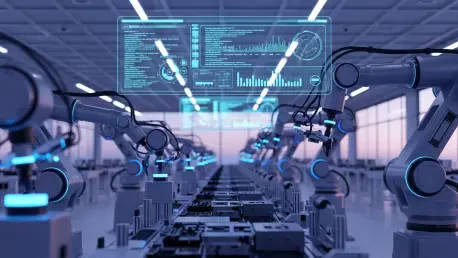
Artificial intelligence is serving as the primary catalyst for the industry’s rapid transition from simple automation to cognitive intelligence, moving from a niche experimental tool to a core component of production. In the current market environment of 2026, AI-enabled offerings are no longer viewed as a luxury but as a baseline requirement for any organization that hopes to maintain its competitive standing. The technology is expected to drive approximately half of all industrial automation revenue by 2030, creating tens of billions of dollars in new market value across various sectors. This impact is particularly visible in the proliferation of adaptive robotics, where machines are now capable of adjusting their movements and tasks in response to environmental changes without requiring a technician to manually rewrite thousands of lines of code. These robots use advanced neural networks to recognize variations in part placement or lighting, allowing them to function in dynamic settings that were previously too complex for traditional automation.
Beyond the physical movement of goods, AI is revolutionizing the way manufacturers approach maintenance and asset management through the deployment of predictive analytics. By analyzing subtle patterns in vibration, temperature, and power consumption, intelligent systems can now forecast mechanical failures with a high degree of accuracy before they actually occur. This allows companies to move away from rigid, schedule-based maintenance routines that often result in either unnecessary downtime or catastrophic equipment failure, transitioning instead to a model where repairs are conducted only when the data indicates they are necessary. Vendors who are unable to provide these data-driven insights are finding themselves at a significant disadvantage, as customers increasingly prioritize the long-term reliability and cost savings associated with intelligent monitoring. The transition to AI is also helping to capture and digitize the intuition of veteran engineers, transforming it into actionable algorithms that can be deployed across global fleets of machines to ensure consistent performance.
Industry Specialization: The Dominance of Vertical Solutions
A notable trend in the current industrial landscape is the move away from horizontal automation platforms that attempt to provide a one-size-fits-all solution for every type of factory. In the past, a standard programmable logic controller was essentially the same piece of equipment whether it was being used to package bread in a bakery or to manage a robotic welding cell in an automotive plant. However, as systems become more intelligent, the value of deep, sector-specific expertise has increased significantly, leading to the rise of verticalized stacks that are tailored to the unique physical and regulatory challenges of a particular industry. Manufacturers are finding that generic solutions often lack the specialized features required to handle the complexities of modern production, such as the stringent hygiene and traceability requirements of the pharmaceutical sector or the high-speed reconfiguration needs of the electronics industry.
Most of the incremental growth in the automation market is now concentrated in these specialized segments, where vendors can provide deep domain knowledge that goes beyond simple motor control. For example, in the hybrid industries such as food and beverage, there is a growing need for systems that can seamlessly blend discrete automation for packaging with process automation for chemical mixing. These industries require a high level of flexibility and the ability to track ingredients through every stage of the lifecycle to ensure safety and compliance with increasingly strict global regulations. Similarly, the rapid expansion of battery manufacturing and electric vehicle production has created a demand for automation systems that understand the specific chemistry and physics involved in energy storage. By focusing on these vertical niches, automation providers can build more meaningful relationships with their customers and insulate themselves from the commoditization that is currently hollowing out the horizontal market.
Commercial Evolution: Transitioning Toward Lifecycle Orchestration
As the technical differentiation of hardware continues to diminish, the traditional business model of one-time capital equipment sales is rapidly being replaced by long-term service relationships. This evolution toward lifecycle orchestration involves a shift from selling a physical product to providing ongoing value through software updates, optimization services, and continuous performance monitoring. Many leading technology providers are now adopting subscription-based models, similar to the software-as-a-service structures found in the IT world, which allow manufacturers to access the latest intelligence without the need for massive upfront capital investments. This shift is particularly attractive to companies looking to modernize their facilities while maintaining financial flexibility, as it moves the cost of automation from a capital expenditure to an operating expense that can be scaled up or down based on actual production needs.
In addition to subscription models, the industry is seeing a rise in outcome-based contracts, where the relationship between the vendor and the customer is defined by specific performance metrics. Under these agreements, a vendor might be paid based on the guaranteed uptime of a production line or the achievement of specific yield improvements rather than the price of the individual components installed. This aligns the incentives of both parties, as the automation provider is now directly invested in the long-term success and efficiency of the manufacturer’s operations. This transition effectively transforms the vendor into a strategic partner responsible for the overall health and intelligence of the production facility, creating a deeper level of integration that is difficult for low-cost competitors to disrupt. As these recurring revenue models become the industry standard, the focus is shifting away from the initial transaction and toward the long-term value generated by the data and intelligence provided throughout the entire lifecycle of the equipment.
Navigating the Competitive Landscape: Strategic Priorities for Leaders
To remain viable in this increasingly complex and intelligent market, leadership teams must make deliberate strategic choices about where they intend to compete and how they will differentiate their offerings. It is no longer feasible for a single organization to lead in every vertical industry and every layer of the technological stack, as the specialized knowledge required to succeed is too vast. Instead, firms must identify the specific sectors where they can establish a dominant position and focus their resources on owning the ends of the hourglass, specifically the software layer and the intelligent edge devices. Attempting to protect a legacy position in the commoditized middle of the stack is likely to lead to a slow decline in margins and strategic influence, as the value in that area continues to be eroded by open standards and low-cost hardware alternatives.
A successful strategy in 2026 also requires a fundamental shift in how organizations treat data, moving it from a byproduct of production to a core strategic asset. Companies need to build robust data architectures that ensure information can flow seamlessly from the individual sensor on the factory floor all the way to the cloud-based analytics engine without being trapped in proprietary silos. This requires a cultural shift within the organization, as engineering teams must learn to work closely with IT and data science departments to ensure that the intelligence being generated is actually useful to the business. Furthermore, the commercial side of the organization must be restructured to support recurring revenue models, which involves redesigning sales incentives and customer success teams to focus on long-term retention rather than just closing the next big hardware deal. Those who successfully navigate these changes will be well-positioned to serve as the indispensable brains of the modern factory, while those who cling to outdated models risk being automated out of the market.
The Autonomous Horizon: Shaping the Future of Production
The transition from traditional control to industrial intelligence has fundamentally altered the expectations of what a production facility can achieve. Throughout the early 2020s, the industry laid the groundwork for this shift by investing heavily in connectivity and data infrastructure, which has now reached a level of maturity that allows for true autonomous operation. Organizations that moved quickly to integrate AI and edge computing into their facilities have already realized substantial benefits, reporting productivity increases of up to 50% in some highly automated sectors. These gains were not merely the result of faster machines, but rather the result of systems that could intelligently manage their own workflows, reducing waste and minimizing the time spent on manual troubleshooting. The shift toward vertical specialization and outcome-based services provided the necessary framework for these technologies to be deployed effectively within the constraints of specific industry regulations.
Looking back at the progress made since the start of the decade, it is clear that the mandate for industrial survival has been the successful conversion of raw data into actionable intelligence. The industry moved past the era where the programmable logic controller was the ultimate authority, embracing a more decentralized and cognitive approach to factory management. Leaders who prioritized open architectures and software-driven flexibility succeeded in creating resilient operations that could adapt to the rapid changes in global demand and labor availability. These strategic moves established a new baseline for performance, where the intelligence of the system is now the primary determinant of a company’s economic success. For manufacturers and automation providers alike, the focus has shifted permanently toward the continuous optimization of the entire production ecosystem, ensuring that the industrial world remains as dynamic and intelligent as the digital world that now powers it.