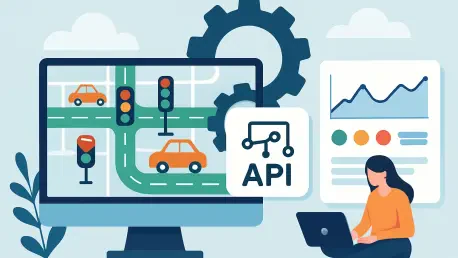

Urban traffic management centers have long struggled with the cumbersome task of manually extracting data from proprietary hardware systems that do not naturally communicate with modern software suites, often resulting in delayed responses to congestion. This operational bottleneck underwent a significant transformation with the official launch of the Flow API, a comprehensive suite of application programming interfaces designed to provide transportation agencies with streamlined, programmatic access to critical signal performance measures. By enabling a direct feed of high-fidelity information, this initiative replaced the inefficient manual data exports that previously hindered rapid decision-making processes. Modern agencies now possess the capability to integrate both real-time and historical analytics directly into their existing infrastructure, including Advanced Traffic Management Systems and custom reporting tools. This shift toward total data accessibility ensures that mobility insights are no longer trapped within isolated hardware silos but are instead available for immediate application.
Bridging the Gap: Hardware and Digital Infrastructure
The architecture of this new interface is bifurcated into two specialized categories to address the inherent complexity of modern urban transportation networks. The Signals APIs deliver a combination of live and historical metrics that are essential for monitoring traffic signal performance and automating the generation of complex operational reports. Simultaneously, the Segments APIs provide high-level mobility data that facilitates corridor analysis, performance benchmarking, and comprehensive urban planning initiatives for the 2026 to 2028 period. This dual-layered approach successfully unified data generated from disparate hardware sources, such as controllers and connected vehicle sensors, into a single actionable stream. By prioritizing an open-platform philosophy, the industry began to move away from the restrictive vendor lock-in that historically limited how municipalities utilized their own infrastructure data. This level of interoperability allowed technical teams to leverage their information on their own terms across the entire digital ecosystem.
Establishing a Foundation for Intelligent Urban Connectivity
The transition toward standardized data access through programmatic interfaces proved to be a decisive moment for agencies seeking to maximize the value of their infrastructure investments. Transportation departments that adopted these integrated solutions successfully moved beyond basic monitoring to implement sophisticated predictive modeling and automated response protocols. This shift required a fundamental reorganization of internal workflows, where data scientists and traffic engineers collaborated to refine signal timing based on high-frequency feedback loops. As the industry progressed from 2026 into 2028, the emphasis remained on maintaining a cohesive technology stack that could adapt to emerging connected vehicle technologies without requiring costly hardware overhauls. Looking ahead, agencies recognized that the key to long-term success involved prioritizing software-defined infrastructure that remained flexible and transparent. The implementation of such open standards effectively eliminated the friction of data sharing and established a scalable framework for future development.