
The sudden and massive expansion of high-density artificial intelligence workloads has forced the global technology industry into a confrontation with the physical limits of environmental resources and infrastructure design. While the public and regulatory bodies often focus on a single, easily observable metric like water consumption to judge sustainability, this narrow focus overlooks the sophisticated engineering required to maintain the digital spine of the modern economy. A truly sustainable approach requires a holistic strategy that balances the immediate need for water with the long-term demand for energy efficiency and operational reliability. Because AI chips generate significantly more heat than traditional processors, the cooling strategies of the past are no longer sufficient to meet the dual challenges of carbon reduction and resource preservation. Industry leaders are now realizing that optimizing for one resource in isolation often leads to a detrimental impact on another, creating a complex puzzle that demands a unified solution.
Navigating Technical Trade-offs
Deciphering the Choice Between Air and Water
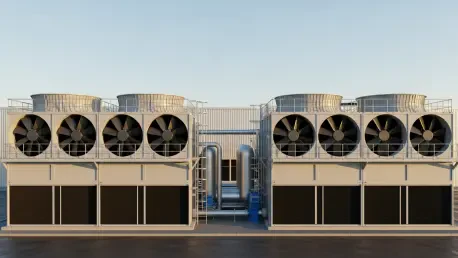
The public discourse surrounding data center sustainability frequently collapses into a binary debate that pits air-based cooling against water-based systems. This simplification fails to account for the thermodynamic realities of high-density computing where air-based methods, while avoiding direct water use, often demand a staggering amount of electricity to move heat away from sensitive components. In warmer climates or during heatwaves, traditional air-cooled facilities must work significantly harder, leading to spikes in energy consumption that strain local power grids and increase the overall carbon footprint of the facility. The reliance on fans and compressors in these dry systems means that while the water meter remains still, the electricity meter spins at an accelerated rate, illustrating the hidden environmental cost of avoiding water altogether.
Conversely, evaporative water-based cooling systems leverage the natural thermal properties of water to achieve much higher levels of energy efficiency, particularly in arid or high-temperature environments. By utilizing the cooling effect of evaporation, these systems can maintain optimal operating temperatures for server racks while consuming far less electricity than their air-cooled counterparts. However, this efficiency comes at the cost of consistent water consumption, which can be a point of contention in regions facing water scarcity or drought conditions. The engineering challenge is not to declare one method superior to the other, but to determine which technology provides the lowest total environmental impact based on the specific climate, grid intensity, and workload requirements of the site. In many cases, the most efficient path involves a combination of both technologies to manage these competing demands.
The Energy-Water Nexus in System Design
Modern engineering has moved beyond the simplistic air-versus-water debate by embracing the “energy-water nexus,” a concept that recognizes these two resources are fundamentally linked. Designing a cooling system solely to minimize water usage can inadvertently lead to a massive increase in carbon emissions if the resulting energy demand is met by fossil-fuel-intensive power plants. To solve this, developers are increasingly implementing hybrid and closed-loop systems that can dynamically shift their cooling method based on real-time environmental conditions and the current price or carbon intensity of the local power grid. For example, a facility might use air cooling during the cool overnight hours to save water and then transition to evaporative cooling during the heat of the day to prevent an energy surge that would stress the electrical infrastructure.
This integrated approach treats the data center as a single, holistic system rather than a collection of independent components. By using sophisticated software to monitor external humidity, ambient temperature, and internal computing loads, operators can fine-tune the cooling mix to hit the “sweet spot” of resource efficiency. This level of optimization is essential as the industry moves toward 2027 and 2028, where the density of server racks is expected to reach levels that make traditional cooling methods obsolete. A system designed with this nexus in mind doesn’t just look at a monthly water bill or a power statement; it looks at the total lifecycle impact of every gallon and every kilowatt-hour consumed, ensuring that the pursuit of one sustainability goal does not actively undermine another critical environmental objective.
Maximizing Operational Efficiency
Implementing Whole-System Optimization
The pursuit of sustainability in the data center sector is increasingly defined by whole-system optimization, where every element from the server chassis to the external cooling tower is part of a unified thermal management strategy. As artificial intelligence drives heat loads to unprecedented heights, traditional methods of simply blowing cold air into a room are becoming both physically impossible and economically unfeasible. Engineers are now looking at liquid-to-chip cooling and immersion technologies that bring the cooling medium directly to the source of the heat. This transition allows for much higher operating temperatures within the cooling loop, which in turn makes it easier to reject heat to the outside environment without needing energy-intensive refrigeration cycles. Such advancements ensure that the facility remains reliable even as the intensity of global digital demand continues to climb.
Furthermore, the decision-making process during the design phase now includes a rigorous analysis of the facility’s long-term interaction with local infrastructure. Effective airflow management, the use of heat exchangers, and the selection of high-durability mechanical equipment are all part of a strategy to reduce the frequency of maintenance and the total carbon footprint of the building’s lifecycle. By optimizing the entire thermal chain, operators can reduce the “parasitic load”—the energy used by the facility itself rather than the servers—allowing more of the incoming power to be used for actual computation. This focus on systemic efficiency ensures that as data centers grow in scale, they do not become a disproportionate burden on the communities that host them, but instead operate as highly tuned industrial assets that maximize every unit of energy and water they consume.
Advancing Sustainability Through Recycled Sourcing
One of the most transformative trends in the industry is the shift in focus from merely reducing the volume of water used to improving the integrity and source of that water. Progressive data center operators are increasingly moving away from using potable, or drinking-quality, water for industrial cooling purposes. Instead, they are partnering with municipal authorities to utilize recycled, reclaimed, or non-potable wastewater that would otherwise be discharged into the environment. This strategy effectively turns a waste product into a valuable industrial resource, allowing the data center to benefit from the high efficiency of water-based cooling without competing with local residents or farmers for limited freshwater supplies. It is a circular economy approach that addresses the primary criticism of water use in the technology sector.
This transition to recycled water also provides a unique opportunity for data centers to act as catalysts for local infrastructure improvement. Because a large data center represents a consistent, long-term consumer of water, its presence can provide the financial certainty a utility needs to invest in and expand recycled water treatment plants. These investments benefit the entire community by creating a secondary water market and reducing the strain on primary aquifers. By 2027, it is anticipated that the use of non-potable water will become a standard requirement for new large-scale developments in many jurisdictions. This shift demonstrates that the industry can maintain its high-performance cooling standards while simultaneously contributing to the resilience of the local water ecosystem, proving that industrial growth and environmental stewardship can coexist.
Establishing Infrastructure Trust
Applying a Strategic Procurement Framework
For organizations tasked with selecting a data center provider, the evaluation of sustainability must move beyond marketing brochures and focus on a rigorous, strategic procurement framework. Buyers are now looking for operators who can provide granular data on their “energy-water nexus” performance, specifically asking how the facility handles peak demand during extreme weather events. A credible provider must be able to demonstrate not just their average efficiency metrics, but their resilience under stress. This involves examining the source integrity of the water being used and verifying whether there is a clear roadmap for transitioning to 100 percent recycled sources. Transparency in these areas is becoming a key differentiator in a market where corporate social responsibility is a primary driver of investment decisions.
In addition to resource consumption, a comprehensive procurement strategy must evaluate the lifecycle and maintenance protocols of the facility’s mechanical plant. Operators who invest in high-quality, long-lasting equipment and provide verifiable, system-level efficiency metrics offer a lower risk profile for long-term deployments. This framework also considers the impact of the data center on the local power grid, favoring providers who use advanced battery storage or onsite renewable energy to mitigate their peak electricity demand. By asking these critical questions, buyers can ensure that their digital infrastructure is hosted in a facility that is built for the realities of the late 2020s—one that prioritizes transparency, efficiency, and a balanced approach to resource management over simple, one-dimensional metrics that may hide deeper operational flaws.
Building Credibility Through Transparency
The long-term viability of the digital economy is inextricably linked to the concept of “infrastructure trust,” which can only be built through consistent engineering discipline and radical transparency. As data centers become as essential to daily life as water and power utilities, the public and stakeholders will naturally demand a higher level of accountability regarding their environmental impact. Operators who proactively share real-time performance data and seek out independent, third-party certifications are setting the standard for the rest of the industry. This openness serves to debunk myths and provide a fact-based foundation for discussions about how technology affects the planet, moving the conversation away from rhetoric and toward measurable engineering reality and verifiable progress.
In conclusion, the industry successfully transitioned toward a model of accountability by prioritizing system-wide performance over isolated metrics. This shift allowed operators to provide the massive computing power required for artificial intelligence while simultaneously reducing the relative environmental strain on local communities. By embracing recycled water sourcing, hybrid cooling technologies, and transparent reporting practices, the sector established a blueprint for sustainable industrial growth. Moving forward, the focus must remain on continuous innovation in liquid cooling and grid-interactive operations to ensure that the digital backbone of society remains resilient. The lessons learned from balancing water and energy during this period of rapid expansion provided the necessary foundation for a more sustainable and trustworthy global infrastructure network.