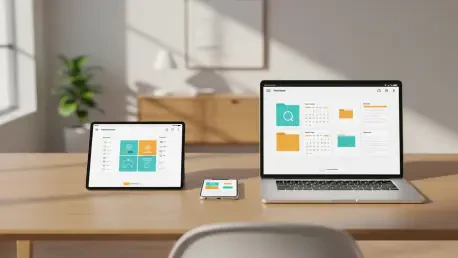

The modern mobile landscape has become an intricate web of data harvesting where even the most basic utility applications often demand excessive permissions and track user behavior for advertising purposes. For many Android users, the standard ecosystem feels less like a set of helpful tools and more like a surveillance platform that prioritizes corporate monetization over individual digital sovereignty. This widespread frustration has fueled a significant movement toward de-Googling devices and seeking out software that respects the boundary between utility and privacy. Fossify emerges as a critical solution in this space, offering a comprehensive suite of open-source applications that replace standard system tools with clean, lightweight, and transparent alternatives. By focusing on essential functionality without the intrusive bloat of modern proprietary software, this suite allows users to reclaim control over their devices. The transition toward such tools represents a fundamental shift in how people interact with their smartphones, moving away from closed ecosystems that treat user data as a commodity and toward a model of software ownership and transparency.
The Evolution of Community-Driven Software Solutions
The emergence of the Fossify project was a direct response to a common problem in the open-source world: the acquisition and subsequent commercialization of trusted software. Originally, many users relied on the “Simple Mobile Tools” suite, which offered a unified design language and a commitment to privacy. However, after that suite was sold to a company that began integrating trackers and advertisements, the community felt a sense of betrayal. This catalyzed the creation of Fossify, a community-driven fork designed to preserve the original vision of free and open-source software. By hosting these apps on repositories like F-Droid, the developers ensure that the code remains auditable and free from the profit-driven motives that often compromise mobile security. This historical context is vital for understanding why Fossify has gained such rapid traction among privacy advocates. It is not just about having a different calculator or calendar; it is about maintaining a digital sanctuary where the software serves the user rather than a hidden corporate master.
Building on this foundation of trust, the philosophy of the Fossify suite stands in stark contrast to the prevailing trends in mobile development throughout the 2026 landscape. While mainstream developers are currently engaged in an aggressive race to integrate generative artificial intelligence, persistent cloud synchronization, and complex analytics into every interface, Fossify intentionally prioritizes minimalism and local-first operations. This “back-to-basics” approach is a deliberate rejection of the complexity that often slows down older hardware and clutters the user experience. Instead of a phone dialer that attempts to transcribe calls or suggest nearby businesses using location data, the Fossify version focuses on clear favorites, a responsive dialpad, and historical logs. This commitment to utility ensures that the apps remain incredibly lightweight, often taking up a fraction of the storage space required by their proprietary counterparts. By stripping away the distractions, Fossify provides a predictable and reliable environment where the tools simply work as intended.
Functional Excellence Through Local-First Architecture
The practical implementation of the Fossify suite is best observed in its core communication and productivity tools, which redefine the relationship between the user and their data. The Phone and Contacts applications serve as the primary gateway for interaction, offering a sleek, customizable interface that supports deep OLED blacks and various theme colors to match system aesthetics. Unlike default apps that may sync contacts to a cloud server without explicit consent, Fossify defaults to local storage, ensuring that personal details remain on the device. However, the developers recognize that users still require modern convenience. Consequently, the Calendar app is designed to work seamlessly with synchronization protocols like CalDAV through external bridges. This flexibility allows a user to maintain a sophisticated, self-hosted data ecosystem using tools like Nextcloud. This approach demonstrates that privacy-focused software does not have to be isolated; it can be part of a robust and interconnected digital life while still maintaining strict boundaries.
Media management within the suite highlights the technical proficiency of the open-source community in delivering high-quality user experiences. The Fossify Gallery stands out as a particularly impressive tool, offering both folder-based and timeline-based views that are often faster and more intuitive than pre-installed manufacturer galleries. One specific feature that garners praise is the ability to resize images to exact pixel dimensions directly within the app, a functional utility that is surprisingly absent from many high-end proprietary solutions. Similarly, the Voice Recorder provides a clean design with flexible file-naming structures, avoiding the unnecessary cloud-upload prompts found in mainstream alternatives. While these tools may lack some of the flashy, AI-driven editing features of the Google or Samsung versions, they provide a reliable foundation for a “best-of-breed” software setup. Users often find that combining these focused tools with other specialized open-source applications creates a more efficient workflow than relying on a single, bloated ecosystem.
Future Horizons for Mobile Autonomy and Sovereignty
The ongoing expansion of the Fossify ecosystem signals a maturing market for alternative mobile operating environments that do not require a complete departure from the Android framework. Beyond the initial suite of tools, the project has successfully integrated a file manager, a music player, and a clock, each maintaining the same cohesive design language and privacy standards. The most significant developments are currently occurring in the beta stages for a dedicated launcher, keyboard, and camera application. These additions are poised to transform Fossify from a collection of utility apps into a comprehensive, drop-in replacement for the entire user interface layer of a smartphone. This growth reflects a broader industry trend where users are no longer satisfied with mere privacy settings; they are seeking complete architectural independence. As these tools move out of testing, they provide a viable path for users to enjoy a modern smartphone experience that is entirely decoupled from the pervasive tracking mechanisms of big tech.
Ultimately, the shift toward suites like Fossify provides a blueprint for how digital interactions should be managed in an increasingly connected world. By prioritizing the user’s agency and providing tools that are both functional and transparent, the community is proving that the trade-off between convenience and privacy is a false dichotomy. For those looking to take the next step, the path forward involves auditing current app permissions and gradually replacing proprietary utilities with open-source equivalents found on F-Droid. Moving toward a self-hosted synchronization model using protocols like DAVx5 can further enhance this autonomy without sacrificing the ability to coordinate schedules across multiple devices. As software continues to evolve from 2026 to 2028, the focus will likely shift even further toward local processing and decentralized data management. Adopting these tools now prepares users for a future where digital sovereignty is not just a niche preference but a fundamental requirement for personal security and peace of mind.