
Modern software engineering has shifted toward treating natural language interfaces as sophisticated orchestration layers rather than isolated experimental features. Instead of functioning as standalone silos, AI chatbots now serve as critical translation tiers that convert complex human intent into the structured API calls and database queries that drive backend systems. This integration model ensures that the primary application logic remains decoupled from the unpredictable nature of generative models, providing a stable foundation for scalable growth. By positioning the chatbot as a specialized interaction adapter, developers can simplify user workflows and reduce the cognitive load required to navigate feature-rich platforms. This approach effectively bridges the gap between a user’s goal and the technical execution required to achieve it, making the application more accessible without sacrificing the integrity of the underlying services or introducing unnecessary architectural fragility.
Effective integration requires a shift in perspective where the chatbot is viewed as a facilitator of existing capabilities rather than a replacement for traditional UI elements. When a bot is tasked with managing specific user intents, it must be granted access to well-defined service endpoints that allow it to pull data or trigger actions within a controlled environment. The goal is to create a seamless feedback loop where the natural language processing component identifies what the user wants and the orchestration layer determines the most efficient path to deliver that result. This architectural discipline prevents the AI from becoming a “black box” that makes autonomous decisions, keeping the power of choice and logic firmly within the hands of the engineering team. As these systems evolve throughout 2026 and into 2027, the focus remains on reliability and the programmatic control of conversational flows to ensure a consistent and predictable user experience across all digital touchpoints.
1. Defining Typical Use Cases for Integrated Chatbots
Identifying the specific scenarios where a chatbot adds the most value is the first step toward a successful deployment within an enterprise environment. High-utility implementations often focus on retrieving information from structured data sources, such as querying inventory levels, checking order statuses, or pulling specific metrics from a financial database. By automating these data-retrieval tasks, the chatbot allows users to bypass complex search filters and navigation menus, providing direct answers through a simple conversational interface. This efficiency not only saves time for the end-user but also reduces the load on traditional customer support channels, as routine inquiries are handled by the automated system with high precision and speed.
Beyond simple information retrieval, integrated chatbots excel at initiating specific automated tasks and helping users navigate through dense software features. Whether it is scheduling a recurring meeting, resetting a password, or configuring a complex set of notification preferences, the bot acts as a guided assistant that handles the heavy lifting of backend coordination. In the context of technical support, these bots manage repetitive tickets by walking users through standardized troubleshooting protocols before escalating the issue to a human agent if necessary. This tiered approach ensures that human resources are reserved for high-complexity problems, while the AI manages the high-volume, low-complexity interactions that typically dominate support queues in modern digital service platforms.
2. Establishing a High-Level System Architecture
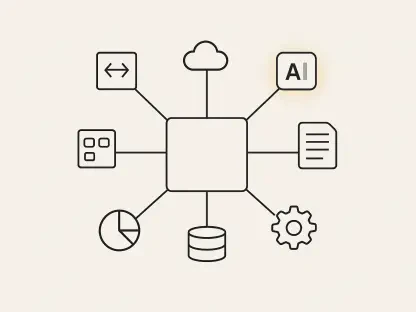
A robust chatbot architecture is built upon four distinct layers that separate concerns and ensure system maintainability over the long term. At the top sits the Client Layer, which serves as the visual interface through which users interact, typically manifesting as a web-based widget, a mobile UI component, or an integration within a third-party messaging platform. The primary responsibility of this layer is to capture user input and render the bot’s responses in a clean, readable format. By keeping the client-side logic minimal, developers can ensure that the interface remains lightweight and responsive, regardless of the complexity of the processing happening behind the scenes in the orchestration and data layers.
Beneath the surface, the Backend Orchestration Layer and the Language Processing Layer work in tandem to transform raw text into actionable intelligence. The orchestration layer manages session states, tracks user context, and routes requests to the appropriate internal APIs, acting as the brain of the operation. Meanwhile, the language processing layer uses advanced models to extract intents and entities from the user’s message. These layers are supported by the Data and Knowledge Sources, which include the databases, documentation, and records that provide the factual basis for the bot’s responses. This tiered structure allows for modular updates, meaning the language model can be swapped or the database can be migrated without necessitating a complete rewrite of the entire interaction system.
3. Precision in Integration Planning and Scope
Before a single line of code is written, engineering teams must establish strict boundaries regarding the bot’s authority and functional limitations. This planning phase involves defining exactly which questions the bot is authorized to answer and which actions it is permitted to perform on behalf of the user. For instance, a bot might be allowed to display a user’s account balance but restricted from authorizing large wire transfers without additional multi-factor authentication or human oversight. Establishing these guardrails early prevents the bot from attempting to handle out-of-scope requests that could lead to user frustration or security vulnerabilities, ensuring the system remains focused on its intended purpose.
Furthermore, a clear set of rules must be defined for the “handoff” process, where the conversation transitions from the bot to a human representative. Engineers need to identify specific triggers for this transition, such as repeated failed intent recognitions, expressions of high user frustration, or requests that fall outside the bot’s programmed capabilities. By designing a graceful fallback mechanism, the application maintains a high level of service quality even when the AI reaches its cognitive limits. This strategic planning ensures that the chatbot functions as a reliable extension of the team rather than an isolated tool, providing a safety net that protects the user experience during complex or sensitive interactions.
4. Executing the Implementation Workflow
The implementation process begins with identifying goals and mapping specific user intentions to concrete backend functions within the application. By starting with a narrow focus, developers can ensure that each supported intent is handled with a high degree of accuracy before expanding the bot’s repertoire. Once these goals are established, the focus shifts to configuring server-side processing, where logic is built to receive input, communicate with the language engine, and execute the corresponding internal services. This phase is critical for ensuring that the bot’s “understanding” is correctly translated into the technical actions required to fulfill a user’s request, bridging the gap between natural language and structured code.
As the backend matures, the development of the User Interface and the organization of conversation history become the primary priorities. The frontend component should be designed to handle messages asynchronously, allowing for a fluid conversation flow that doesn’t freeze the application while waiting for a response. Simultaneously, the system must manage session tracking and temporary storage to maintain context throughout a discussion. If a user asks a follow-up question, the bot needs to “remember” the previous exchange to provide a coherent answer. Implementing this context management requires a careful balance between utility and privacy, ensuring that session data is stored securely and deleted once the interaction is concluded to remain compliant with data protection standards.
5. Prioritizing Security and Data Privacy
Security must be woven into every layer of the chatbot integration to protect both the user and the integrity of the host application. All data transfers between the client, the orchestration layer, and any third-party AI services must be encrypted using Transport Layer Security (TLS) to prevent interception. Furthermore, strict authentication protocols are required for any interaction involving user-specific data, ensuring that the bot only accesses information that the current user is explicitly authorized to see. This prevents unauthorized data exposure and ensures that the chatbot does not become a backdoor for malicious actors seeking to bypass traditional security measures.
Beyond encryption and authentication, engineers must implement controlled logging and clear data deletion policies to manage the lifecycle of conversational data. While logging is essential for debugging and improving the bot’s performance, it must be handled with extreme care to avoid storing sensitive personally identifiable information (PII) longer than necessary. Automated scripts should be used to scrub sensitive details from logs and to purge old session data in accordance with corporate governance and international privacy laws. By treating conversational data with the same rigor as financial or medical records, organizations can build trust with their users and mitigate the legal risks associated with modern data processing.
6. Rigorous Quality Assurance and Testing
Testing an AI chatbot requires a departure from standard unit testing, as the non-deterministic nature of language models introduces a layer of unpredictability. Quality assurance teams must focus on the accuracy of intent recognition, ensuring that the bot correctly identifies what the user wants even when the phrasing is non-standard or includes slang. This involves running large datasets of varied phrases against the engine to calculate confidence scores and refine the training data. Additionally, testers must intentionally feed the bot confusing or incomplete messages to verify that it handles ambiguity gracefully, rather than providing hallucinated or irrelevant information to the end-user.
Verification of fallback responses and load testing are equally critical components of the QA phase. When the bot cannot identify an intent, it must trigger a helpful, pre-defined response that guides the user back to supported topics or offers human assistance. Meanwhile, load testing ensures that the system can maintain its responsiveness during periods of high traffic, such as during a product launch or a service outage. Engineers should simulate thousands of concurrent conversations to identify potential bottlenecks in the orchestration layer or latency issues within the language processing API. These rigorous tests ensure that the chatbot remains a functional asset under pressure, providing a stable and reliable interface for the entire user base.
7. Deployment and Strategic Monitoring
Once the chatbot is deployed, the focus shifts to continuous monitoring of key performance indicators to ensure long-term system health and user satisfaction. Response speed, or latency, is perhaps the most visible metric; if the bot takes too long to reply, users will likely abandon the interaction in favor of other channels. Engineers should also track the confidence levels of the language engine for every interaction, as a downward trend in confidence scores may indicate that the user base is shifting toward topics the bot is not yet equipped to handle. By monitoring these technical metrics, the team can proactively identify and resolve performance issues before they impact the broader user experience.
In addition to technical performance, monitoring should encompass user behavior patterns, specifically identifying the points where users stop interacting with the bot. High abandonment rates at a particular step in a workflow often signal a flaw in the bot’s logic or a confusing response that needs to be rewritten. System error rates must also be tracked to catch any failures in API connections or backend services that might interrupt the conversational flow. This data-driven approach to post-deployment oversight allows the engineering team to make informed decisions about where to allocate resources for future updates, ensuring that the chatbot evolves in alignment with actual user needs rather than speculative design goals.
8. Sustaining Success Through Ongoing Maintenance
The lifecycle of an integrated chatbot does not end at deployment; rather, it enters a phase of continuous refinement and data-driven updates. Maintenance involves regularly refreshing intent definitions based on real-world usage data to account for new ways users might describe their needs. As new features are added to the primary application, the chatbot’s underlying data sources must be updated to ensure it can answer questions about the latest capabilities. This synchronization between the core application and the chatbot interface is vital for maintaining the bot’s relevance and preventing it from providing outdated or incorrect information to inquisitive users.
Furthermore, engineers must actively fix responses that lead to high abandonment or frustration, treating the bot’s dialogue as a living component of the UI. This might involve shortening long-winded explanations, adding buttons for quicker navigation, or refining the tone of the responses to better match the brand’s voice. Regular audits of the knowledge base are also necessary to prune obsolete information and incorporate new insights gained from user feedback. By committing to an iterative maintenance schedule, organizations ensure that their AI integration remains a high-performing asset that consistently delivers value. The transition to advanced interaction models in the coming years will be defined by this ability to adapt and improve based on empirical evidence of user success.
9. Future Considerations for Scalable AI Integration
As the integration of AI chatbots matures, the technical landscape will increasingly favor systems that prioritize modularity and deep-link orchestration. Future-proofing an application involves ensuring that the chatbot can seamlessly hand off complex tasks to specialized microservices without requiring a full system overhaul. This requires a standard of interoperability where the conversation layer remains thin and the business logic is centralized. Organizations that mastered these architectural boundaries in early 2026 are now seeing the benefits of reduced technical debt and faster deployment cycles. The focus shifted from merely having a conversational interface to ensuring that every interaction results in a meaningful, data-backed outcome that advances the user’s journey.
Ultimately, the goal of integrating an AI chatbot into an application was to create a more intuitive way for humans to interact with complex machines. Successful teams realized that the most effective bots were those that acted as invisible bridges, making the underlying technology feel more responsive and helpful. By maintaining strict control over data privacy, security, and logic, engineers turned a potentially chaotic tool into a disciplined orchestration layer. Looking forward, the next steps for many developers will involve expanding these systems into multi-modal interfaces, where text, voice, and visual inputs are processed through the same unified backend. This evolution solidified the chatbot’s role as a primary interaction tier, setting the stage for more advanced, intent-driven software architectures in the years ahead.