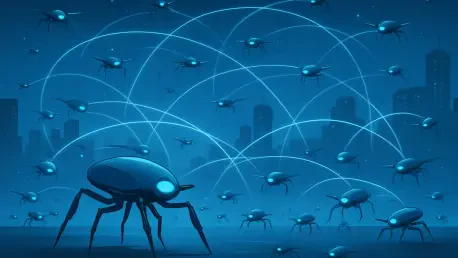

The quest to build truly intelligent and autonomous systems has led researchers to explore increasingly complex architectures, yet a fundamental challenge persists in coordinating large groups of agents effectively. While traditional Multi-Agent Systems (MAS) have shown promise, their reliance on centralized control often introduces critical vulnerabilities and scalability limits, hindering their application in the dynamic and unpredictable real world. A compelling alternative, however, is emerging from the elegant efficiency of the natural world. By emulating the decentralized, self-organizing principles observed in biological swarms—from ant colonies navigating complex terrains to birds executing flawless aerial maneuvers—Swarm Intelligence (SI) offers a transformative approach. This paradigm shift proposes a new generation of artificial intelligence systems that are inherently more robust, adaptable, and scalable, potentially overcoming the long-standing obstacles that have constrained their predecessors and unlocking new frontiers in automation and problem-solving.
The Old Guard vs. The New Wave
The Fragility of Centralized Control
Conventional multi-agent systems, though effective within highly structured and predictable environments, reveal significant weaknesses when confronted with the complexities of the real world. Their operational architecture is frequently built upon a central controller, a single entity responsible for orchestrating the actions of all agents, managing communication, and making high-level decisions. This top-down approach, while simplifying design in some respects, creates a cascade of vulnerabilities. The most glaring of these is the single point of failure; if the central controller is compromised or malfunctions, the entire system can be rendered inoperative. Furthermore, this model generates substantial communication overhead, as every agent must report back to the central hub and await instructions, leading to delays and network congestion, especially as the number of agents increases. This inherent limitation makes it exceedingly difficult to scale such systems effectively, presenting a formidable barrier to their deployment in large-scale applications where hundreds or thousands of agents must operate in concert.
The practical implications of these architectural flaws are profound, often representing the difference between a system that works in a lab and one that fails in the field. For instance, in a large-scale disaster response scenario, a centralized MAS coordinating a fleet of rescue drones would be dangerously fragile. The loss of the central command unit due to environmental hazards or network failure could paralyze the entire search operation at the most critical moment. Similarly, in dynamic logistics or traffic management, a centralized system would struggle to adapt in real time to unforeseen events like road closures or sudden surges in demand, as the bottleneck at the central processor would prevent rapid recalculation and redistribution of tasks across the agent network. These examples underscore the fundamental gap between the theoretical neatness of centralized control and its practical brittleness, motivating the urgent search for a more resilient and scalable design philosophy capable of handling the fluid and often chaotic nature of real-world challenges.
Nature’s Blueprint for Collective Intelligence
In stark contrast to the rigid, top-down structures of traditional systems, Swarm Intelligence offers a powerful solution inspired by nature’s masterfully coordinated collectives. In the wild, astonishingly complex and coherent group behaviors emerge without any form of central leadership or explicit instruction. Ants, for example, collectively discover the shortest path to a food source by following simple rules based on laying and sensing pheromone trails. A flock of birds can execute intricate and synchronized aerial maneuvers, with each bird adjusting its flight based only on the position and velocity of its immediate neighbors. The foundational principle behind these phenomena is emergence, where sophisticated global intelligence arises from simple, local interaction rules followed by individual agents. By harnessing this biologically inspired concept, it becomes possible to engineer artificial systems that are inherently decentralized, fault-tolerant, and capable of adapting to environmental feedback in real time, mirroring the resilience and efficiency observed in nature.
Despite its immense potential, the path to widespread adoption of Swarm Intelligence is not without its obstacles, and several unresolved challenges hinder its transition from a promising concept to a mainstream technology. The primary difficulty is the non-trivial task of designing effective local interaction rules that reliably produce a desired global behavior. The emergent nature of swarm systems makes their collective actions inherently difficult to predict and control, particularly in dynamic or uncertain environments where conditions can change unexpectedly. Furthermore, significant open research questions persist regarding the optimal balance between exploration (the search for new, potentially better solutions) and exploitation (the refinement of known, effective solutions). Ensuring that the system converges toward an optimal state without getting trapped in suboptimal patterns, all while maintaining overall stability, remains a critical area of investigation. Addressing these hurdles is essential to developing a structured framework for the systematic integration of SI techniques into MAS design, moving the field beyond ad-hoc implementations toward established best practices.
A Roadmap for Innovation
Charting the Course Objectives and Methods
To navigate the complexities of implementing Swarm Intelligence and unlock its full potential, a clear and methodologically sound research plan is indispensable. The initial objective is to undertake a comprehensive analysis of established SI algorithms, such as Ant Colony Optimization (ACO) and Particle Swarm Optimization (PSO). This foundational study will aim to deconstruct these algorithms to understand their core mechanics and determine how they can be specifically adapted from their typical optimization contexts to the dynamic, interactive environments of multi-agent systems. Following this theoretical groundwork, the subsequent objective is to design a novel, swarm-based MAS architecture. This architecture will be fundamentally built to support decentralized decision-making, emergent coordination, and self-organization among agents. The final step in this phase is the implementation of the adapted SI algorithms within this custom-designed framework or an existing simulation platform, effectively translating the theoretical models into a functional, testable system. This structured progression ensures a rigorous and systematic approach, moving beyond speculative ideas to establish a robust foundation for integrating SI into the next generation of intelligent systems.
The research methodology chosen to achieve these ambitious objectives is a mixed-methods approach, carefully blending theoretical rigor with hands-on, practical application. The process commences with the development of a conceptual framework that meticulously maps the core principles of Swarm Intelligence onto the essential components of a multi-agent system. This involves defining precise agent behaviors, interaction rules, and feedback mechanisms that will govern the swarm’s collective actions. Subsequently, relevant SI algorithms like ACO and PSO will be selected and specifically modified to function effectively in real-time, interactive scenarios, a significant departure from their traditional use in static optimization problems. A modular MAS architecture will then be implemented on a suitable simulation platform, which allows for the creation of dynamic scenarios. For instance, agents can be added or removed on the fly to rigorously test the system’s robustness and fault tolerance. This emphasis on controlled, repeatable experiments within a flexible simulation environment forms the core of the methodology, enabling a thorough and evidence-based investigation into the capabilities of swarm-based systems.
Proving the Paradigm Evaluation and Comparison
The heart of the research effort lies in a meticulous and comprehensive experimental evaluation designed to empirically validate the performance of the implemented swarm-based MAS. This evaluation will be conducted using a set of key performance indicators that capture the most critical aspects of a multi-agent system’s effectiveness. These metrics include scalability, which measures how well the system’s performance holds up as the number of agents is significantly increased; robustness, assessing the system’s resilience and ability to continue functioning effectively despite the failure of individual agents; adaptability, which quantifies the swarm’s capacity to respond and adjust its collective behavior in response to sudden changes in the environment or task requirements; and efficiency, gauging resource utilization, such as energy consumption or computational load, alongside the time taken to complete assigned tasks. By systematically measuring the system against these rigorous benchmarks across a variety of simulated scenarios, a clear and objective picture of its strengths and weaknesses will emerge.
To provide context and definitively demonstrate the advantages of the swarm approach, the research plan includes a direct comparative analysis. The performance data gathered from the SI-based system will be benchmarked against that of traditional, centrally controlled multi-agent systems operating under identical conditions and tasked with the same objectives. This head-to-head comparison is crucial for empirically validating the hypothesized benefits of decentralization, such as superior fault tolerance and scalability. The synthesis of these comparative results will not only highlight the strengths of the swarm paradigm but also shed light on its potential limitations and the specific conditions under which it excels. The findings will be used to identify remaining challenges, point toward promising avenues for future research, and ultimately contribute to a deeper, more nuanced understanding of how to engineer truly intelligent and resilient distributed systems, solidifying the case for Swarm Intelligence as a transformative force in the field.
From Concept to Consequence
Envisioning a Swarm-Powered Future
The anticipated outcomes of this research were poised to be multifaceted and highly significant, promising to yield a more profound and nuanced understanding of how Swarm Intelligence principles can be effectively integrated into MAS design to foster intelligent collective behavior. A key tangible outcome was the development of a flexible and scalable framework for swarm-based coordination. This framework was not merely theoretical; it was supported by a wealth of empirical data that demonstrated its superior performance in terms of robustness, adaptability, and efficiency when compared directly to conventional, centralized methods. Furthermore, the research provided invaluable insights into the inherent challenges and limitations of SI-based systems, offering practical guidance and identifying critical areas for future researchers and practitioners to explore. The findings made a substantial contribution to academic knowledge in distributed artificial intelligence and informed the practical application of these technologies across numerous domains.
The broad significance and wide-ranging applicability of this research underscored its transformative potential. The applications spanned multiple industries, promising to solve some of today’s most complex challenges. In autonomous robotics, the framework enabled the deployment of coordinated swarms for tasks like large-area exploration, search and rescue missions in disaster zones, and sophisticated environmental monitoring. For smart transportation, it laid the groundwork for decentralized traffic management systems where vehicles could communicate locally to optimize traffic flow, reduce congestion, and prevent accidents without relying on a central controller. In the realm of distributed sensor networks, the use of SI enhanced efficiency and fault tolerance for dynamic routing, data aggregation, and energy management. Finally, these principles were applied to solve complex logistical problems, such as dynamic fleet management, real-time scheduling, and adaptive resource allocation, showcasing the immense practical value of harnessing collective intelligence.
The Responsibility of Creation: Ethical Considerations
The development of increasingly autonomous systems, particularly those capable of emergent behavior like swarms, brought with it a set of profound ethical responsibilities that could not be overlooked. A critical part of the research initiative involved a careful and deliberate examination of complex issues such as system transparency, accountability for actions that arise from collective decisions, and the potential for unintended negative consequences. Because the global behavior of a swarm emerges from local interactions, it can be difficult to predict every outcome or assign responsibility when something goes wrong. Acknowledging these challenges was a crucial first step, leading to a proactive approach to ethical design and risk mitigation. This commitment ensured that the pursuit of technological advancement was balanced with a deep consideration for its societal impact and the safety of its real-world implementation.
To address these significant ethical concerns, the research methodology was designed with safety and responsibility at its core. The primary reliance on extensive simulations and controlled experiments served as a critical strategy to mitigate risks. Within these virtual environments, researchers could thoroughly test the limits of the system, introduce unexpected variables, and observe emergent behaviors without any real-world consequences. This process allowed for the identification and correction of potential failure modes and unintended actions long before any consideration of physical deployment. This methodical approach ensured that the exploration of this revolutionary technology proceeded in a cautious and responsible manner. By prioritizing risk assessment and ethical reflection throughout the development process, the research aimed not only to advance the frontier of intelligent systems but also to establish a blueprint for responsible innovation in the field of autonomous technology.