
The raw, earth-shattering power of an industrial blast is a spectacle of controlled force, yet achieving true control has always been the most critical challenge for mining and quarrying operations. For decades, the industry has balanced immense explosive energy with the need for meticulous planning, where the margin for error is measured in safety incidents and operational losses. This delicate equilibrium is now being redefined not by more powerful explosives, but by sophisticated digital intelligence.
The Persistent Challenges of Conventional Blasting
Traditionally, blast design has been a discipline blending scientific principles with empirical knowledge gained over years of fieldwork. However, this approach carries inherent risks and inefficiencies. Unpredictable ground vibrations can threaten nearby structures and communities, while uncontrolled flyrock poses a direct safety hazard. Moreover, suboptimal fragmentation leads to downstream processing delays and increased costs, turning a single miscalculation into a significant operational bottleneck. These legacy issues underscore the need for a more predictable, data-driven methodology.
The Digital Blueprint for Modern Blast Design
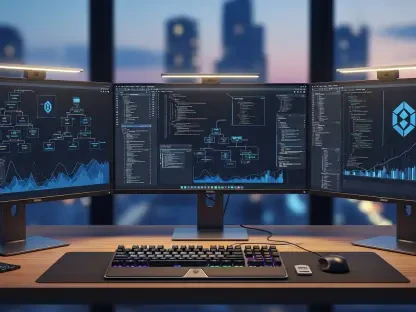
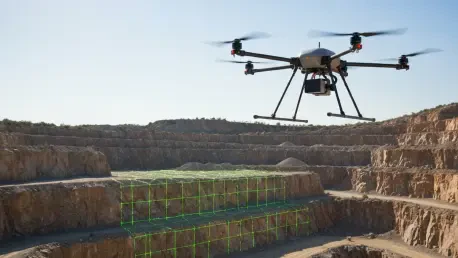
Modern blast-design software, such as EPC Groupe’s recently upgraded Expertir platform, directly addresses these long-standing problems by creating a digital twin of the blast site. By integrating highly accurate laser and photogrammetry models, engineers can visualize the terrain with unprecedented detail. This virtual environment serves as the canvas for generating optimal drilling patterns and customized explosive loading plans, ensuring energy is distributed effectively. Burden visualization tools allow operators to see the impact before detonation, while complex delay sequences can be modeled to actively cancel out seismic waves, dramatically mitigating vibration.
Forged in the Field Through User-Centric Development
The true value of such advanced tools lies in their practicality, a quality achieved through close collaboration between developers and end-users. The development philosophy, spearheaded by specialists like Dr. Ricardo Chavez and designer Mailys Padiolleau, centered on incorporating direct feedback from field engineers across global operations. This user-centric approach has shaped a tool that is not only powerful but also intuitive. By focusing on a logical workflow and a user-friendly interface, the software simplifies complex tasks, making precision planning accessible even in high-pressure environments.
A Step-by-Step Guide to the Digital Workflow
The transition to a digital-first approach streamlines the entire blasting process into a clear, repeatable framework. The first step involves data acquisition, where advanced scanning technology captures the physical environment to build the digital model. Next, in the design and simulation phase, engineers use the software to plan, test, and refine every parameter of the blast in a virtual setting, identifying potential issues before any drilling occurs. Finally, the system generates clear, data-driven instructions and loading plans, ensuring the design is executed with precision by the field crew.
The arrival of this technology marked a fundamental shift in how the industry approached blast operations. By replacing estimation with data-driven simulation, these digital tools provided engineers with the foresight needed to enhance safety and efficiency simultaneously. This evolution represented not just an upgrade in software but a redefinition of what was possible in controlled blasting, turning a volatile art into a precise science.