
Countless hours of meticulous user research culminate in beautifully crafted reports and personas, yet their ultimate fate is often to languish unread in a forgotten corner of a company’s digital infrastructure. This wealth of insight, representing the collective voice of the user base, is painstakingly gathered only to become a static artifact. While intended to guide decision-making, it frequently remains inaccessible at the very moments it is needed most. The consequence is a silent but significant gap between understanding the user and acting on that understanding. Every day, critical decisions regarding product features, marketing campaigns, and financial processes are made, shaping the user experience without direct input from the users themselves. This disconnect is not born from a lack of effort or data but from a fundamental flaw in how user intelligence is stored, accessed, and integrated into the fast-paced workflows of a modern organization. The challenge lies in transforming this dormant knowledge from a passive archive into an active, conversational partner in the decision-making process.
Is Your Most Valuable Research Gathering Digital Dust
The lifecycle of user research within many organizations follows a predictable yet inefficient pattern. Teams invest significant resources in conducting interviews, deploying surveys, and analyzing behavior, culminating in insightful reports and detailed personas. These documents are often presented with initial enthusiasm in kickoff meetings or quarterly reviews. However, once the presentation concludes, these valuable assets are typically uploaded to a shared drive or internal wiki, where their visibility and influence rapidly diminish. They become part of a vast digital library, theoretically available to all but practically consulted by few, their potential impact slowly eroding over time as new projects and priorities take center stage. This cycle of creation and neglect represents a substantial loss of institutional knowledge and a missed opportunity to build truly user-centered products and services.
This archival oblivion has direct consequences for business outcomes. In departments far removed from the UX team, crucial choices are frequently made in an insight vacuum. A product manager, facing a tight deadline, might prioritize a new feature based on a competitor’s actions or an internal assumption rather than validated user needs. Similarly, a marketing team may craft messaging that fails to resonate because it overlooks the nuanced motivations and pain points detailed in persona documents they have never seen. Even financial teams designing invoicing systems can inadvertently create user friction by making decisions based on technical efficiency alone. In each case, the organization possesses the necessary information to make a better, more user-aligned choice, but the barriers to accessing and applying it are simply too high for those outside the immediate research function.
The core of the problem is not a scarcity of information but a severe bottleneck in its accessibility and interpretation. The knowledge exists, but it is locked away in formats that are ill-suited for the rapid, iterative nature of contemporary business operations. Expecting a stakeholder to pause their work, navigate a complex repository, locate the relevant study from months or years prior, and then translate academic findings into an actionable answer for a specific, immediate question is impractical. This friction ensures that user research remains a specialized resource used primarily by the team that created it, rather than a democratized asset that informs and elevates the work of the entire organization. The challenge, therefore, is to dismantle this bottleneck and create a system where user insight is as easy to query as asking a colleague a question.
Why Static Personas Fail in a Dynamic Organization
Traditional personas, often presented as polished, single-page documents, are fundamentally incompatible with the speed and fluidity of agile development and decision-making. These artifacts are designed to be consumed in a linear, reflective manner, providing a snapshot of a user archetype at a specific point in time. In contrast, modern organizational workflows are characterized by constant iteration, rapid pivots, and a need for immediate information. A team in the middle of a two-week sprint does not have the operational capacity to halt progress and engage in a deep dive into static documentation. The persona-as-a-poster model, while visually appealing, functions more as a decorative reminder of user-centricity than as a functional tool integrated into daily tasks.
The impracticality of this model becomes clear when observing the day-to-day realities of cross-functional teams. A software engineer weighing different implementation options or a support specialist writing a new help article cannot be reasonably expected to locate a research folder, open multiple documents, and synthesize disparate data points to guide their specific micro-decision. This process is time-consuming and requires a degree of research literacy that may not be present outside of the UX department. The effort involved creates a significant barrier to entry, meaning that user insights are only consulted for major strategic initiatives, while the countless smaller decisions that cumulatively define the user experience are made without their guidance.
This inherent friction has the unfortunate effect of siloing critical user knowledge, confining it almost exclusively within the research and design teams. These teams become the de facto gatekeepers of user understanding, a role that is both unsustainable and counterproductive to fostering a truly user-centric culture. When insights are only shared through formal presentations or on-demand consultations, their reach is severely limited. The vast potential of the organization’s collective user knowledge remains untapped, preventing it from becoming a shared asset that empowers every employee to make more informed, empathetic, and effective decisions in their respective roles.
The Solution Transforming Personas from Static Artifacts to Interactive Advisors
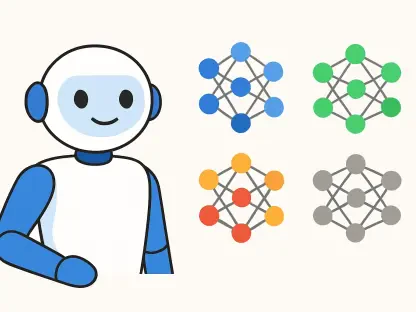
The necessary evolution is a paradigm shift away from static artifacts and toward a dynamic, interactive system where user knowledge is conversational. This new approach reimagines personas not as documents to be read, but as advisors to be consulted. It enables any stakeholder, from a marketer to an engineer, to pose a direct question to the organization’s entire user base and receive a consolidated, multi-persona response in real-time. For instance, a product manager could ask, “How would our users react to a subscription price increase?” and receive a synthesized answer detailing the likely perspectives of each key persona, highlighting points of consensus and conflict, and offering actionable recommendations based on the underlying research data.
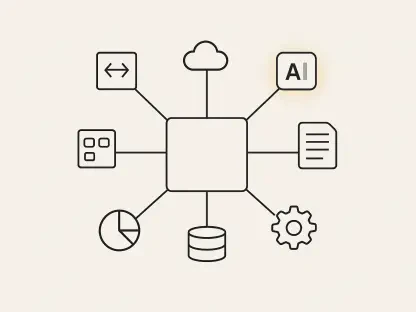
The initial and most critical step in building this system is the creation of a centralized research repository, which serves as a single source of truth for the AI. This process involves unifying the scattered fragments of user knowledge from across the organization into one coherent location. Disparate data sources, including interview transcripts stored in cloud documents, quantitative results from survey platforms, unstructured feedback from support tickets, user behavior data from analytics tools, and public sentiment from social media mentions, are all consolidated. For organizations with limited primary research, AI-powered deep research tools can be leveraged to scan public forums, competitor reviews, and industry reports to establish a robust foundational understanding of the user landscape.
With the repository in place, the next stage is to engineer personas specifically for an AI, not for a printed poster. This fundamentally changes their construction. Human-readable personas must be concise and scannable, forcing researchers to omit nuance and complexity. In contrast, an AI can process documents of immense detail, allowing for the inclusion of contradictory observations, lengthy behavioral narratives, and deep contextual information that would be overwhelming for a human stakeholder. This enables the creation of far more sophisticated and realistic user profiles. Furthermore, this approach allows for the development of “Lenses”—tailored perspectives within a single persona for different business functions. For example, a single persona could have a marketing lens focused on channel preferences and messaging, a product lens centered on feature priorities and usability patterns, and a support lens detailing common frustrations, all of which the AI can draw upon depending on the nature of the stakeholder’s query.
The Organizational Shift From Gatekeepers to Curators of User Knowledge
Adopting an interactive persona system fundamentally redefines the role of the user experience team within an organization. Their function evolves from being the sole source and gatekeeper of user insights to becoming the architects and curators of a democratized knowledge platform. Instead of spending the majority of their time conducting studies and then manually translating the findings into reports and presentations for different audiences, their focus shifts toward maintaining the integrity of the research repository, refining the AI’s interpretive models, and ensuring the system provides accurate and helpful responses. They become enablers of insight rather than just producers of it.
This change also transforms the primary mode of research communication from a “push” to a “pull” model. The traditional approach involves researchers actively pushing their findings out to the organization through scheduled presentations, email newsletters, and static reports, hoping the information finds the right audience at the right time. The new model empowers stakeholders to pull the exact insights they need, precisely when they need them. A marketer developing a new campaign can query the system on their own schedule, and a developer can seek clarification on a user flow issue without having to wait for a formal meeting. This self-service capability makes user knowledge an on-demand utility, seamlessly integrated into existing workflows.
The cumulative effect of this shift is profound: user-centric thinking ceases to be the exclusive domain of one department and becomes a distributed, self-perpetuating capability across the entire organization. When every team member has direct, conversational access to user perspectives, empathy and informed decision-making become embedded in the company culture. This makes the work of UX researchers more scalable and impactful than ever before. By building and maintaining the system that gives users a voice, they amplify their influence far beyond what could be achieved through traditional, manual methods of dissemination, fostering a more responsive and intelligent enterprise.
Your Practical Playbook for Activating User Voices
Organizations can begin implementing this approach through several distinct pathways, adaptable to teams of any size or resource level. The most straightforward method involves leveraging the built-in workspace or project features now common in major AI platforms like ChatGPT, Claude, and Gemini. A team can create a dedicated project, upload its most critical research documents and persona profiles, and then provide the AI with a clear, instructional prompt. This prompt directs the AI to act as a user insight consultant, instructing it to consult all provided personas when answering questions and to structure its responses to include individual persona viewpoints, a summary of agreements and disagreements, and a set of actionable recommendations.
For a more robust and scalable solution, teams can adopt a sophisticated approach by building an interconnected research repository in a platform like Notion. Such tools allow for the creation of extensive databases for different research types—such as interview notes, survey data, and usability test findings—which can be linked together. The platform’s integrated AI capabilities can then query across this entire interconnected ecosystem of knowledge. This method provides the AI with significantly more context, enabling it to draw on a wider range of data points to generate richer, more nuanced, and highly accurate responses to stakeholder inquiries, effectively creating a living, breathing knowledge base for the entire organization.
It is critical, however, to establish realistic boundaries and understand what this technology does not replace. AI-powered personas are a tool to activate and democratize existing research, not a substitute for direct interaction with real human beings. Primary research remains indispensable for several key scenarios: exploring entirely new product concepts that fall outside the scope of existing data, validating the usability of specific designs and prototypes, refreshing a repository that has become stale, and, most importantly, building the direct, visceral empathy that only comes from hearing from users in their own words. To that end, a well-designed system should be configured to recognize its own limitations. The AI can be programmed to identify questions that its underlying data cannot confidently answer and respond by recommending that new primary research, such as a user interview or a targeted survey, is necessary to fill the knowledge gap.
The journey from static reports to interactive advisors marked a significant evolution in how organizations could leverage user data. The initial challenge lay in the vast quantities of valuable research that remained dormant and inaccessible within digital archives. It was recognized that traditional, document-based personas failed to integrate into the dynamic, fast-paced workflows of modern teams, thereby siloing crucial knowledge within specialized departments. The discussion explored the transition toward a new paradigm where AI could transform these static artifacts into interactive, conversational advisors, accessible to anyone in the organization. This required both the consolidation of disparate research into a centralized repository and the engineering of detailed, AI-first personas. This strategic shift ultimately redefined the role of UX teams, moving them from gatekeepers to curators of a self-service knowledge system. By giving users a persistent, interactive voice at the table, organizations can now embed customer-centricity into their operational core, ensuring that every decision is better informed by the people it aims to serve.