
The strategic integration of Artificial Intelligence within microservice architectures is fundamentally redefining the application of the Scaled Agile Framework (SAFe 5.0), pushing large enterprises beyond incremental improvements toward a transformative paradigm shift in value creation. This convergence is not merely a technological enhancement but a strategic imperative, evolving organizations from manual, often cumbersome, decision-making processes to a state of data-informed, AI-driven operations. By embedding intelligent, autonomous capabilities directly into the framework’s core, businesses are unlocking unprecedented levels of scalability and agility. This allows for the creation of self-optimizing systems that can anticipate market needs and adapt with a speed and precision previously unattainable, securing a decisive competitive advantage in an increasingly complex digital landscape where efficiency and responsiveness are paramount.
The New Strategic Partner in Portfolio Management
AI is rapidly emerging as an indispensable catalyst for transforming Lean Portfolio Management (LPM) from a potential organizational bottleneck into a dynamic, forward-looking strategic function. The integration of AI-driven microservices enables the automation of complex and traditionally time-consuming activities, such as detailed financial forecasting, resource allocation modeling, and strategic risk analysis. This approach directly counters the prevalent concern that incorporating AI will only add another layer of complexity to already intricate processes. Instead, these intelligent systems are engineered to simplify decision-making by systematically sifting through vast and disparate datasets, filtering out irrelevant noise to identify previously obscured value streams and present clear, actionable insights to leadership. This strategic delegation of analytical heavy lifting allows executive teams to shift their primary focus away from administrative overhead and toward high-impact strategic initiatives that drive long-term growth and innovation.
This evolving relationship positions AI as a “Lean Portfolio Ally,” fundamentally sharpening an organization’s decision analytics and optimizing the performance of its value streams. By leveraging intelligent microservices, portfolio-level decisions become grounded in real-time data and predictive models rather than historical trends and intuition alone. This data-informed approach ensures that an enterprise’s strategic choices are not only made more quickly but are also more accurately aligned with current market dynamics and emerging opportunities. Such a strategic partnership fosters a culture of adaptability, enabling the entire organization to pivot with greater confidence and precision in response to unforeseen shifts. The result is a more resilient and agile portfolio capable of consistently delivering value while navigating the inherent uncertainties of the modern business environment, ensuring that localized agility contributes directly to the enterprise’s broader objectives.
Empowering Delivery with Decentralized Intelligence
A pivotal architectural evolution in scaled agile environments is the deliberate shift from monolithic, centralized AI systems to decentralized intelligence models embedded directly within the operational core of Agile Release Trains (ARTs). This paradigm effectively grants each ART a significant degree of autonomy, transforming it into a self-optimizing unit capable of independent, data-driven decision-making. By distributing AI capabilities across the organization, enterprises successfully dismantle the single chokepoint often associated with top-down, centralized command structures. This empowerment enables teams on the ground to analyze their specific context, adapt their workflows in real-time, and respond instantly to new information without waiting for hierarchical approval. This localized intelligence is the key to unlocking a higher order of agility, where teams can rapidly iterate and innovate based on immediate feedback and performance metrics, driving efficiency from the bottom up.
The profound impact of this intelligent decentralization extends throughout the entire delivery pipeline, fundamentally transforming conventional DevOps practices and culture. The augmentation of DevOps with AI introduces powerful predictive capabilities that can proactively identify potential deployment risks long before they manifest as critical failures. Furthermore, AI automates highly sophisticated testing scenarios that mimic complex user behaviors, ensuring greater product quality and robustness. It also establishes intelligent feedback loops that provide development teams with richer, more contextual, and actionable insights than traditional monitoring tools ever could. This evolution reshapes the software development lifecycle from a reactive, problem-solving process to a proactive, resilient, and continuously improving system. The entire delivery pipeline becomes more efficient and adaptive, capable of delivering higher-quality software faster and more reliably while navigating the complexities of modern development environments.
Forging Ahead Through Integration and Innovation
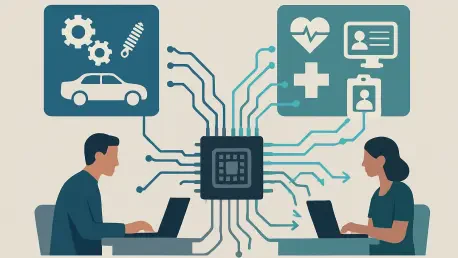
One of the most compelling aspects of this technological fusion has been the remarkable transferability of AI models across industries that, on the surface, appear entirely disconnected. A prime example was seen when a sophisticated predictive maintenance model, originally engineered to anticipate vehicle component failures in the automotive sector, was successfully repurposed for a healthcare context. In its new application, the model’s core logic for predicting system stress was adapted to forecast patient needs, optimize resource allocation in hospitals, and personalize treatment plans, ultimately leading to improved health outcomes. This successful cross-pollination of ideas underscored a powerful truth: the fundamental AI patterns of prediction, optimization, and personalization are universally applicable. This discovery opened up new avenues for inter-industry collaboration and demonstrated how solutions developed in one domain could spark transformative innovation in another.
Of course, this journey of integration was not without its significant challenges. Enterprises frequently contended with the inherent complexities of distributed microservices architectures and often lacked mature methodologies for embedding AI seamlessly into their existing frameworks. The initial transition required overcoming considerable hurdles related to maintaining data consistency, ensuring system reliability, and managing a more intricate technological landscape. The solution, however, emerged from the technology itself. By leveraging AI to solve the very problems it introduced, organizations implemented intelligent monitoring systems, adaptive resource allocation protocols, and predictive system maintenance. This strategic approach required a concerted investment in specialized integration tools and robust, continuous training for Agile professionals. By methodically bridging these knowledge and implementation gaps, organizations successfully navigated the transformation, embedding intelligence into their very fabric to thrive in a perpetually evolving digital world.