
The silent hum of high-performance server farms in lower Manhattan has long signaled a profound disadvantage for the individual investor sitting at a kitchen table in the suburbs. While these institutional titans deploy billions in capital and proprietary silicon to shave microseconds off trade executions, the typical retail participant has historically been forced to navigate the stormy waters of global finance with little more than a compass and a prayer. This disparity is not merely a matter of bankroll; it is a fundamental gap in data processing velocity and analytical depth that has turned the modern market into a playground for the elite. However, the current technological landscape is undergoing a tectonic shift, as sophisticated fintech architectures begin to offer the average person the same level of algorithmic precision once reserved for the world’s most exclusive hedge funds.
The democratization of these advanced tools represents more than just a convenience; it is a necessary evolution for survival in a market where human intuition is increasingly outmatched by machine logic. For decades, the “smart money” has relied on high-frequency trading and complex quantitative models to exploit micro-movements that are invisible to the naked eye. The arrival of integrated AI trading systems means that the barrier to entry is no longer a doctorate in mathematics or a ten-million-dollar server budget. By distilling the complexities of technical analysis and macroeconomic sentiment into a streamlined, automated experience, new platforms are effectively dismantling the “Great Wall” between Main Street and Wall Street, allowing for a truly globalized and equitable financial ecosystem.
The Great Wall Between Main Street and Wall Street
The divide between institutional powerhouses and everyday retail investors has never been purely about the amount of money in the pot; it is about the crippling disparity in information processing speed. While high-frequency trading firms utilize massive server clusters and proprietary algorithms to exploit market inefficiencies in milliseconds, individual traders are often left staring at lagging charts with tools that haven’t fundamentally changed in decades. This technological chasm has historically relegated the “retail” crowd to the sidelines of the most lucrative market opportunities, forcing them to take on higher risks for lower rewards. The traditional landscape was built to favor those with the fastest pipes and the deepest pockets, creating a tiered system where the majority are perpetually a step behind the trend.
Moreover, the complexity of modern financial instruments has outpaced the cognitive capacity of even the most dedicated part-time enthusiast. Global markets are now influenced by an interconnected web of geopolitical events, social media sentiment, and algorithmic triggers that operate around the clock. For a human to synthesize this volume of data manually is an impossible task, leading to a state of permanent “information overload.” This environment has created a reality where retail traders are not just competing against other people, but against cold, calculated machines that never sleep and never hesitate. The introduction of institutional-grade automation for the public is the first real attempt to level this uneven playing field, offering a bridge across a divide that many thought was permanent.
Why Traditional Trading Tools Fail the Modern Investor
The contemporary financial landscape has shifted decisively from a human-centric environment to one dominated by algorithmic execution and rapid-fire data shifts. For the average individual, the obstacles to entry are no longer just financial, but intellectual and temporal in nature. Mastering the intricacies of technical analysis, interpreting shifting market sentiment, and tracking macroeconomic trends requires a level of dedicated study that most professionals simply cannot afford alongside their primary careers. When a trader relies on static indicators like moving averages or basic charts, they are essentially looking in the rearview mirror while trying to drive at two hundred miles per hour. This “expertise barrier” ensures that by the time a retail trader identifies a pattern, the institutional algorithms have already exhausted the profit potential.
Beyond the intellectual requirements, the physical limitations of the human body present a significant hurdle in a market that never truly closes. Markets operate 24/7 across various time zones, yet humans require rest, creating a “time constraint” that leads to missed opportunities and increased vulnerability. Missing a pivotal 15-minute window during an overnight session in Tokyo or London can be the difference between a profitable week and a significant capital loss. Furthermore, the inherent “emotional bias” of the human psyche remains the most persistent enemy of the retail investor. Fear and greed often lead individuals to exit winning positions too early or hold onto losing trades far too long in the hopes of a recovery—irrational mistakes that emotionless, code-based systems simply do not commit.
Hybrid Signal Fusion: A Three-Tiered Intelligence Engine
The breakthrough of this modern system lies in its sophisticated “Hybrid Signal Fusion” architecture, a design that moves beyond the limitations of single-source data. Rather than relying on a solitary indicator that might provide a “false positive,” the system synthesizes three distinct layers of intelligence to validate every market move before committing capital. This multi-layered approach ensures that the strategy is not just reacting to price movement, but is understanding the underlying momentum and context of the trade. By combining technical, quantitative, and qualitative data, the engine creates a comprehensive picture of market health that was previously only accessible to top-tier quantitative desks.
Technical Foundation via RSI
At its base, the system utilizes the Relative Strength Index (RSI) to monitor overbought and oversold conditions with extreme granularity. By analyzing these conditions across 1-minute, 5-minute, and 15-minute intervals simultaneously, the platform establishes a baseline of “momentum” data. This multi-timeframe perspective is crucial for identifying potential entry points that are supported by both short-term volatility and medium-term trends. Instead of a single snapshot, the system sees a moving, three-dimensional view of how an asset is being valued by the broader market, allowing it to filter out the noise of momentary price spikes.
Quantitative Forecasting with LSTM Neural Networks
To move beyond lagging indicators that only describe what has already happened, the system incorporates a custom TensorFlow-based Long Short-Term Memory (LSTM) network. This neural architecture is specifically designed for time-series forecasting, analyzing deep historical price windows to identify non-linear patterns that a human eye would likely miss. By calculating trend vectors and volatility clusters, this layer generates a quantitative confidence score. It essentially predicts where the price is headed based on the structural DNA of past market movements, providing a forward-looking perspective that complements the immediate data of the technical layer.
Qualitative Reasoning through Large Language Models
In a significant departure from traditional bot-driven systems, Large Language Models (LLMs) now act as the “expert analysts” of the operation. These models interpret market sentiment by processing vast amounts of textual data and provide a qualitative “veto” power over the entire process. If the technical indicators suggest a “buy” signal, but the LLM detects a high-impact economic news event or a sudden shift in central bank rhetoric that could cause erratic volatility, the system can opt to stand down. This adds a layer of “common sense” to the algorithm, ensuring that the system doesn’t blindly follow technical patterns into a fundamental trap.
Pro-Grade Architecture for Global Scalability
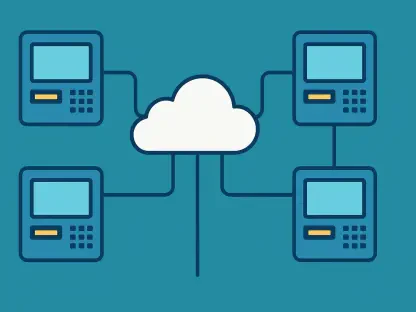
To ensure both security and execution speed at a global scale, the system is constructed on a sophisticated Oracle Database backend. This infrastructure is not merely a storage solution; it serves as the central nervous system of the entire analytical process. By utilizing a multi-tenant security model, the platform ensures that every user operates within an isolated data schema. This design keeps personal trading data and account details private and secure, meeting stringent global regulatory standards while allowing a centralized AI engine to serve thousands of participants without cross-contamination or performance lag.
The efficiency of this setup is further enhanced by database-centric analytics, where complex calculations like RSI triggers are run directly within the database layer. This architectural choice eliminates the latency caused by moving massive amounts of data between separate applications, a critical factor when dealing with fast-moving assets. Working in tandem with this backend is a dedicated Java execution service that polls the AI signal tables in real-time. Once the hybrid fusion engine reaches a high-confidence consensus, this module communicates with broker APIs to execute trades in less than sixty seconds. This ensures that the price seen by the AI is as close as possible to the price actually captured in the market.
Practical Strategies for Navigating the New Trading Reality
Transitioning from manual, chart-based trading to an AI-driven approach requires a fundamental shift in the user’s strategic mindset. The traditional role of the trader is transformed from one of “active execution” to one of “portfolio oversight.” In this new framework, the goal is no longer to hunt for individual trade setups, but to manage the parameters of an autonomous system that can do the hunting more effectively. This allows the investor to step back from the screen and focus on long-term capital allocation, relying on the system’s ability to maintain discipline and consistency in the face of market turbulence.
Users are encouraged to prioritize consensus over single signals, looking for platforms that require multiple layers of validation to reduce the risk of “fake-outs.” Furthermore, the use of explainable AI is a vital component of this transition; by utilizing LLMs that provide trade reasoning in plain English, investors can treat the platform as an educational resource. Understanding the why behind a trade helps build the confidence necessary to adopt a “set-and-forget” mindset. Rather than micro-managing every individual outcome, the modern investor evaluates performance through the lens of long-term metrics, such as the system’s 92% signal accuracy, ensuring that the technology works toward sustainable wealth generation rather than short-term gambles.
The implementation of these AI-driven systems effectively redefined the relationship between the individual and the global financial markets. By integrating technical, quantitative, and qualitative data into a single, cohesive engine, the platform removed the emotional and temporal barriers that previously hindered retail performance. The use of robust Oracle-based architecture ensured that security and speed were no longer the exclusive domain of institutional firms, providing a stable foundation for global scalability. These advancements suggested a future where financial success depended less on physical proximity to a trading floor and more on the intelligent application of hybrid intelligence. Investors who embraced this shift found themselves better equipped to handle the complexities of a 24/7 market environment. Ultimately, the transition toward automated, consensus-based trading provided a replicable blueprint for a more inclusive and sophisticated financial ecosystem.