
As a specialist in enterprise SaaS technology and a thought leader in software architecture, Vijay Raina has spent his career in the trenches, building the secure, scalable systems that power modern web applications. We sat down with him to discuss a foundational but often underestimated aspect of backend security: domain ownership verification. Drawing from his recent experience implementing this very feature for a screenshot API, he provides a masterclass in navigating the technical and user-experience challenges involved.
Our conversation delves into the critical trade-offs between different verification methods, from the robust security of DNS records to the immediate feedback of file-based approaches. Vijay offers a blueprint for engineering a resilient system capable of weathering common network and parsing failures. We also explore the ongoing operational security required to manage domain ownership long-term, touching on token security, rate limiting, and strategic re-verification. Finally, we discuss how to architect a data model for performance and how to design a user interface that transforms a potentially frustrating technical process into a clear and trustworthy experience.
DNS TXT records are highly secure but can have significant propagation delays. How do you weigh this trade-off against the immediacy of meta tag or file-based methods? Please describe a scenario where you would insist on using only DNS verification for a service.
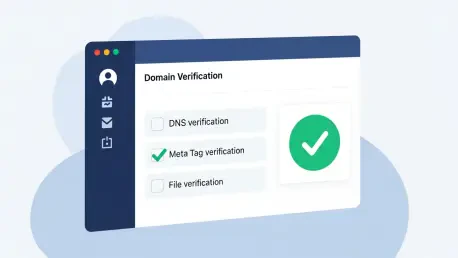
That’s the central tension in this whole process, isn’t it? The balance between airtight security and a smooth user experience. The 48-hour worst-case scenario for DNS propagation can feel like an eternity to a developer eager to get a feature working. In many cases, like the OG image generator I recently built, offering all three methods and accepting the first one that succeeds is the right call for developer convenience. It gets them up and running in minutes. However, I would absolutely insist on DNS-only verification for any service where the stakes are critically high. Imagine a service that sends authenticated emails on behalf of a domain or manages payment infrastructure. In that context, the risk of a compromised web server leading to a successful meta-tag or file-based verification is unacceptable. The delay of DNS propagation is a small, manageable price to pay for the assurance that only someone with administrative access to the domain’s core configuration could grant that level of trust.
Developers often encounter unexpected issues like fragile meta tag parsing or CDNs blocking .well-known paths. Can you walk me through the key steps you would take to build a resilient verification system that gracefully handles these common parsing and network-level failures?
Oh, absolutely. The real world is always messier than a clean specification. My first rule for resilience is to never rely on a single method. The system should be designed to try all three verification types in a sequence and accept the first one that passes. This immediately provides fallback options. For meta tag parsing specifically, you have to remember that a browser’s parser is incredibly forgiving, but your server-side code won’t be. A simple regex will break. You must anticipate variations in attribute order, different whitespace patterns, and the use of single versus double quotes. Building a more robust parser that accounts for these realities is step one. For the .well-known path, you have to expect that some CDNs or security tools will block it. The key here isn’t just a technical fix but also clear documentation. Providing users with guides and workarounds for common platforms can prevent a lot of frustration and support tickets. The final, and perhaps most critical, step is logging. When a verification succeeds, you must store which method was used. That single piece of data is invaluable for debugging when a user inevitably says, “It’s not working!”
Beyond the initial check, what are the most critical operational security practices for managing domain ownership long-term? Please elaborate on your approach to token entropy, rate limiting, and the strategic choice between automatic re-verification and logging verification age for manual review.
Initial verification is just the beginning; you have to maintain that chain of trust. First, token entropy is non-negotiable. Your verification tokens must be generated using a cryptographically secure random number generator. They need to be long and random enough to make a brute-force attack completely impractical. Second, you must protect your verification endpoints with aggressive rate limiting. For the system I built, we settled on a limit of 10-20 attempts per minute per organization. This is lenient enough to allow for legitimate user error during setup but strict enough to shut down any automated brute-force attempts. Finally, there’s the question of re-verification. Domains change hands, and a check from two years ago isn’t a guarantee of current ownership. I’m personally wary of automatic re-verification because an unexpected failure—say, due to a DNS provider issue—could suddenly break a user’s production integration. That’s a terrible experience. A much safer approach is to log the age of the last successful verification. This allows you to flag domains that haven’t been checked in a long time for a manual review or a gentle user-facing prompt to re-verify.
When designing a verification system for a high-traffic service, how would you architect the data model to efficiently handle both root domains and wildcard subdomains? Also, describe the caching strategy you would implement to protect performance on public, verification-gated endpoints.
Performance is paramount, especially when you have a public endpoint that social media crawlers or other services will be hitting constantly. For the data model, you need to think about how you’ll query it. We found that storing a simple boolean wildcard flag on the verified domain record works beautifully. When a request comes in for blog.example.com, the logic is straightforward: first, you check for an exact match for blog.example.com. If that fails, you then check for a record for the root domain, example.com, where the wildcard flag is set to true. This keeps the query logic clean and fast. On the caching side, once a domain’s verification status is confirmed, that result needs to be cached aggressively. For a public endpoint generating images, you absolutely cannot afford to run a DNS query or fetch an HTML page on every single request. Caching that “verified” status in a fast in-memory store like Redis, with a reasonable TTL, is essential. This ensures that the expensive verification logic runs only once, and subsequent hits are served almost instantaneously.
Given that technical issues like DNS propagation delays can cause user frustration, what specific feedback should a UI provide during the verification process? How do you design an experience that manages expectations, builds trust, and helps users debug a failed verification attempt themselves?
This is where engineering meets user empathy. The UI is your first line of defense against support tickets. When a user initiates a DNS-based verification, the most important thing you can do is manage their expectations. Don’t just show a generic “pending” state. The UI should explicitly say something like, “We’re looking for your DNS record. This can sometimes take a few hours to appear, depending on your provider.” This simple message turns impatient waiting into a known, expected part of the process. If a verification fails, the feedback needs to be actionable. Instead of a vague “Verification Failed,” show them exactly what your system was looking for and what it found (or didn’t find). For a meta tag, you might say, “We fetched your homepage but couldn’t find the required meta tag in the section.” For a file, “We received a 404 Not Found error when trying to access the specified URL.” Showing which method succeeded and the timestamp of the last verification also builds immense trust and gives the user a clear picture of their status.
Do you have any advice for our readers?
My advice is to treat domain verification not just as a security checkbox but as a core part of your user’s onboarding experience. The complexity involved—DNS, file servers, HTML—is a huge opportunity to demonstrate that you understand and respect a developer’s time. Invest in clear UI copy that explains the why behind each method. Provide copy-pasteable snippets for records and files to eliminate typos. And most importantly, when things go wrong, give transparent, actionable feedback. A well-designed verification flow does more than just secure your platform; it tells your users that you’ve thought through the details and are building a service they can trust.