
Listen to the Article
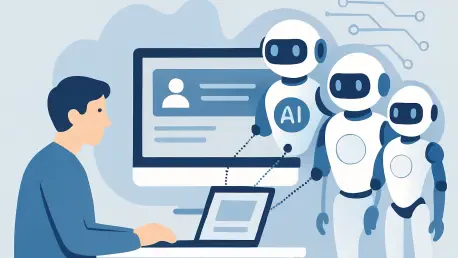
Software interfaces have always evolved around the people using them. Graphical interfaces were designed for individuals navigating computers visually. APIs enabled developers to integrate systems programmatically. The next interface shift is happening now: software designed for AI agents as the primary users.
Unlike humans, agents do not click buttons or browse dashboards. They interpret instructions, evaluate options, and trigger actions across multiple systems automatically. For this to work reliably, agents need consistent ways to discover capabilities, call tools, and coordinate with other software.
Today’s ecosystem is still fragmented. Many agent implementations rely on custom wrappers, ad-hoc integrations, or tightly coupled orchestration frameworks. These approaches work for prototypes, but they do not scale well across organizations or ecosystems.
What the emerging agent ecosystem needs is lightweight infrastructure for interoperability. Two initiatives illustrate how this layer may develop: Model Context Protocol (MCP) and Invoke Network. Each addresses a different architectural challenge in making agents practical beyond demos.
Why AI Agents Need Infrastructure
Agent systems behave differently from traditional applications. They make decisions dynamically, choose tools at runtime, and may interact with several services in a single workflow.
Without a predictable interface layer, three common problems emerge:
Integration frictionEach tool requires custom adapters or prompts to function with different models.
Operational riskUnstructured tool calls can introduce inconsistent parameters, failed executions, or unpredictable behavior.
Limited scalabilityAgent systems that rely on hand-built integrations become difficult to extend as new capabilities are added.
A stable infrastructure layer helps solve these problems by providing:
predictable contracts between agents and services
consistent execution patterns for tool calls
mechanisms for discovery and coordination
The Agent-to-Agent Layer
Some agent systems are designed as networks of specialized agents working together. One agent may plan tasks, another retrieves information, and another executes external operations.
For these systems to collaborate effectively, they need a shared communication model. This is where Model Context Protocol (MCP) becomes useful.
MCP focuses on how agents describe their capabilities and communicate with one another. Instead of embedding hard-coded integrations, agents expose structured interfaces that other agents can understand.
From an architectural perspective, MCP acts as a coordination protocol rather than an execution framework.
How MCP supports agent collaboration
An MCP-enabled agent typically publishes:
a list of callable functions
parameter definitions
expected response formats
Other agents can inspect these capabilities and invoke them when needed.
A simplified example might look like this:
WeatherAgent capability: json { “functions”: [ { “name”: “get_weather”, “description”: “Returns the current weather in a given city.”, “parameters”: { “type”: “object”, “properties”: { “city”: { “type”: “string”, “description”: “The city to get weather for.” } }, “required”: [“city”] } } ] } |
TripPlannerAgent call: json { “call”: { “function”: “get_weather”, “arguments”: { “city”: “San Francisco” } } } |
WeatherAgent response: json { “response”: { “result”: { “temperature”: “70°F”, “condition”: “Sunny” }, “explanation”: “It is currently sunny and about 70°F in San Francisco.” } } |
The point is not the weather. It is the contract. One agent can reliably use another without bespoke glue.
Developer experience advantages
For developers building multi-agent systems, MCP offers several benefits:
clear schemas reduce prompt engineering complexity
capabilities become reusable components
planners can dynamically choose the most relevant agent
Instead of writing custom glue code between agents, developers can focus on defining capabilities and orchestration logic.
Architectural considerations
MCP does not handle operational concerns directly. Organizations still need infrastructure for:
authentication and authorization
routing and service discovery
error handling and retries
execution environments
Because of this, MCP is most effective when used within a broader agent platform that manages these operational layers.
Invoke Network, HTTP for LLMs
The Agent-to-System Layer
While MCP focuses on agents collaborating with other agents, many real-world tasks require agents to interact with existing systems such as APIs, databases, and SaaS platforms.
Invoke focuses on how models interact with external services in a consistent way. Instead of creating separate tools for every API, Invoke defines a structured file describing available endpoints.
This definition acts as a single tool interface that models can interpret.
How Invoke simplifies tool integration
An Invoke configuration typically includes:
the base API endpoint
authentication method
available operations
parameter descriptions
example calls
A simplified definition might look like this:
json { “agent”: “openweathermap”, “label”: “OpenWeatherMap API”, “base_url”: “https://api.openweathermap.org”, “auth”: { “type”: “query”, “param”: “appid”, “value”: “YOUR_API_KEY” }, “endpoints”: [ { “name”: “current_weather”, “label”: “Current Weather Data”, “description”: “Retrieve current weather data for a specific city.”, “method”: “GET”, “path”: “/data/2.5/weather”, “query_params”: { “q”: “City name to retrieve weather for.” }, “examples”: [ { “url”: “https://api.openweathermap.org/data/2.5/weather?q=London” } ] } ] } |
A minimal Python implementation:
python # pip install langchain-openai invoke-agent from langchain_openai import ChatOpenAI from invoke_agent import InvokeAgent llm = ChatOpenAI(model=”gpt-4″) invoke = InvokeAgent(llm, agents=[“path-or-url/agents.json”]) print(invoke.chat(“What is the current weather in London?”)) |
From the model’s perspective, this is one tool with many capabilities. No plugin scaffolding. No bespoke wrappers per API.
The runtime environment exposes this configuration to the model. When a request requires external data, the model fills in the parameters and triggers the call.
Developer experience advantages
For developers integrating APIs into agent workflows, this approach offers:
faster integration without building custom wrappers
consistent tool interfaces across different models
easier updates when APIs change
Instead of embedding API logic in prompts, developers define machine-readable service descriptions.
Architectural considerations
Invoke emphasizes simplicity, which means some enterprise requirements must be handled elsewhere:
workflow state management
advanced orchestration
resilience patterns such as retries and circuit breakers
These capabilities are usually implemented in orchestration frameworks or agent platforms that sit above the Invoke layer.
Designing Reliable Tool Contracts
As agent systems become production infrastructure, tool contracts will become as important as APIs are today. Designing these contracts carefully is essential for reliability and governance.
Several design principles are emerging.
Clear interface definitions
Agents rely on structured data to reason about tools. Interfaces should include:
strongly typed parameters
clear response formats
documented error conditions
Ambiguous inputs increase the risk of incorrect tool usage.
Principle of least privilege
Agents should only access the minimum capabilities required for a task. Tool definitions should clearly specify:
authentication requirements
permitted operations
scope limitations
Restricting permissions reduces operational risk.
Observability and monitoring
Production systems need visibility into how agents interact with tools. Logging should capture:
which tools were invoked
parameters provided
execution outcomes
latency and failure rates
These signals help teams detect misuse, failures, or inefficiencies.
Versioning and lifecycle management
As tool definitions evolve, versioning becomes essential. Agents must be able to distinguish between:
deprecated endpoints
updated parameter structures
new capabilities
Without versioning, agent systems may call incompatible interfaces. According to Postman’s 2023 State of the API Report, 92% of organizations say investments in APIs will rise or stay the same year over year, reinforcing that APIs are now critical infrastructure rather than side projects.
Measuring Real Business Impact
Early demonstrations of agent technology often emphasize impressive automation or creative outputs. Enterprise adoption, however, depends on measurable productivity improvements.
Research suggests that AI integration can deliver substantial economic value when connected to real systems.
In 2023, McKinsey & Company estimated that generative AI could generate $2.6 trillion to $4.4 trillion in annual economic value across industries. Much of that value depends on integrating models with operational systems rather than using them only for text generation.
Developer productivity improvements are also emerging. GitHub reported that developers using GitHub Copilot completed tasks significantly faster than those working without AI assistance.
Adoption is accelerating as well. Gartner predicts that by 2026, a large majority of enterprises will experiment with or deploy generative AI capabilities in production environments.
These trends suggest that interoperable agent infrastructure will become a key enabler of enterprise AI adoption.
Conclusion
The next layer of the internet will not depend on clicks alone. It will depend on agents that can read, reason, and then do. That future will reward standards that are boring in the best way, contracts that disappear into the background so builders can focus on outcomes.
Model Context Protocol and Invoke Network map two complementary paths. MCP gives agents a common language to communicate with each other. Invoke provides models with a single, practical gateway to the APIs that matter. Neither solves everything. Together, they demonstrate the contours of an ecosystem that is already forming.