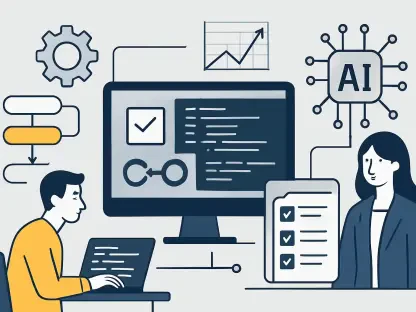

Software teams across industries face familiar pressure: deliver faster, reduce costs, maintain quality. What's changed are the tools available to address it. Generative AI has moved from a productivity curiosity to a structural force in software delivery, raising questions about how deeply it can

For most of the last decade, DevOps was often presented to the C-suite as a tooling challenge: Invest in modern platforms, automate delivery pipelines, and software velocity would follow. Organizations responded by modernizing infrastructure, consolidating vendors, and scaling continuous

Decision clarity and the ability to direct autonomous systems at scale now define the main constraints in software delivery. In several early adopters, engineers begin their day triaging pull requests, test evidence, and risk flags created overnight by coordinated AI agents. Human teams set

Agentic AI is about action, not just answers. That single shift changes the math of operations. While traditional models predict or summarize, agents execute tasks across systems, make bounded decisions, and close loops that used to stall in inboxes. Waiting is not a neutral choice. Cost structures
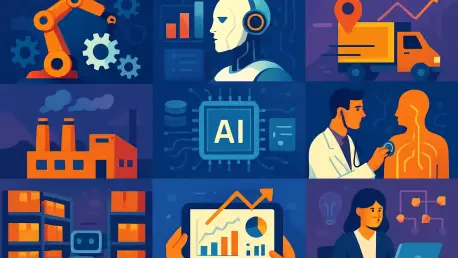
Most AI pilots stall because the use case was never built as a product. It starts as a demo and stays a demo. Enterprise value emerges only when a use case has a dedicated owner, clear service levels, integrations with core systems, and reliable guardrails. Treat AI like software rather than a

Speed is a core operating model of great software. Ramp’s early trajectory made this especially clear. Public reporting placed the company’s valuation at roughly 8.1 billion dollars by 2022, and interviews from that period pointed to a sprint from seven figures to a nine-figure run rate in record