
The foundational architecture of enterprise computing is currently undergoing a radical transformation that necessitates a complete departure from the isolated management styles of the past. For over half a century, the IBM z/OS platform has served as the bedrock of global finance and logistics, relying almost exclusively on specialized languages such as COBOL, PL/I, and High-Level Assembler to drive its high-performance workloads. While these languages remain unsurpassed in their ability to handle massive transactional volumes with absolute integrity, the modern technological landscape demands a level of flexibility and cross-platform integration that traditional tooling was never designed to provide. Consequently, Python has emerged as a critical instrument for platform engineering, effectively serving as a high-level bridge that connects the legendary reliability of the mainframe with the rapid innovation cycles of the broader developer ecosystem. This shift is not merely a matter of convenience; it is a strategic imperative for organizations that must modernize their operations without compromising the stability of their core systems.
Leveraging Global Innovation and Talent
The Strategic Value: Universal Adoption
The widespread dominance of Python across nearly every sector of the technology industry has created a massive, decentralized repository of intellectual property that mainframe environments can no longer afford to ignore. According to the latest metrics from major industry indices, Python consistently maintains its position as the most sought-after programming language, supported by a vast ecosystem of open-source libraries and pre-built frameworks. By fully integrating Python into the z/OS environment, organizations can immediately leverage sophisticated tools for data analytics, automated testing, and system monitoring that would otherwise take years to develop natively in Assembler or COBOL. This approach effectively reframes the mainframe as a first-class participant in the modern software supply chain, allowing engineers to pull from the same pool of global innovation that fuels cloud-native development. Instead of building custom solutions for every new business requirement, teams can now import proven modules to handle complex tasks, significantly reducing the time required to bring new features to market.
Furthermore, the adoption of Python on the mainframe allows for a level of standardization that was previously impossible in the highly siloed world of z/OS engineering. Historically, mainframe specialists were required to master a suite of proprietary tools and syntax that shared very little common ground with distributed systems or web-based architectures. By embracing a universal language, enterprise leaders can align their mainframe strategy with their broader IT objectives, ensuring that the same security protocols and data processing logic are applied consistently across the entire infrastructure. This synchronization is particularly valuable when dealing with hybrid cloud environments, where data must flow seamlessly between on-premises mainframes and public cloud services. Python serves as the common denominator that enables these disparate systems to communicate effectively, providing a unified interface for managing complex workflows and ensuring that the mainframe remains a dynamic, integrated component of the modern enterprise rather than a static legacy silo.
Bridging the Gap: Generational Skills Integration
One of the most pressing challenges facing the mainframe sector today is the significant demographic shift as veteran engineers reach retirement age, leaving behind a vacuum of specialized knowledge. For decades, the barrier to entry for the z/OS platform has been exceptionally high, requiring years of study to master the intricacies of Job Control Language or the nuances of mainframe-specific memory management. In contrast, Python has become the undisputed lingua franca of the next generation of technical talent, serving as the primary introductory language in nearly every university computer science program and technical bootcamp. By providing robust support for Python, the mainframe environment becomes immediately accessible to a younger, more diverse pool of developers who can apply their existing expertise to mission-critical systems without the need for extensive retraining. This transition is essential for ensuring the long-term sustainability of the platform, as it allows for a more natural transfer of knowledge between seasoned experts and new hires.
The integration of Python into the mainframe workflow also fundamentally changes the perception of z/OS among emerging developers, transforming it from a mysterious legacy system into a powerful engine for modern engineering. When a new graduate enters the workforce and finds that they can interact with a mainframe using the same IDEs, libraries, and coding styles they used in academia, the intimidation factor disappears, replaced by a sense of professional curiosity and engagement. This shift allows organizations to recruit from a much wider talent pool, attracting individuals who are passionate about high-scale computing and data science but might have been deterred by the prospect of learning archaic coding standards. By lowering these technical barriers, enterprises can foster a more collaborative environment where different generations of engineers work side-by-side, combining the deep system knowledge of the veterans with the modern architectural perspectives of the newcomers to drive continuous improvement and operational excellence.
Unifying Development and Intelligence
Modernizing Workflows: DevOps and Integration
In the world of distributed computing and cloud-native applications, Python acts as the essential connective tissue that links various stages of the software development lifecycle into a cohesive, automated pipeline. Bringing this capability to the mainframe allows for the total unification of development cultures, finally breaking down the silos that have historically isolated z/OS from the rest of the enterprise’s IT operations. With Python, mainframe engineers can implement the same modern DevOps practices that are standard in other environments, including automated unit testing, static code analysis, and continuous integration. This alignment ensures that every line of code running on the mainframe is subjected to the same rigorous quality and security gates as a mobile app or a web service. By utilizing Python-based automation scripts, teams can eliminate the manual, error-prone processes that often slow down mainframe deployments, enabling a much higher frequency of updates while simultaneously reducing the risk of system outages or security vulnerabilities.
Moreover, the use of Python as an orchestration layer allows for a more streamlined integration of mainframe resources with enterprise-wide monitoring and alerting systems. Traditionally, mainframe health data was often confined to specialized dashboards that were only visible to a small group of system programmers, making it difficult for the broader IT organization to get a holistic view of system performance. Python enables the creation of custom bridges that export mainframe metrics to modern observability platforms, providing real-time insights into how z/OS workloads are impacting overall business processes. This visibility is crucial for maintaining service level agreements and identifying potential bottlenecks before they escalate into major incidents. By adopting a unified approach to development and operations, organizations can ensure that their mainframe environment is not just a high-speed transaction engine, but a fully integrated part of a modern, responsive, and secure digital infrastructure that evolves at the speed of business.
The Gateway: Artificial Intelligence and Data
The rapid proliferation of Artificial Intelligence and Machine Learning has made Python an indispensable tool for any environment that handles large volumes of sensitive transactional data. Because the mainframe is the primary home for the world’s most valuable data assets, it is the most logical place to execute high-performance AI models to minimize the latency and security risks associated with moving data across a network. Most leading AI and data science libraries, including TensorFlow, PyTorch, and scikit-learn, are built primarily for Python, making it the natural on-ramp for deploying intelligence directly on the z/OS platform. By running these models in-place, enterprises can perform real-time fraud detection, predictive maintenance, and complex anomaly detection during the actual execution of a transaction. This capability provides a significant competitive advantage, as it allows businesses to react to changing conditions in milliseconds rather than hours, all while keeping the data within the highly secure perimeter of the mainframe.
Beyond simple model execution, Python provides the necessary tools for the entire data engineering pipeline on the mainframe, from data cleaning and transformation to feature extraction and validation. Historically, extracting value from mainframe data required complex ETL processes that were often slow, expensive, and difficult to manage. With Python, data scientists can interact with VSAM files, Db2 databases, and other mainframe-specific storage formats using familiar, high-level abstractions. This accessibility democratizes the data held on the mainframe, allowing a broader range of analysts and researchers to derive insights without needing a deep understanding of mainframe storage internals. As AI continues to redefine the boundaries of what is possible in enterprise computing, the ability to bridge the gap between massive data repositories and modern analytical tools through Python will be the defining characteristic of a successful mainframe strategy, ensuring the platform remains the ultimate source of truth and intelligence.
Balancing Performance and Sustainability
Optimization: Execution vs. Development Speed
A recurring point of debate among veteran mainframe systems programmers is whether an interpreted language like Python can ever truly belong in an environment where every microsecond of CPU time is carefully accounted for and billed. It is certainly true that for raw, high-frequency transaction processing, a compiled language like COBOL or Assembler will always maintain a performance edge due to its proximity to the underlying hardware and lack of runtime overhead. However, modern platform engineering recognizes a critical distinction between execution speed and development speed. In today’s fast-paced market, the time it takes to move a concept from a requirements document to a production-ready feature is often more valuable than the marginal savings in CPU cycles. Python allows engineering teams to prototype, test, and deploy new logic in a fraction of the time it would take to write a similar function in a legacy language, providing the agility necessary to respond to shifting market demands or emerging security threats.
To address the performance concerns without sacrificing the benefits of modern coding, many forward-thinking organizations are adopting a hybrid approach to mainframe application development. In this model, the performance-critical “heavy lifting”—such as high-volume database updates or complex mathematical calculations—remains written in optimized C or Assembler, while Python is used as the high-level orchestration layer that manages the business logic and external integrations. This strategy allows developers to wrap existing legacy modules in Python extensions, granting them the ease of use of a modern language while retaining the raw processing power of the original code. This “best of both worlds” methodology ensures that the system remains highly efficient and cost-effective while still offering the flexibility and speed of development that modern business environments demand. By optimizing for the total value delivered rather than just raw execution speed, platform engineers can create a sustainable ecosystem that supports both legacy stability and modern innovation.
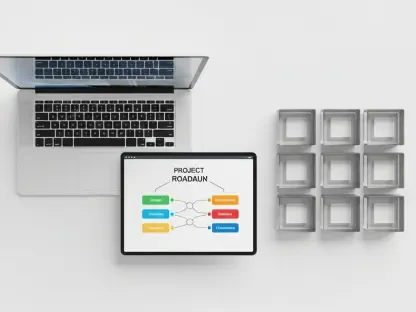
The Road Map: Building a Robust Infrastructure
The successful integration of Python into a shared, multi-tenant mainframe environment requires a level of engineering discipline and architectural planning that goes far beyond simply installing a runtime. Organizations must develop a comprehensive roadmap that addresses the unique challenges of managing interpreted languages at scale, particularly regarding runtime versioning and dependency governance. Because different development teams may require different versions of Python or specific third-party libraries to support their applications, platform engineers must implement a system that allows for multiple, isolated environments to coexist without interference. This isolation is critical for preventing “dependency hell,” where an update to a shared library for one application inadvertently breaks another mission-critical service. By utilizing containerization or sophisticated environment managers, organizations can ensure that each Python application has exactly what it needs to run reliably across different logical partitions.
Furthermore, a mature Python strategy on the mainframe must include a plan for artifact portability and long-term maintenance to ensure that applications remain functional as the underlying operating system evolves. This involves creating a standardized process for packaging Python code and its dependencies into portable units that can be easily moved between development, testing, and production environments. Managing the software supply chain is also paramount; every third-party package must be vetted for security vulnerabilities and compliance with corporate standards before it is allowed onto the z/OS system. By establishing these rigorous engineering practices, organizations can protect the integrity of the host operating system while providing a flexible, scalable environment for modern applications. This structured approach to platform engineering not only mitigates the risks associated with introducing new technology but also provides a stable foundation for future growth, ensuring that the mainframe remains a resilient and adaptable centerpiece of the enterprise for years to come.
Ultimately, the successful integration of Python into the mainframe ecosystem was achieved through a balanced commitment to both innovation and operational stability. Organizations that treated the language not as a replacement for COBOL, but as a powerful extension of the platform’s existing capabilities, were the ones that realized the greatest return on investment. The implementation of rigorous dependency management and hybrid execution models allowed for a seamless transition that respected the legacy of the z/OS environment while embracing the tools of the future. Looking ahead, the focus shifted toward deepening the interplay between mainframe data and real-time intelligence, ensuring that the platform remained at the heart of the digital enterprise. By fostering a culture of continuous learning and cross-disciplinary collaboration, engineering teams ensured that the mainframe was no longer viewed as a relic of the past, but as a vital and evolving asset. The journey toward a more connected and intelligent mainframe proved that with the right strategy, even the most established systems could lead the way in a new era of technology.