
The silent fragmentation of codebases across modern software organizations presents a persistent and costly challenge, where parallel development efforts can lead to synchronization nightmares, duplicated work, and the slow erosion of architectural integrity. As projects scale, what begins as a manageable collection of repositories can evolve into a tangled web of dependencies, making large-scale refactoring or consistent standards enforcement a nearly impossible task. It was within one of the world’s most complex software environments that a solution was forged, not as a simple version control utility, but as a sophisticated code transformation engine. Google’s Copybara, born from the necessity of managing a colossal monorepo, has since been open-sourced, offering the broader development community a powerful and programmatic way to automate the migration, transformation, and synchronization of code between disparate repositories. It stands as a testament to the idea that the most intricate code management problems require a tool that can intelligently manipulate code in transit, not just move it from one place to another.
The Architecture of Automated Code Flow
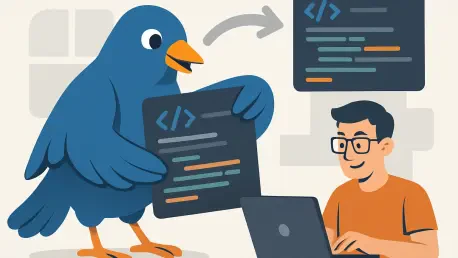
At its core, Copybara operates as a highly specialized transformation engine, distinguishing itself from tools that merely copy files between version control systems. Its functionality is orchestrated through “workflows,” which are defined within a configuration file, typically named copy.bara.sky. These workflows provide a precise, step-by-step blueprint for moving code from an origin repository to a destination, but its true power is unlocked in the intermediate steps. The tool allows developers to apply a chain of deep transformations during the migration process. This goes far beyond simple file transfers, enabling complex operations such as renaming entire directory structures, automatically updating import statements to reflect a new project architecture, and executing sophisticated regular expression-based replacements to rewrite code syntax. This capability is essential for enforcing coding conventions, updating dependencies, or removing proprietary information when transitioning code between internal and public environments, thereby reducing technical debt and ensuring code health.
The mechanism enabling this granular control is a Domain-Specific Language (DSL) built upon Skylark, a deterministic and restricted dialect of Python. This design choice provides developers with the expressive power of a scripting language while ensuring that migration workflows are reproducible and free of side effects. Within the copy.bara.sky file, developers can define origins, such as a Git repository URL, and destinations, like a GitHub repository requiring specific authentication credentials. They can then construct a sequence of transformations using built-in functions. For instance, the glob function facilitates the selective inclusion or exclusion of files based on pattern matching, allowing for precise control over what gets migrated. This programmatic approach allows for the creation of incredibly intricate and reusable rules that can handle the unique complexities of any given project, turning what would be a manual, error-prone process into a reliable, automated pipeline that can be executed with a single command.
Advanced Capabilities for Complex Scenarios
Beyond its fundamental transformation abilities, Copybara offers specialized modes designed to address some of the most challenging version control scenarios encountered in large-scale software development. A standout feature is the “splicer” mode, which is engineered to meticulously merge the commit histories of two different repositories. Unlike simpler merging strategies, the splicer preserves critical commit metadata, including author information, timestamps, and commit messages. This functionality is indispensable for organizations, particularly those in regulated industries, where maintaining a complete and auditable trail of every code change is not just a best practice but a strict compliance requirement. By ensuring that no historical context is lost during a repository merge, the splicer mode facilitates complex organizational changes, such as integrating a newly acquired company’s codebase or consolidating separate projects into a unified monorepo, without compromising the integrity of the version history.
Furthermore, Copybara supports “reversible” workflows, a feature that enables true bidirectional synchronization between repositories. This allows changes to flow seamlessly from the origin to the destination and, crucially, back from the destination to the origin. This two-way street is a game-changer for teams that need to maintain parallel versions of a codebase, such as a private, internal repository and its public, open-source counterpart. Developers can work on new features internally, push them to the public repository, and then pull community contributions from the public repository back into the internal one. Copybara intelligently manages the flow of commits, preventing conflicts and ensuring both repositories remain in sync. This creates a fluid and collaborative environment, bridging the gap between proprietary development and open-source engagement while automating the complex and often tedious task of keeping parallel codebases aligned.
From Theory to Practice in Modern Development
In real-world application, Copybara has established itself as an essential tool for executing complex repository strategies, most notably the increasingly prevalent transition from a monolithic repository (monorepo) to multiple, more focused repositories (multirepos). As technology giants and growing startups alike adopt hybrid repository models to improve team autonomy and build performance, the need for a tool that can automate the intricate process of splitting and syncing codebases has become paramount. Copybara excels in this domain, offering the precise control required to carve out a piece of a monorepo into a new, standalone repository while preserving its history. It can then be configured to maintain a continuous synchronization between the new repo and the original monorepo, allowing different teams to work independently without creating a fragmented or outdated codebase. This capability allows organizations to evolve their code architecture without disrupting ongoing development or losing invaluable historical context.
The tool’s utility extends powerfully into the realm of automation, integrating seamlessly into Continuous Integration and Continuous Deployment (CI/CD) pipelines. By hooking into automation servers like Jenkins or cloud-native solutions such as GitHub Actions, Copybara can fully automate the propagation of code between repositories as part of a build or deployment process. A key use case is the mirroring of an internal repository to a public one, where Copybara can be configured to automatically sanitize the code in transit. During this workflow, it can apply transformations to redact sensitive information like internal hostnames, API keys, or proprietary comments, ensuring that only clean, secure code is released to the public. Beyond repository management, developers leverage Copybara as a powerful instrument for large-scale refactoring. A team can define a set of transformation rules to systematically update a deprecated API across an entire codebase, enforce new linting standards, or perform other critical maintenance tasks during a migration, handling thousands of files with an efficiency that makes rapid, sweeping improvements to code quality feasible.
Navigating Implementation and the Competitive Landscape
Despite its immense power, successfully implementing Copybara is not without its challenges. The primary hurdle for new users is often the learning curve associated with its Skylark-based DSL. While powerful, it requires a degree of familiarity with Python-like syntax and an understanding of Copybara’s specific functions and workflow structure. A misconfigured workflow poses a significant risk, with the potential to cause unintended file overwrites, create complex and difficult-to-resolve merge conflicts, or, in the worst-case scenario, lead to data loss. The tool’s precision is a double-edged sword; it will do exactly what it is told, making a well-defined and thoroughly tested configuration absolutely essential for safe and effective operation. These initial complexities require a deliberate and careful approach from teams looking to adopt the tool for critical infrastructure.
To mitigate these risks, a clear set of best practices has emerged within the user community. It is widely recommended to begin with simple, narrowly-scoped workflows and incrementally add complexity as familiarity with the tool grows. Storing Copybara configuration files under version control, preferably in a dedicated repository, is crucial for ensuring that migrations are reproducible and that changes to the migration logic itself are tracked and auditable. One of the most critical features for safe implementation is the tool’s dry-run mode, which allows developers to simulate a full migration workflow. This simulation outputs a detailed report of all the changes that would be made—including file modifications, deletions, and creations—without actually committing them. This allows for a thorough review before execution, preventing costly mistakes. For enhanced code quality, it is also suggested to integrate Copybara with linters to perform pre-transformation checks, ensuring that only compliant code enters the pipeline.
A Future Forged in Automation and Community
Looking toward the future, Copybara’s evolution is poised to continue, driven by both internal development and a vibrant open-source community. There is significant potential for the integration of AI-assisted features, which could, for example, analyze a codebase and automatically suggest or generate transformation rules for common refactoring tasks, further lowering the barrier to entry. More immediate updates have focused on tangible performance and usability improvements, such as enhanced support for modern protocols like Git over HTTP/2 and more descriptive error diagnostics to simplify troubleshooting. Security remains a paramount consideration, addressed through robust features like token-based authentication for repositories and sophisticated content-filtering transformations that serve as a critical defense against the accidental leakage of sensitive data. This ongoing commitment to security and performance ensures Copybara remains a trusted tool for enterprise-grade workflows.
Ultimately, Copybara emerged as a highly specialized and indispensable asset for organizations navigating the intricate realities of multi-repository software development and large-scale code modernization. It provided a level of automated control and transformation precision that was previously unattainable with generic scripts or simpler version control commands. Its ability to handle everything from preserving commit history during complex merges to sanitizing code for public release established it as a powerhouse in the DevOps toolkit. The active engagement of its open-source community on platforms like GitHub proved to be a vital force, driving enhancements and ensuring the tool remained robust, relevant, and responsive to the evolving needs of developers worldwide. This collaborative ecosystem solidified its legacy not just as a tool, but as a foundational solution for managing code at scale.