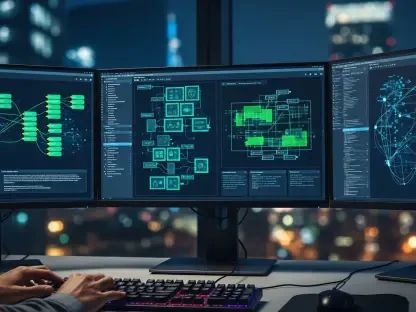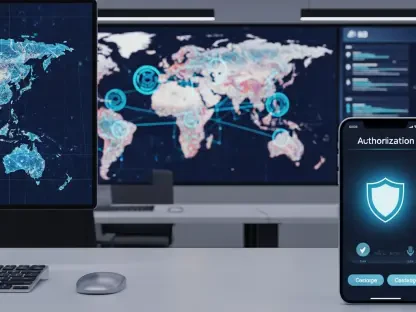

The software development landscape is undergoing a fundamental shift, driven by a powerful new standard that is poised to redefine how humans and artificial intelligence collaborate to build and maintain complex systems. This standard, the Model Context Protocol (MCP), serves as a universal interface, enabling sophisticated AI agents to move beyond code generation and directly interact with the vast ecosystem of tools that form the backbone of modern DevOps. By providing a structured way for AI to communicate with version control systems, CI/CD pipelines, cloud infrastructure, and project management platforms, MCP is unlocking a new paradigm of automation often referred to as “chatops 2.0.” This evolution allows developers and operations professionals to orchestrate intricate, multi-step backend processes using simple, natural language commands. Since its debut, MCP has seen a remarkable surge in support from major technology corporations and has captured the interest of the global development community, signaling a pivotal moment in the practical integration of AI into the daily workflows of technical teams. The momentum suggests that AI is no longer just an assistant for writing code but is becoming an active participant in the entire software delivery lifecycle.
Version Control and Project Management
At the core of this transformation are the platforms where code lives and evolves, making the GitHub MCP Server one of the most significant implementations in the ecosystem. Given GitHub’s central role in the open-source and enterprise worlds, its official server provides an exceptionally rich set of capabilities that mirror the platform’s extensive API. This server empowers AI agents to perform a wide range of repository operations, from creating and commenting on issues to opening and merging pull requests. Agents can also retrieve detailed project metadata, such as contributor lists, commit histories, and security advisories, providing them with deep contextual awareness. Crucially, its functionality extends into CI/CD management through endpoints for GitHub Actions, enabling a command like “cancel the current running action” to directly invoke the corresponding tool. Acknowledging the immense power this grants an autonomous agent, GitHub has wisely included a vital --read-only flag, allowing teams to configure the server in a way that prevents any changes, offering a secure environment for initial testing and observational use cases. Similarly, GitLab has introduced an MCP server for its Premium and Ultimate tier customers. While still in beta, this server allows AI agents to securely interact with GitLab APIs to gather project information and perform a limited set of operations, such as creating new issues or merge requests. Its primary strength lies in data retrieval, enabling agents to fetch detailed information on issues, merge requests, code diffs, and CI/CD pipeline statuses, all secured through OAuth 2.0 for robust authentication.
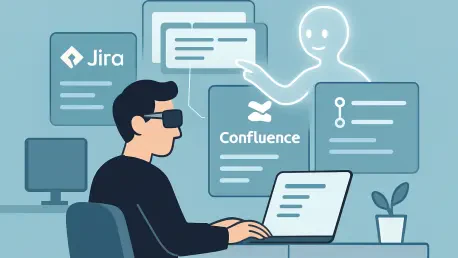
Beyond the code itself, MCP is bridging the gap between AI and the essential tools used for collaboration and knowledge management within engineering teams. The Atlassian Remote MCP Server provides a vital link to the widely used Atlassian Cloud suite, with a specific focus on Jira for project management and Confluence for documentation. Its primary function is to allow external AI tools to interface with these platforms to create, summarize, or update Jira issues and retrieve or reference Confluence pages. A key differentiator is its ability to chain related actions, such as fetching technical documentation from a Confluence page to provide context before automatically updating a linked Jira ticket. This enables sophisticated, context-aware workflows that streamline communication and reduce manual effort. Complementing this is the Notion MCP Server, which addresses the critical need for process documentation and knowledge management. This official server enables AI agents to access and manipulate information stored in Notion, allowing them to surface relevant internal style guides, operational runbooks, or team knowledge bases directly within a developer’s workflow. It is characterized as a low-risk integration due to its granular permission model and offers flexible deployment options, making it an accessible entry point for teams looking to bring AI into their documentation and planning processes.
Automating Infrastructure and CI/CD
For organizations leveraging Kubernetes, the Argo CD MCP Server, developed by Akuity, provides a natural language gateway to GitOps-driven continuous delivery. This server acts as an intelligent wrapper for the Argo CD API, offering two main toolsets: one for managing applications and another for inspecting the underlying Kubernetes resources. Using these tools, AI agents can respond to simple prompts to retrieve application status, create or delete applications, view resource trees, fetch logs and events, or trigger a synchronization action. Commands like “Show me the resource tree for guestbook” or “Sync the staging app” transform complex cluster management tasks into simple, conversational interactions, significantly lowering the barrier to entry for managing Kubernetes-native CI/CD workflows. The server’s use requires an accessible and properly configured Argo CD instance, and for teams using other CI/CD systems, a community-maintained plugin for Jenkins offers a similar level of AI-driven control, demonstrating the protocol’s adaptability across different tooling environments.
The domain of Infrastructure-as-Code (IaC) is also being profoundly reshaped by MCP, enabling a new level of automated infrastructure management. HashiCorp’s official server for Terraform allows agents to assist in the generation and management of infrastructure configurations by integrating with both the public Terraform Registry and commercial services like Terraform Enterprise. This integration allows agents to query metadata about modules and providers, inspect the state of workspaces, and trigger Terraform runs, all while incorporating a critical human approval step to ensure safety and oversight. To facilitate agent understanding, the server package includes a machine-readable guide to its tools. As a compelling open-source alternative, the OpenTofu MCP server offers similar functionality with additional features like cloud deployability. In a powerful demonstration of end-to-end automation, the official Pulumi MCP Server allows AI agents not just to query but to execute commands directly against its system. A detailed walk-through from Pulumi showcased a developer using natural-language instructions to have an AI assistant provision an entire Azure Kubernetes Service cluster by orchestrating a series of Pulumi CLI commands, highlighting the immense potential for AI to manage the entire lifecycle of cloud infrastructure from a simple conversational interface.
Enhancing Observability and Security
In the critical domains of observability and site reliability engineering (SRE), the official Grafana MCP Server empowers AI agents to programmatically query and surface performance and health data. This server allows agents to retrieve full or partial details from Grafana dashboards, fetch information about configured data sources, and query underlying monitoring systems to inform development and operational decisions. It also provides access to details about active incidents, enabling AI to assist in diagnostics and troubleshooting. The server is designed with efficiency in mind, featuring a configurable toolset to manage agent permissions and structuring its responses to minimize context window consumption and control the token costs associated with large language models, a significant practical consideration for any organization operating at scale. This allows developers to quickly get answers about system performance without leaving their coding environment, streamlining the process of identifying and resolving issues before they impact users.
A dedicated focus on DevSecOps is brought to the MCP ecosystem by the Snyk MCP Server. This integration equips AI agents with the ability to scan and remediate vulnerabilities across a wide range of assets, including application code, open-source dependencies, IaC configurations, containers, and Software Bill of Materials (SBOM) files. It even supports the creation of an AI Bill of Materials (AIBOM), reflecting the growing need for transparency in AI-powered systems. The server’s true power lies in its potential to orchestrate complex security workflows. For example, an agent could use the GitHub MCP server to locate a repository and then invoke Snyk’s scanning tools to identify security risks, all within a single automated sequence. This server operates locally, leveraging the Snyk command-line interface for its authenticated API calls, which ensures that sensitive security operations are performed within the user’s controlled environment. By embedding security scanning and remediation capabilities directly into AI-driven workflows, this server helps organizations shift security left and build more resilient applications from the ground up.
The Expanding Ecosystem and Critical Safeguards
The adoption of MCP has been particularly notable among major cloud providers, with AWS taking a distinctive approach by releasing dozens of specialized MCP servers, each tailored to a specific AWS service. This strategy provides granular control and interaction capabilities across its vast cloud ecosystem, with servers available for services like Lambda, S3, and a specialized AWS Knowledge server that acts as an agent-optimized interface for all AWS documentation. These servers come in two deployment models: some are offered as fully managed AWS services, while others are designed for local use. This trend is not limited to AWS; other major providers, including Microsoft Azure, Alibaba, Cloudflare, and Google, are actively developing or experimenting with their own MCP server implementations. Beyond the cloud and core DevOps tools, the ecosystem is rapidly expanding to include adjacent workflows. Engineers are adopting servers like the Filesystem MCP for local file access, the Linear MCP for issue tracking, and the Chrome DevTools and Playwright MCP servers for browser debugging and automated testing. With a burgeoning community developing servers for tools like Docker and Kubernetes, the potential for deeply integrated, AI-driven operations continues to grow.
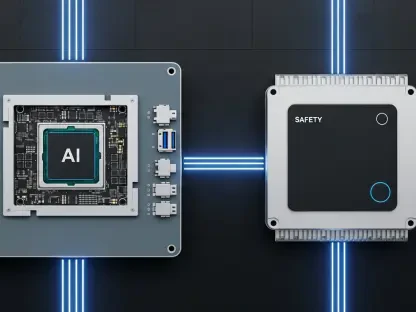
Despite the immense potential, the journey into this new paradigm of AI-driven operations was one that necessitated careful consideration of the associated risks. The introduction of MCP servers could, in some cases, introduce unnecessary complexity, particularly when they merely replicated the functionality of well-understood command-line interfaces. However, the most critical concern raised was security. A report from Enterprise Management Associates (EMA) had noted that 62% of IT leaders identified security and privacy as their top concern with AI, a sentiment that was amplified when AI agents were given control over production systems. To mitigate these risks, a phased and cautious adoption strategy was strongly recommended. This involved beginning with read-only permissions to test agent behavior before gradually enabling write capabilities, using only trusted LLMs and clients, and avoiding the exposure of high-value credentials. The financial technology company Block provided a prime example of successful implementation, where a company-wide, MCP-compatible agent was used by thousands of employees to eliminate bottlenecks. Ultimately, the power of MCP had to be handled with robust safety controls, but its potential to reduce the toil and cost of modern DevOps made it a transformative technology that organizations successfully integrated into their workflows.