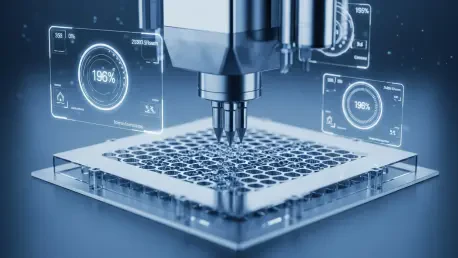

The pharmaceutical industry has undergone a radical transformation where the identification of a single therapeutic lead no longer relies on serendipity but on the relentless precision of automated systems. High-throughput screening (HTS) has transitioned from a specialized laboratory technique to the foundational pillar of modern drug discovery, enabling researchers to navigate the complexities of vast compound libraries with unprecedented speed. This evolution is driven by the necessity to process millions of chemical variants against biological targets, a task that would be physically impossible and economically unviable through manual labor alone. By utilizing advanced mechanical systems to execute repetitive assays, laboratories achieve a level of reproducibility and accuracy that far exceeds human capabilities. These systems allow for the rapid identification of active molecules, antibodies, or genes that modulate specific pathways, effectively shortening the timeline for therapeutic development while ensuring that the data generated is of the highest possible quality for downstream validation.
Architectural Foundations: Components of the Modern Screening Environment
Robotic liquid handling systems serve as the primary engines of the modern laboratory workflow, utilizing precision pipetting technologies to dispense reagents in volumes ranging from microliters down to the nanoliter scale. This level of accuracy is absolutely vital for maintaining assay integrity, as even the smallest variation in volume can lead to “noisy” data or expensive false positives that derail the research process. Modern dispensers utilize diverse technologies, including air displacement and positive displacement, to handle liquids with varying viscosities and surface tensions. The ability to perform these tasks with high fidelity ensures that experimental conditions remain consistent across thousands of microplates. Furthermore, these systems are now equipped with sensors that detect liquid levels and tip clogs in real-time, providing an additional layer of security that prevents the loss of precious samples during high-speed operations. This technological reliability is the bedrock upon which successful high-volume screening programs are built.
Supporting the liquid handlers are sophisticated plate handling robotics, which typically take the form of articulated robotic arms or conveyor tracks designed for high-speed transport. These components are responsible for the physical movement of microplates between storage hotels, incubators, and detection units, ensuring a continuous flow of materials through the screening pipeline. Meanwhile, integrated detection technologies, such as high-performance plate readers, capture critical data points at precise intervals to monitor biological reactions. These hardware components are orchestrated by sophisticated control and scheduling software, which acts as the “brain” of the operation to prevent bottlenecks and ensure every plate receives identical treatment. By managing the complex timing requirements of multiple overlapping assays, this software maximizes instrument utilization and ensures that time-sensitive kinetic measurements are captured with sub-second precision. The synergy between physical movement and digital management creates a robust environment for discovery.
Efficiency through Scale: The Impact of Strategic Miniaturization
A dominant trend in drug discovery is the push toward miniaturization, moving from traditional 96-well plates to high-density 1536-well formats that significantly increase the data output per run. This shift is driven by the urgent need to reduce the consumption of expensive reagents and precious compound samples, which are often available in very limited quantities. However, shrinking the equipment introduces significant physical challenges, such as increased susceptibility to evaporation and the phenomenon known as “edge effects,” where peripheral wells behave differently than those in the center. To address these issues, automated systems now incorporate advanced environmental regulation units that maintain precise humidity and CO2 levels. Additionally, the adoption of non-contact dispensing technologies, such as acoustic liquid handling, allows for high-precision delivery without the risk of cross-contamination from pipette tips. This method uses sound energy to eject droplets, providing a level of control that was previously unattainable.
The synthesis of these miniaturization technologies allows laboratories to achieve a significantly higher density of data points per run, which directly translates to lower operational costs. By optimizing the workflow through these high-density formats, research facilities can lower the cost-per-data-point and accelerate the transition from initial screening to lead optimization. This strategic efficiency is crucial for maintaining a competitive edge in the fast-paced biotechnology industry, where the speed of discovery directly impacts the delivery of new treatments to patients. Moreover, miniaturization facilitates the screening of more complex biological models, such as 3D spheroids or organoids, by making the high-volume testing of these expensive models economically feasible. As these technologies continue to mature, the ability to perform complex biological experiments at scale will become the standard requirement for any laboratory seeking to contribute to the next generation of life-saving medical breakthroughs.
Strategic Integration: Evaluating Modular and Closed System Architectures
Laboratory managers must decide between closed and modular automation systems based on their specific research goals and the expected longevity of their screening protocols. Closed systems are pre-configured, “turnkey” platforms designed by a single vendor, offering high reliability and ease of use for standardized, high-volume screening. Because all components are factory-validated to work together, these systems are ideal for environments where assay protocols rarely change and consistency is the top priority. They provide a “plug-and-play” experience that minimizes the need for internal engineering expertise, allowing biologists to focus on the science rather than the machinery. However, this convenience often comes at the cost of flexibility, as integrating a new instrument from a different manufacturer can be difficult or impossible. For laboratories focused on repetitive, high-throughput tasks with fixed parameters, the stability and support of a closed system provide a significant operational advantage.
In contrast, modular systems follow a “best-of-breed” philosophy, allowing laboratories to integrate the most effective components from various manufacturers into a single customized workflow. While these platforms require more effort in terms of software integration and initial setup, they offer unparalleled scalability and the ability to adapt to new scientific discoveries. As new technologies emerge, a modular system can be upgraded piece by piece, ensuring that the laboratory remains at the cutting edge of research without needing to replace the entire infrastructure. This approach is particularly beneficial for research organizations that handle a wide variety of assay types or those that frequently experiment with new methodologies. By maintaining a flexible architecture, these facilities can pivot their resources quickly in response to changing therapeutic priorities. Ultimately, the choice between these two styles depends on a balance between the need for immediate operational reliability and the long-term requirement for technological adaptability.
Operational Excellence: Overcoming Bottlenecks and Ensuring Data Integrity
Despite the high speed of robotic systems, operational bottlenecks remain a challenge, particularly at transition points between different functional modules with varying processing speeds. For example, a liquid dispenser may operate much faster than a plate reader can process a 1536-well plate, leading to idle time for the robot and potential degradation of time-sensitive biological samples. Effective automation strategies focus on balancing these speeds through intelligent scheduling and the use of buffer stations to ensure that robotic arms never sit idle. Maintaining a steady flow of plates through the system is essential for maximizing throughput and ensuring that every sample is treated with the same temporal precision. Advanced simulations are often used during the design phase of a workflow to identify these potential logjams before they occur. By optimizing the mechanical dance of the hardware, laboratories can reach the theoretical maximum efficiency of their instrumentation.
Furthermore, the reliability of the resulting data depends heavily on rigorous machine calibration and systematic validation to prevent the accumulation of errors. Laboratories must conduct regular checks of liquid handlers to ensure volume accuracy across all channels and use standardized plates to calibrate optical sensors on a frequent basis. Without these quality control measures, the speed of automation would only serve to generate large volumes of inaccurate data, potentially leading researchers down the wrong therapeutic path. Maintaining these high standards ensures that the “garbage in, garbage out” phenomenon does not compromise the integrity of the drug discovery process. Regular maintenance schedules and automated diagnostic routines are now standard features of high-end robotics, providing researchers with the confidence that every data point is a true reflection of the biological activity being measured. This commitment to data integrity is what separates successful screening campaigns from those that fail to produce viable clinical candidates.
Intelligent Automation: The Convergence of Robotics and Artificial Intelligence
The trajectory of laboratory robotics is currently being shaped by the deep integration of Artificial Intelligence (AI) and Machine Learning (ML) into the screening process. These technologies are moving beyond simple data analysis to participate in “closed-loop” discovery, where the system analyzes screening results in real-time and automatically adjusts parameters for the next set of experiments. This allow the robotics to “learn” which chemical structures are most promising without constant human intervention, effectively narrowing down the search space for new drugs with incredible efficiency. By identifying patterns that are invisible to the human eye, AI-driven systems can suggest chemical modifications or alternative assay conditions that maximize the chances of success. This shift toward intelligent automation represents a move from passive execution to active participation in the scientific process, where the machine becomes a partner in the discovery of new molecular entities.
Another significant trend is the expansion of automation into both upstream processes, like cell culture and sample preparation, and downstream activities, such as hit validation and secondary screening. This evolution is creating a fully automated pipeline where human researchers can move away from manual labor to focus on high-level experimental design and complex data interpretation. Automated cell culture systems can maintain cell lines for months with perfect consistency, providing a stable source of biological material for screening that is free from the variability of human handling. As these technologies continue to converge, the drug discovery process will become increasingly efficient, paving the way for the next generation of life-saving therapeutics. The future of the industry lies in these interconnected, intelligent ecosystems that handle every aspect of the laboratory workflow from initial hypothesis testing to the final validation of a clinical lead, ensuring that no potential medicine is overlooked.
Strategic Evolution: Future Considerations for Automated Research
The implementation of advanced robotics and automation provided a definitive solution to the throughput challenges that previously hindered the pace of pharmaceutical innovation. By adopting integrated workflows, research facilities established a new standard for precision and speed, which effectively reduced the time required to move from a biological target to a validated lead compound. The industry recognized that the successful deployment of these systems required not only significant capital investment but also a fundamental shift in laboratory culture, where data management and systems engineering became as important as traditional biology. This transformation facilitated the transition to high-density formats and miniaturized assays, which preserved resources while maximizing the depth of information gathered from each experiment. As these technologies matured, they became accessible to a wider range of organizations, leveling the playing field and allowing smaller biotechnology firms to compete with global pharmaceutical giants in the race to discover new cures.
Moving forward, the focus shifted toward the long-term sustainability of these robotic ecosystems through the continuous refinement of AI-driven decision-making tools and modular hardware upgrades. Organizations emphasized the importance of maintaining rigorous validation protocols to ensure that the massive volumes of data generated remained accurate and actionable. The integration of upstream and downstream automation created a seamless pipeline that allowed researchers to dedicate more time to creative problem-solving and the development of complex therapeutic modalities, such as gene and cell therapies. By prioritizing flexibility and data integrity, the scientific community ensured that the infrastructure of discovery could adapt to the rapidly changing landscape of modern medicine. These advancements ultimately streamlined the path toward personalized treatments and more effective drug candidates, proving that the synergy between human ingenuity and robotic efficiency is the most powerful tool in the ongoing quest to improve global health outcomes.