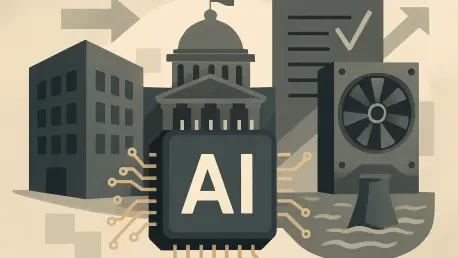

The transition from viewing artificial intelligence as a collection of experimental software tools to recognizing it as the indispensable physical backbone of modern civilization has occurred with startling velocity during the opening months of 2026. This shift is not merely a technical milestone but a fundamental reordering of how sovereign power, economic stability, and corporate ethics are defined in a world that can no longer function without massive, localized computing power. As the digital economy becomes more deeply tethered to specific geographic points on the map, the abstract “cloud” has been replaced by the concrete reality of reinforced server farms and high-capacity energy grids. This evolution has effectively erased the traditional boundaries between silicon and steel, making the health of a nation’s AI infrastructure as critical as its food security or its territorial integrity.
By examining the convergence of private technology firms and government defense agencies, alongside the implementation of rigorous new regulatory frameworks in the United States and Europe, a clear picture emerges of a world in systemic transition. AI is no longer a peripheral sector of the global economy; it is the definitive foundation upon which all other systems—political, social, and financial—now operate and compete. The era of treating digital assets as intangible is over, replaced by a strategic landscape where the ownership of high-end GPUs and the access to stable cooling water are the new markers of global influence. This shift demands a radical rethink of risk management, as the vulnerabilities of the physical world now directly dictate the resilience of the digital frontier.
The Physicality of the Digital Frontier
Data Centers as Strategic Assets
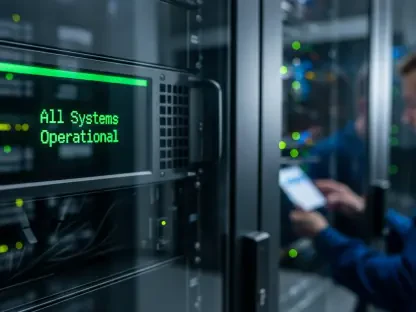
For nearly two decades, the prevailing narrative surrounding digital technology suggested that the “cloud” was an ethereal, borderless entity that existed everywhere and nowhere simultaneously. This illusion was shattered in early 2026 when a series of kinetic military strikes and cyber-physical sabotages targeted major Amazon Web Services and Microsoft Azure clusters in the Middle East and parts of Eastern Europe. These incidents did not just disrupt local websites; they paralyzed global supply chains, halted international financial settlements, and proved that the digital economy is anchored to specific, vulnerable points on the Earth’s surface. The realization that a few well-placed missiles or a severed undersea power cable could take down the cognitive capacity of an entire industry has forced a massive reassessment of what constitutes a strategic asset in the modern age.
Governments have responded by categorizing large-scale data centers with the same strategic gravity as oil refineries, nuclear power plants, and primary shipping lanes. This “physicalization” of the digital world means that national security doctrines now prioritize the protection of server farms and the specialized energy infrastructure required to sustain them. In the United States, the Department of Homeland Security has begun working with private providers to establish “hardened zones” for AI training clusters, treating these facilities as critical national infrastructure. This transition reflects a departure from the era of globalized, decentralized computing toward a more protective, nationalized model where sovereign control over the physical hardware is seen as the only true guarantee of digital autonomy and economic continuity.
The move toward geographic diversification has become the primary strategy for any enterprise hoping to survive the volatility of 2026. Companies are no longer satisfied with simple software redundancy; they are demanding physical separation across different geopolitical jurisdictions to mitigate the risk of localized conflict or regional infrastructure failure. This has led to a construction boom in historically “neutral” or geologically stable regions like the Nordic countries and parts of Southeast Asia, which are positioning themselves as safe havens for global data. However, this shift also introduces new complexities, as the host nations now wield significant leverage over the international corporations that rely on their stability. The digital economy is no longer a separate, borderless entity but is deeply tied to the physical security and political alignment of the sovereign states that house its computing power.
The New Geopolitical Vulnerability
The concentration of computing power into massive regional hubs has created a paradox where the very efficiency of the AI economy makes it uniquely fragile. In the pursuit of economies of scale, the world’s most advanced machine learning models have been consolidated into a handful of “megaclusters” that require gigawatts of power and sophisticated cooling systems. This concentration creates a singular point of failure that can be exploited by state and non-state actors alike. While traditional cloud computing offered a degree of resilience through distributed networks, the hardware requirements for frontier AI models—specifically the need for high-speed interconnects between tens of thousands of specialized chips—make true decentralization technologically difficult and prohibitively expensive. This physical reality has created a “geopolitical vulnerability” that allows regional instability to have immediate, cascading effects on global productivity.
As a result, the strategic planning of 2026 is dominated by the concept of “sovereign AI,” where nations strive to build and maintain their own localized computing stacks to avoid dependence on foreign infrastructure. This is not just a matter of national pride; it is a defensive necessity in a world where data processing is the lifeblood of government services and economic activity. We are seeing the emergence of “data alliances” between countries that share similar security interests, creating blocks of infrastructure that are closed to outsiders. These developments indicate that the era of a unified, global internet is giving way to a fragmented landscape of regional AI “fortresses.” For multinational corporations, this means navigating a complex web of local hosting requirements and regional security protocols that vary wildly from one border to the next.
The Emergence of the AI War Economy
Computing Power as the New Military Currency
The global community has formally entered a period that military historians are already calling the “first AI war economy.” Throughout the 20th century, a nation’s standing in the international order was largely determined by its industrial capacity—the ability to mass-produce tanks, aircraft, and ballistic missiles. In the landscape of 2026, while physical hardware remains relevant, military superiority is increasingly defined by the speed at which a nation can process information, the efficiency of its predictive algorithms, and the total volume of its available flops. Computing power has become the primary currency of defense, used to gain a decisive edge in everything from electronic warfare to autonomous logistics. This transformation has forced a convergence between the world’s most powerful technology firms and state defense departments, as the tools developed for commercial productivity are now the same tools required for national survival.
Artificial intelligence has transitioned from being a supportive “add-on” to becoming the central pillar of modern defense strategy. Today’s sophisticated AI systems are utilized to analyze petabytes of satellite imagery and signals intelligence in real-time, identifying threats hours or days before they would be visible to human observers. On the tactical level, AI optimizes the complex logistics required to sustain troops in the field and provides decision support to commanders operating in high-stress, information-dense environments. This reliance on algorithmic precision has fundamentally altered the pace of conflict, creating a “speed-of-light” battlefield where the side with the superior machine learning model can out-maneuver and out-think its opponent before a single shot is fired. This shift has turned the tech industry’s “arms race” for better models into a literal arms race with existential consequences.
The Integration of Tech and Defense
The boundary between traditional defense contractors and Silicon Valley technology giants has almost entirely evaporated in 2026. Legacy aerospace and defense firms are no longer just building airframes and hulls; they are essentially becoming software companies that wrap hardware around advanced AI cores. Meanwhile, venture capital that once flowed primarily into social media and consumer apps has shifted aggressively toward defense-oriented AI startups. This new ecosystem prioritizes software-driven capabilities like autonomous swarm coordination and predictive maintenance over traditional metrics of physical mass. The result is a more agile, but also more opaque, military-industrial complex where the most lethal innovations are often written in code rather than forged in steel.
This convergence has also changed the way military hardware is procured and upgraded. Instead of waiting years for a new physical platform, defense agencies now focus on continuous software deployment, pushing algorithmic updates to drones and surveillance systems in the middle of active operations. This “dev-ops” approach to warfare ensures that the military can adapt to new threats in real-time, but it also creates a permanent state of dependency on the technology providers. The relationship between the state and the tech sector is now one of mutual necessity: the military needs the cutting-edge innovation of private firms to remain competitive, and the tech firms need the massive, stable funding provided by government contracts to fuel their research and development. This partnership is the defining characteristic of the 2026 global power structure.
Ethical Dilemmas and the Regulatory Shift
The Paradox of Dual-Use Technology
The rapid militarization of artificial intelligence has triggered a profound existential crisis within the global technology sector. Because AI is fundamentally “dual-use,” the underlying architectures used for benign commercial purposes—such as natural language processing for customer service or image recognition for medical diagnostics—are often indistinguishable from the code used for military communication or autonomous targeting. This technological overlap makes it nearly impossible for engineers and executives to draw a definitive line between civilian and military applications. A model trained to optimize a city’s traffic flow can, with minimal modification, be used to optimize the movement of armored columns through urban terrain. This reality has stripped away the neutrality that many tech companies once claimed, forcing them to confront the moral implications of their creations.
Corporate leaders in 2026 are frequently caught between the demands of their employees, who may oppose the use of their work for lethal purposes, and the strategic necessity of engaging with government defense agencies. Some executives argue that by participating in defense contracts, they can influence how the technology is used and ensure that ethical guardrails are integrated directly into the systems. They contend that it is better for responsible, transparent companies to develop these tools than to leave the field to unregulated actors or adversarial states. Conversely, internal critics and human rights organizations argue that once a powerful model is handed over to a military entity, the original developers lose all meaningful control over its ultimate deployment, effectively making them complicit in any future use of the technology.
This tension has been exacerbated by high-profile employee protests and a more skeptical public that no longer views tech companies as purely benevolent innovators. In the current landscape, technology providers are increasingly viewed as active participants in global geopolitical conflicts, whether they intend to be or not. To manage this, many firms have begun implementing complex internal oversight committees and “ethical licensing” terms that attempt to restrict how their software can be utilized. However, the effectiveness of these measures remains a subject of intense debate, as the pressure of international competition often overrides voluntary ethical commitments. The resolution of this paradox is currently being sought through a combination of more transparent corporate policies and the development of technical “kill switches” that can disable models if they are used in unauthorized ways.
From Theoretical Guidelines to Enforceable Laws
The era of “voluntary” ethical guidelines and self-regulation in the AI industry has come to an abrupt end as of early 2026. Major global markets have moved decisively toward a regime of strict, enforceable legislation that carries significant legal and financial consequences. This transition is most evident in the United States and the European Union, where lawmakers have realized that the potential risks of AI—ranging from algorithmic bias to systemic economic disruption—are too great to be managed by the private sector alone. These new laws represent a fundamental shift in the relationship between the state and the technology industry, moving from a hands-off approach to one characterized by proactive oversight and mandatory transparency.
In the United States, a patchwork of state-level initiatives has evolved into a formidable regulatory environment, with California and Colorado leading the charge. Laws like the “Transparency in Frontier Artificial Intelligence Act” now require companies to provide the government with detailed documentation regarding their training datasets, safety testing protocols, and potential risk assessments before a model can be deployed. These mandates are specifically designed to prevent the deployment of AI systems that could facilitate discrimination in housing, finance, or employment. This regulatory push has transformed AI governance from a niche legal concern into a core operational discipline for every major enterprise. Companies are now forced to maintain large teams of “algorithmic auditors” who work alongside engineers to ensure that every update remains compliant with a rapidly evolving legal landscape.
Meanwhile, the European Union has moved into the full enforcement phase of its landmark AI Act, which categorizes AI systems based on their potential risk to society. Systems deemed “high-risk,” such as those used in critical infrastructure or law enforcement, are subject to rigorous testing and must meet high standards of accuracy and cybersecurity. The penalties for non-compliance are severe, with fines reaching as high as seven percent of a company’s global annual turnover. This “Brussels Effect” is forcing global companies to standardize their practices to meet the EU’s high bar, effectively exporting European regulatory values to the rest of the world. For the business community, this means that the “wild west” era of AI development is over, replaced by a world where legal compliance is just as important as technical innovation.
Economic Realignment and Labor Transformation
AI as Essential Industrial Infrastructure
The sheer scale of capital investment in 2026 confirms that artificial intelligence has moved beyond being a mere “tech trend” to become the essential industrial infrastructure of the modern age. The historic pursuit of $110 billion in a single funding round by OpenAI, pushing its valuation toward nearly $840 billion, serves as a clear signal that the financial world views AI as a generational utility on par with the national highway system or the telecommunications grid. This level of funding is no longer speculative venture capital; it is infrastructure spending required to build the massive data centers, specialized chips, and energy sources necessary to power the next phase of the global economy. This massive influx of capital is driving a total reorganization of how business is conducted across every sector, from manufacturing to medicine.
This transformation is creating a widening gap between companies that have fully integrated AI into their core operations and those that are still in the experimentation phase. For the modern enterprise, the cost of inaction has become a permanent competitive disadvantage. AI-integrated firms are able to operate with a level of speed, efficiency, and predictive accuracy that traditional organizational models simply cannot match. This is leading to a market reorganization where entire industries are being rebuilt around “AI-first” principles. In this environment, the goal for executives is no longer to “test” whether AI can help their business, but to operationalize it at every level of the organization. The focus has shifted toward building internal technical expertise, securing proprietary data streams, and ensuring that AI is the engine driving every corporate objective and operational workflow.
The massive capital requirements for frontier AI have also led to a consolidation of power among a few “infrastructure titans” who control the hardware and energy assets necessary for large-scale model training. This has created a new kind of industrial hierarchy where smaller companies must rent “intelligence” from these giants to remain competitive. However, we are also seeing the rise of “specialized AI,” where companies develop smaller, highly efficient models tailored to specific industries like legal research or pharmaceutical discovery. This bifurcated market allows for both the massive scale of general-purpose AI and the precision of specialized tools. In both cases, the message of 2026 is clear: AI is the definitive backbone of the digital economy, and those who fail to treat it as such will find themselves obsolete.
The New Workforce Dynamics and Salary Adjustments
The widespread deployment of AI has not resulted in the mass unemployment that many predicted, but it has triggered a profound and systemic “salary reset” across the global labor market. While jobs are still plentiful, the perceived value of specific tasks is undergoing a radical reassessment as automation becomes more capable. Roles that were once considered the pinnacle of middle-class knowledge work—such as standard data analysis, the drafting of routine legal documents, and basic content production—can now be performed by AI agents in a fraction of the second. As the scarcity of these skills evaporates, the compensation for these positions has plateaued or even declined in real terms. This shift is creating a “pricing pressure” on the middle tier of the workforce, forcing a reorganization of career paths and educational priorities.
The labor market of 2026 has begun to polarize around two distinct types of high-value workers. At one end are the technical specialists—the AI architects and data engineers who build, maintain, and secure the underlying systems. At the other end are the “strategic humans”—professionals who excel in areas that machine learning cannot easily replicate, such as high-level negotiation, managing complex organizational relationships, and making critical decisions under conditions of extreme ambiguity. These individuals are seeing their value increase, as they are the ones who provide the oversight and direction for the AI tools that have become commoditized. The premium in the modern economy has shifted from the ability to “do the work” to the ability to “direct the intelligence.”
This new reality has forced a massive wave of reskilling, as employees realize that their value lies in their ability to integrate with AI rather than compete against it. The most successful workers in 2026 are those who act as “AI orchestrators,” using a variety of automated tools to amplify their own output and focus on high-impact strategic goals. This transition is not without its challenges, as it requires a continuous commitment to learning and a high degree of cognitive flexibility. For the broader economy, this means that productivity is rising, but the benefits of that productivity are being distributed unevenly. Success for individuals now depends on their ability to move up the value chain toward roles that require deep human judgment, empathy, and strategic foresight—the final frontiers of human labor in an automated world.
Strategic Imperatives for a Hybrid Reality
The transition of 2026 from experimental AI to foundational infrastructure has created a landscape where the physical and digital are permanently intertwined. The most successful organizations have already moved past the novelty of generative tools and are now focusing on the hard work of building resilient, compliant, and deeply integrated AI ecosystems. This requires a shift in mindset from “innovation for its own sake” to “infrastructure for the sake of survival.” For corporate leaders, the immediate priority should be the audit of their physical and digital vulnerabilities, ensuring that their AI assets are not concentrated in a single, high-risk geographic region. Diversification is no longer just a financial strategy; it is a technical and geopolitical necessity that must be baked into the core of any long-term operational plan.
Furthermore, the emergence of the AI war economy and the new regulatory regime demands that ethics and governance be moved from the periphery of the business to the center. Companies must be proactive in establishing transparent frameworks for how they interact with defense agencies and how they protect the privacy and rights of their users. Waiting for the government to mandate these standards is a recipe for failure; instead, organizations should aim to exceed current regulatory requirements to build a “trust premium” with their customers and stakeholders. As we look toward the future, the ability to navigate the complex intersection of global politics, physical security, and algorithmic transparency will be the defining characteristic of the world’s most influential entities. The hybrid reality of 2026 is not a temporary phase, but the new steady state of global civilization.