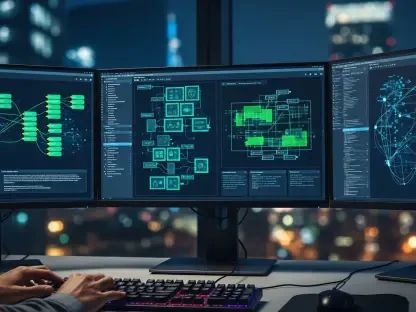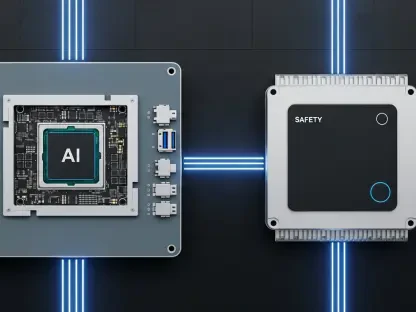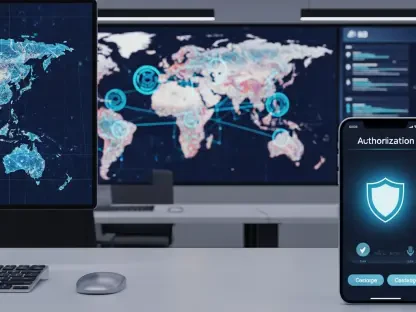

Imagine a world where software development races ahead at breakneck speed, delivering innovative solutions daily, yet security vulnerabilities lurk undetected in the shadows, ready to strike at the most critical moment. This is the reality for many organizations today as they embrace DevSecOps, a methodology blending development, security, and operations into a seamless pipeline. Projections suggest that the DevSecOps market could soar to USD 19 billion by 2030, a testament to its transformative power. However, while speed and collaboration thrive, security often lags, creating a dangerous buildup of “security debt” with each release. A striking statistic reveals that over 61% of organizations test less than 60% of their critical applications, exposing a glaring gap between rapid development and robust protection. Thankfully, Artificial Intelligence (AI) steps in as a game-changer, promising to bridge this divide by automating and enhancing security processes to match the pace of modern pipelines.
1. Addressing the Security Gap in DevSecOps
The essence of DevSecOps lies in its ability to integrate security into every phase of software development, fostering a collaborative environment where developers, operators, and security teams work in unison. Yet, despite this noble aim, the reality often paints a different picture. Traditional security practices struggle to keep up with the velocity of development and operations, leaving critical applications exposed. The disconnect is evident as teams prioritize speed over thorough testing, resulting in potential vulnerabilities slipping through unnoticed. This imbalance not only risks data breaches but also undermines trust in the very systems designed to protect users. As organizations push code to production at an unprecedented rate, the need for a smarter approach becomes undeniable. AI offers a beacon of hope here, with the potential to transform how security is embedded in the pipeline, ensuring that it’s no longer an afterthought but a core component of the process.
Moreover, the scale of the challenge demands more than just manual intervention or outdated tools. AI-driven solutions can analyze vast datasets in real time, spotting patterns and threats that human oversight might miss. By leveraging machine learning, these systems adapt to evolving risks, providing a proactive shield against attacks. Unlike conventional methods that slow down cycles with cumbersome checks, AI streamlines security without sacrificing accuracy. For instance, it can predict vulnerabilities before they manifest, allowing teams to address issues at the earliest stage. This shift from reactive to preventive measures marks a significant leap forward, aligning security with the high-speed demands of today’s development landscape. As the industry grapples with mounting security debt, embracing AI could be the key to restoring balance and safeguarding critical systems against emerging threats.
2. Powering DevSecOps with AI Automation
Delving deeper into AI’s role, it’s clear that this technology redefines how security operates within DevSecOps by automating complex tasks with precision. Traditional manual processes often hinder efficiency, bogging down CI/CD pipelines with delays and errors. AI changes the game through tools like Static Application Security Testing (SAST), which intelligently analyzes source code to identify vulnerabilities while minimizing false positives. Beyond detection, it offers automated remediation suggestions, drastically cutting down the time spent on fixes. Additionally, AI enhances Security Orchestration, Automation, and Response (SOAR) platforms, sharpening threat detection and delivering actionable insights for swift incident response. This level of automation ensures that security keeps pace with development, creating a pipeline where risks are addressed as they emerge rather than after the fact.
Furthermore, the ability of AI to process massive volumes of data—such as code changes, build logs, and deployment metrics—sets it apart from conventional approaches. Continuous monitoring of the CI/CD pipeline becomes a reality, with AI assessing risk levels of incoming code changes to maintain software integrity. This real-time analysis helps teams stay ahead of potential breaches, fostering a more resilient environment. Unlike static security measures that become obsolete over time, AI models learn from diverse codebases and historical data, refining their accuracy with each cycle. The result is a dynamic system that not only identifies threats but also prioritizes them based on severity, empowering teams to focus on what matters most. By embedding such intelligence into DevSecOps, organizations can achieve a seamless blend of speed and safety, setting a new standard for software delivery.
3. Building an Intelligent DevSecOps Pipeline
Creating an AI-driven DevSecOps pipeline requires a strategic approach that weaves security and automation into every stage of the software delivery lifecycle. The goal is to build a system that not only reacts to threats but anticipates and prevents them through continuous learning and adaptation. A recommended four-phase process can guide this transformation, starting with planning and coding. This initial stage focuses on cultivating a security-first culture through leadership commitment and cross-team alignment. A “human-in-the-loop” strategy ensures shared responsibility among Dev, Ops, and Sec teams. Threat models, secure coding standards, and pre-commit secret scanning are established, alongside the selection of AI-powered tools like IDE plugins and SAST solutions. These tools must integrate smoothly into the CI/CD stack to avoid friction, laying a strong foundation for the pipeline.
In the second phase—build and test—automation takes center stage as security gates are embedded in the CI pipeline. Container images are scanned, policy checks are enforced, and dynamic testing is implemented to maintain both speed and protection. AI-driven tools such as Dynamic Application Security Testing (DAST) and platforms like Synk, alongside Infrastructure as Code (IaC) scanners like Terrascan, play a pivotal role here. The third phase, deploy and release, emphasizes automated configuration validation and runtime security checks, ensuring actionable feedback reaches developers promptly. Tools like Falco for Kubernetes security enhance anomaly detection. Finally, the monitor and respond phase establishes continuous compliance tracking via dashboards and alerts, supported by AI-enabled systems like Security Information and Event Management (SIEM). This structured approach ensures pipelines evolve based on real-time data, delivering robust security at every turn.
4. Strategizing AI Integration for DevSecOps Success
Implementing an AI-enhanced DevSecOps strategy starts with embedding a security-first mindset across the organization. This means appointing AI-trained champions to drive initiatives and fostering shared accountability among teams. Starting with high-impact projects offers a practical entry point for scaling efforts, while adopting policy-as-code automates compliance across infrastructure and applications. AI must be integrated at every stage, even in small beginnings, with static analysis tools catching vulnerabilities early in development workflows. A zero-trust approach, validating all connections within the CI/CD pipeline through automated scanning, further strengthens defenses. Such measures ensure risks are identified and mitigated before they escalate, creating a proactive security posture that aligns with rapid development cycles.
Beyond tools and policies, the human element remains crucial in this transformation. Continuous training equips teams with the skills to handle emerging threats and new technologies, ensuring adaptability in a fast-evolving landscape. AI-powered anomaly detection adds depth to security testing by analyzing logs and runtime behavior for subtle threat patterns, while integrated toolchains reduce complexity and false positives. Establishing secure coding standards from the outset minimizes flaws at the source, reinforcing pipeline integrity. This holistic strategy balances automation with oversight, ensuring that AI enhances rather than replaces human judgment. By prioritizing education and consistency, organizations can build a DevSecOps framework that not only addresses current challenges but also anticipates future risks, paving the way for sustained innovation and safety.
5. Reflecting on the Path to Smarter Security
Looking back, the journey to integrate AI into DevSecOps emerged as a response to the growing disconnect between development speed and security readiness. Organizations grappled with mounting security debt as traditional methods faltered under the pressure of rapid releases. AI stepped in as a powerful ally, automating complex tasks and enabling proactive threat prevention across pipelines. Each phase of implementation, from planning to continuous monitoring, demonstrated how intelligent systems could transform vulnerabilities into opportunities for improvement. The adoption of tools like SAST and SOAR platforms redefined incident response, while structured processes ensured security remained a priority at every step. This evolution marked a turning point, proving that technology and strategy could align to protect critical systems without sacrificing efficiency.
As the industry moved forward, the emphasis shifted to actionable next steps for sustaining this momentum. Prioritizing secure coding practices and ongoing training became essential to empower teams against emerging threats. Exploring advanced AI integrations to further reduce false positives offered a promising avenue for refinement. Additionally, fostering cross-team collaboration through shared metrics and feedback loops helped eliminate silos, strengthening the pipeline’s resilience. The focus also turned to scalability, encouraging organizations to expand AI-driven initiatives across diverse projects while adapting to new regulatory demands. By embedding security by design through intelligent automation, the groundwork was laid for a future where DevSecOps could thrive amidst complexity, ensuring that innovation and protection went hand in hand.