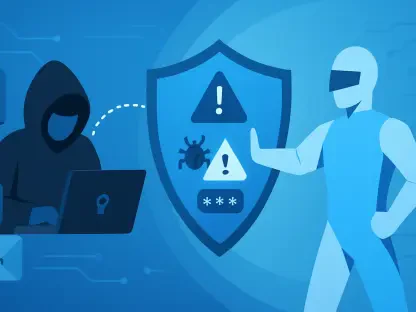

In the silent corridors of modern data centers, a massive surge of automated identities has quietly overtaken the human population, creating a security gap that traditional defense mechanisms are no longer equipped to handle. While corporate security departments have spent the better part of the last decade and millions of dollars perfecting multi-factor authentication and biometric logins for their employees, a far more numerous and potentially lethal population has been allowed to propagate without equivalent oversight. In the current cloud-native landscape, machine identities—comprising service accounts, API keys, secrets, and OAuth tokens—now outnumber the human workforce by a staggering ratio of twenty to one. These non-human entities represent the modern keys to the digital kingdom, yet they operate in a secondary tier of visibility, often possessing administrative privileges that far exceed those of their human counterparts. The fundamental risk has shifted from a human user clicking a malicious link to a neglected, over-privileged bot or service account becoming the primary gateway for a sophisticated breach.
The complexity of managing this massive non-human population is compounded by the fact that machines do not sleep, do not adhere to traditional business hours, and do not possess the behavioral tells that security teams usually rely upon to detect a compromise. A service account might execute thousands of transactions per minute as part of its normal routine, making it nearly impossible to distinguish between legitimate activity and a data exfiltration event without highly granular context. This burgeoning crisis is not merely a technical oversight but a systemic failure in how trust is allocated within the infrastructure. As organizations continue to scale their cloud operations, the mismanagement of these machine credentials has created a silent vulnerability that is increasingly being targeted by threat actors who recognize that an API key is a much more efficient weapon than a stolen password.
Beyond the Login Screen: The Silent Population Outnumbering Human Users Twenty to One
The era of human-centric security has reached its natural conclusion, giving way to a landscape dominated by billions of automated interactions that never touch a browser or a keyboard. While the industry successfully moved toward securing the workforce with Single Sign-On and hardware security keys, the population of non-human identities grew at an exponential rate, largely invisible to the centralized identity teams. Every microservice, every container in a Kubernetes cluster, and every automated script in a continuous integration pipeline requires its own identity to interact with databases, cloud buckets, and external third-party services. This explosion of machine identities has occurred without the benefit of the rigorous lifecycle management that governs human users, leading to a massive sprawl of credentials that are often hardcoded, shared across teams, or simply forgotten after a project is completed.
Furthermore, the lack of accountability for these machine identities creates a unique challenge for incident response and governance. Unlike a human employee who can be offboarded through a standardized HR process, a machine identity often lacks a clear owner or a designated expiration date. This results in “orphan identities” that persist in the environment long after the original service has been decommissioned, providing a permanent, unmonitored backdoor into sensitive infrastructure. The sheer volume of these credentials means that manual auditing is no longer feasible, yet many organizations continue to treat machine identity as a secondary concern, failing to realize that the vast majority of their attack surface is now comprised of these automated entities. The reality is that the modern perimeter is no longer a firewall or a login screen; it is the collective permissions of twenty times more machines than there are people in the organization.
The Evolution of the Perimeter: From Workforce Identity to Workload Integrity
For several decades, the security industry operated under the assumption that if the human user was verified, the system was safe. This led to a heavy concentration of resources on workforce identity management, focusing on session monitoring and endpoint protection for laptops and mobile devices. However, the rapid migration to cloud-native architectures and the adoption of serverless computing have rendered this human-centric model entirely obsolete. In a modern environment, the real security boundary is defined by machine-to-machine interactions, where the integrity of the workload is the only thing standing between a secure environment and a total compromise. This tectonic shift has given rise to a phenomenon known as “Machine Identity Debt,” a compounding risk where credentials are created by automated systems, granted excessive permissions to ensure smooth deployment, and then left unmonitored as the development teams move on to the next task.
This identity debt accumulates as a byproduct of the tension between engineering speed and security governance. In the race to deploy features and maintain high availability, security is often viewed as a friction point, leading engineers to use long-lived, static API keys or broad “admin” roles for service accounts just to “make it work.” The problem is that these temporary shortcuts frequently become permanent fixtures of the infrastructure. As the number of these over-privileged, static credentials grows, the organization loses its ability to reconcile who has access to what, creating a gap that threat actors are eager to exploit. This debt is not just a technical burden; it is a financial and operational risk that, if left unmanaged, leads to a state of identity bankruptcy where the sheer volume of issued trust is so vast that it can no longer be audited or secured with existing tools.
Lessons from the Salesloft Breach: How Valid Credentials Become Dangerous Weapons
The high-profile security incident involving Salesloft and Drift in late 2025 provides a definitive case study for why traditional, human-focused security controls are no longer sufficient to protect the enterprise. In this coordinated campaign, a threat actor identified as UNC6395 did not rely on malware, social engineering, or complex zero-day exploits. Instead, the attackers capitalized on the most common vulnerability in the cloud: a valid, stolen OAuth token. By obtaining this token from a GitHub repository where it had been inadvertently exposed, the attacker was able to impersonate a chatbot integration that had already been granted wide-ranging permissions across hundreds of different Salesforce environments. This was not a breach of a firewall or a password; it was a breach of a trusted machine relationship.
What made this incident particularly terrifying was the ability of the attacker to move laterally across the customers’ infrastructures without triggering any of the traditional alarms designed to catch human intruders. Because the chatbot was a “trusted” machine identity, its automated requests for data were viewed as legitimate by the system. The attacker was able to harvest sensitive account records and even extract further secrets, such as AWS keys and Snowflake tokens, which had been mistakenly pasted into support ticket descriptions by human users. This incident highlights the inherent danger of “standing access” for machine identities. Once a single token or key is compromised, the attacker inherits the full trust of that identity, bypassing every defense built for the human workforce because the system assumes the automated request is pre-authorized and benign.
The AI Multiplier and the Growing Crisis of Secrets Sprawl
The scale of machine identity mismanagement has reached a breaking point, largely accelerated by the widespread adoption of AI-assisted coding and the rapid pace of automated software development. Recent industry research indicates that code generated with the help of AI models tends to leak sensitive secrets—such as API keys and private certificates—at twice the rate of human-written code. As developers rely more heavily on these tools to speed up their workflows, the volume of hardcoded credentials pushed to both private and public repositories has skyrocketed. In the previous year alone, over 28 million distinct secrets were detected in public commits, and the median time for an organization to remediate such an exposure often exceeds 90 days. This lag time provides a massive window of opportunity for automated “secret-scraping” bots that can detect and exploit an exposed key within seconds of it appearing online.
Furthermore, the problem of secrets sprawl extends far beyond the codebase itself. In the frantic search for speed and troubleshooting efficiency, developers frequently share machine keys and authentication tokens through internal communication channels like Slack, Microsoft Teams, and Jira. These credentials often remain active and valid indefinitely, sitting in unencrypted chat logs that are visible to a wide range of employees and potentially vulnerable to any attacker who gains a foothold in the corporate communication platform. This creates a secondary layer of identity debt that is even harder to track than the secrets in the code. When AI agents are introduced into these environments to help automate tasks, they often “learn” from these chat logs or code repositories, inadvertently reproducing or utilizing exposed credentials in ways their creators never intended, further complicating the task of maintaining a clean and secure identity posture.
Why Legacy Security Models Create Dangerous Blind Spots in Automated Environments
The fundamental failure of legacy security models in the age of the machine lies in their reliance on human-centric behavioral baselines. Most detection systems are tuned to look for anomalies that a human might produce, such as a user logging in from an unfamiliar geographic location, at an unusual time of night, or from a device they have never used before. However, these metrics are completely irrelevant for a service account or a serverless function that operates globally, 24/7, and triggers thousands of API calls from a rotating set of dynamic IP addresses. In an automated cloud environment, “unusual” behavior is nearly impossible to define without a deep, contextual understanding of what each specific microservice is programmed to do. This lack of a baseline means that when a machine identity is hijacked, its activities often blend perfectly into the noise of the production environment.
Moreover, machine identities lack the inherent accountability that comes with a human employee who has a manager, a department, and a physical identity. A script or a CI/CD pipeline can create a new service account with administrative privileges in seconds, but there is rarely a corresponding process to ensure that the account is deleted when the job is done. This leads to a total lack of ownership, where the security team sees a credential active in the logs but cannot determine which developer created it or whether it is still necessary for the business. This lack of visibility is the primary driver of “Identity Bankruptcy,” a state where the organization becomes so overwhelmed by the sheer number of credentials and permissions that it can no longer distinguish between a legitimate automated task and a malicious actor moving through the stack. In this environment, every unmanaged secret is a permanent backdoor that an attacker only needs to find once.
Transitioning to Adaptive Machine Trust: A Framework for Engineering Leaders
To effectively combat the rising tide of machine identity debt, engineering and security leaders must move away from the outdated concept of static secrets and embrace a framework known as Adaptive Machine Trust Architecture (AMTA). This approach replaces long-lived credentials, which are essentially shared passwords for machines, with short-lived, cryptographically verifiable identities. By implementing frameworks such as SPIFFE—the Secure Production Identity Framework for Everyone—organizations can ensure that every request between microservices is verified based on the current state and nature of the workload rather than a persistent secret stored in an environment variable. This model shifts the security paradigm from “trust but verify” to “verify every transaction,” ensuring that even if a single component is compromised, the attacker cannot use its identity to move laterally without re-verifying their status.
Practical implementation of this architecture involves several critical shifts in how software is built and deployed. First, organizations must move toward Just-in-Time authorization, where access is granted only for the specific duration of a task and then immediately revoked. Second, the use of policy-as-code tools, such as the Open Policy Agent, allows security teams to separate the logic of who can access what from the application code itself. This separation of concerns ensures that security policies can be updated, audited, and enforced globally across the entire infrastructure without requiring a redeployment of the services. By automating the lifecycle of machine identities—from issuance to rotation and eventually to decommissioning—engineering leaders can finally align their security posture with the speed of their delivery pipelines, paying down their identity debt through structural architecture rather than manual cleanup efforts.
Key Metrics for Quantifying and Paying Down Identity Debt
Success in securing the non-human population requires a move away from qualitative “security theater” and toward data-driven key performance indicators that quantify the actual risk of the environment. Engineering leaders should prioritize the tracking of the Mean Credential Lifetime, which measures the average age of all active secrets within the infrastructure. In a mature, secure environment, this metric should be trending downward, moving from months or weeks to hours or even minutes. A second critical metric is the Attestation Percentage, which represents the ratio of workloads that are authenticated via cryptographically verifiable identities versus those that still rely on static API keys. High attestation indicates that the organization has successfully transitioned to a more resilient identity model where trust is earned in real-time rather than inherited from a long-lived file.
In addition to these structural metrics, organizations must also monitor the “blast radius” of their third-party integrations and service accounts. This involves measuring how many disparate data stores or services a single machine identity can access and identifying cases where permissions are excessively broad. By implementing automated scanning to detect credential exposure in non-production environments like Slack or Jira, and by tracking the frequency of secret rotation, teams can gain a clear picture of their overall identity health. The goal is to create a culture of proactive governance where identity debt is treated with the same urgency as financial debt. By establishing these metrics and making them visible to both the security and engineering teams, organizations can begin the systematic process of paying down their vulnerabilities before they are discovered and exploited by an external threat actor.
The resolution of the machine identity crisis required a fundamental reconsideration of the traditional trust models that had governed the industry for decades. It was eventually recognized that the survival of secure cloud-native architectures depended on the ability to treat every automated request as a unique event requiring cryptographic proof of intent and origin. By moving away from the dangerous reliance on static secrets and toward a model of continuous, adaptive trust, organizations managed to regain visibility into the silent majority of their digital ecosystems. This shift was not merely a technical upgrade but a cultural transformation that elevated machine identity to the same level of strategic importance as the human workforce. The ultimate lesson learned from the many breaches of the past was that in an automated world, the only way to maintain security was to ensure that every secret had an expiration date and every identity had a verifiable purpose.
The journey toward a more resilient infrastructure involved the widespread adoption of policy-as-code and the integration of identity management directly into the development lifecycle. This integration allowed security teams to move from being a bottleneck to becoming an enabler of safe, high-speed innovation. Leaders who prioritized the health of their machine identity landscape found that they could not only reduce the risk of a catastrophic breach but also improve the overall efficiency and reliability of their systems. As the population of machines continued to grow, the organizations that succeeded were those that had the foresight to build an identity foundation capable of supporting a world where the human user was no longer the primary inhabitant of the network. The focus remained steadfastly on the elimination of permanent standing access, ensuring that the keys to the kingdom were never left unattended in the shadows of the code.