
The integration of artificial intelligence into software development has rapidly evolved from a novel concept to a fundamental necessity, with a recent market shift pushing AI beyond simple code completion tools and into the very fabric of the DevOps lifecycle. The promise is no longer just about writing code faster but about creating a more intelligent, automated, and context-aware environment where development, security, and operations converge seamlessly. This transformation is being spearheaded by the introduction of agentic AI platforms designed to understand and act within an organization’s unique ecosystem. GitLab’s official release of its Duo Agent Platform marks a pivotal moment in this evolution, introducing a system where AI agents are not just assistants but active participants in the entire software delivery process. This platform aims to provide development teams with sophisticated automation that operates with a deep understanding of an organization’s specific context, adhering to its established standards and governance protocols from the outset. By embedding this intelligence directly into the workflow, the goal is to streamline complex processes, enhance security, and empower developers to focus on innovation rather than administrative overhead, fundamentally reshaping how teams collaborate and deliver value.
The Dawn of an Agentic DevOps Era
From Assistant to Active Participant
The centerpiece of this new platform is Agentic Chat, a significant evolution of the previous Duo Chat that fundamentally redefines the role of AI in a developer’s daily tasks. This advanced tool leverages a profound contextual understanding derived from nearly every component within the GitLab ecosystem, including issues, merge requests, CI/CD pipeline data, and critical security findings. Unlike earlier AI assistants that primarily offered suggestions or code snippets, Agentic Chat transitions into an active role, capable of performing concrete actions on behalf of the developer. Based on natural language commands and pre-configured permissions, it can autonomously create issues, structure epics, and initiate merge requests, directly translating conversation into workflow execution. GitLab has intentionally designed this functionality to be an integral and unobtrusive part of a developer’s environment, accessible within the GitLab web interface as well as through extensions in widely used IDEs like Visual Studio Code and JetBrains. This deep integration ensures that the AI functions as a natural extension of the developer’s workflow rather than a separate, context-switching application, thereby minimizing disruption and maximizing efficiency.
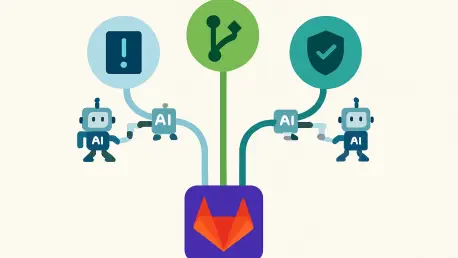
This shift from passive recommendation to active execution represents a significant leap in AI-driven development. The Duo Agent Platform launches with two pre-built foundational agents that showcase this capability: the Planner agent, designed to help teams structure and prioritize work by analyzing project goals and existing tasks, and the Security Analyst agent, which meticulously analyzes vulnerabilities and proposes actionable next steps to remediate them. These agents provide immediate value out of the box, but the platform’s true power lies in its extensibility. GitLab has announced that more specialized agents are already in beta, promising even more tailored assistance for specific domains. Crucially, the platform is engineered to be highly customizable, allowing organizations to build their own bespoke agents that are finely tuned to their unique internal processes, coding standards, and compliance requirements. This open architecture ensures that the AI can adapt to the organization, not the other way around, fostering a more natural and effective adoption of AI-driven automation across the development lifecycle.
Orchestration and Governance at Scale
For handling more complex, multi-step operations that are common in modern software delivery, the platform introduces a powerful feature known as Agentic Flows. This capability enables the sophisticated orchestration of multiple agents, allowing them to work in concert to tackle large-scale tasks that would otherwise be manually intensive and error-prone. A prime example is the migration of legacy CI/CD pipelines, a process that can involve intricate dependencies and extensive refactoring. With Agentic Flows, a combination of agents can analyze the existing pipeline, identify necessary changes, generate new configurations, and validate the results, all while providing checkpoints for human oversight and approval. Similarly, this feature can be used to streamline code reviews by having agents automatically check for style guide adherence, potential security flaws, and performance bottlenecks before a human reviewer even sees the code. This combination of powerful, multi-agent automation with the option for human-in-the-loop intervention strikes a critical balance, accelerating processes without sacrificing quality control or developer autonomy.
Recognizing that the adoption of powerful AI tools in an enterprise setting hinges on trust and control, GitLab has built robust governance controls directly into the core of the Duo Agent Platform. This enterprise-ready framework provides organizations with granular authority over every aspect of AI usage, ensuring that automation aligns perfectly with internal security policies and compliance mandates. Administrators can precisely manage AI model selection, allowing them to choose between different large language models based on performance, cost, or data privacy considerations. Access to AI capabilities and specific agents can be controlled through group-based rights, which integrate seamlessly with existing enterprise identity systems like LDAP and SAML. This ensures that only authorized personnel can leverage certain AI functions. Furthermore, approvals for tool usage can be configured to align with existing security frameworks, preventing the unauthorized use of external integrations. Available for both GitLab.com and self-managed installations, this comprehensive approach to governance was designed to embed AI deeply and safely into the development process.