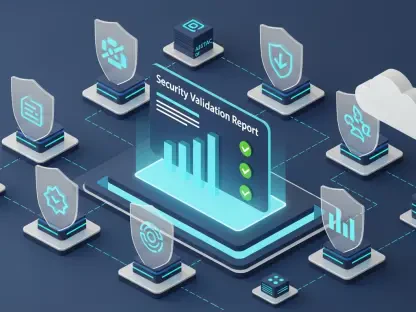

The sudden realization that a clinic’s digital patient records have been compromised often begins not with a dramatic siren, but with a simple, failed login attempt or a cryptic file extension on a local server. Small medical practices across the United States are currently navigating a treacherous digital landscape where they are expected to uphold the same rigorous HIPAA standards as multi-billion-dollar hospital networks, yet they must do so without the luxury of dedicated security departments. This disparity creates a significant vulnerability gap, as independent providers often rely on outdated software or manual processes that cannot keep pace with modern cyber threats. By integrating security directly into the development and operational lifecycle—a methodology known as DevSecOps—these smaller entities can fundamentally transform their defensive posture. This shift allows for the creation of a resilient infrastructure that protects sensitive health information through automated, repeatable processes rather than relying on the hope that a single IT contractor has covered every possible entry point.
Securing Access and Identity Management
Mitigating the Human Element of Risk
The most sophisticated encryption in the world offers little protection if an attacker can simply walk through the front door using credentials harvested from a former employee or a shared office spreadsheet. In the context of a small medical practice, “zombie accounts”—access permissions that remain active long after a staff member has departed—represent a ticking time bomb for HIPAA compliance. DevSecOps addresses this human-centric risk by implementing automated identity lifecycle management, ensuring that access is granted based on the principle of least privilege. This means a billing specialist only sees financial data, while a nurse only accesses clinical records, with no overlapping administrative rights that could be exploited. Furthermore, enforcing multi-factor authentication (MFA) across every single touchpoint of the practice’s network acts as a critical secondary barrier. Even if a password is leaked or guessed, the requirement for a physical token or a biometric scan prevents unauthorized entry, effectively neutralizing the most common vector for data breaches in healthcare today.
Beyond just technical settings, fostering a culture of security awareness through systematic guardrails is essential for long-term sustainability. When security becomes a background process rather than an intrusive hurdle, staff members are less likely to seek dangerous workarounds that compromise the integrity of patient data. For instance, implementing single sign-on (SSO) solutions allows practitioners to move between different medical applications without needing to remember a dozen different weak passwords, which inherently reduces the temptation to write them down on sticky notes. By centralizing identity management, a practice can also perform instant audits to see who accessed what information and when, fulfilling a core HIPAA requirement while simultaneously strengthening the perimeter. This proactive stance ensures that the “human element,” often cited as the weakest link in cybersecurity, is instead supported by a framework that makes the right security choices the easiest ones to follow during a busy clinical day.
Safeguarding Sensitive Credentials
Hardcoding API keys or database passwords directly into software code is a frequent but dangerous shortcut that can lead to catastrophic data exposure if a repository is ever compromised. To prevent this, small practices must transition toward centralized secret management, using specialized tools like AWS Secrets Manager or HashiCorp Vault to keep sensitive credentials encrypted and out of reach. These systems allow for the automatic rotation of passwords, meaning that even if a secret is somehow intercepted, its utility to an attacker is strictly limited by time. This technical layer ensures that the “crown jewels” of the practice—the databases containing Protected Health Information (PHI)—are never accessible through static, unchanging keys. By decoupling credentials from the application code itself, developers and IT staff can maintain and update systems without ever being exposed to the raw passwords, significantly reducing the internal risk of accidental or intentional data leaks.
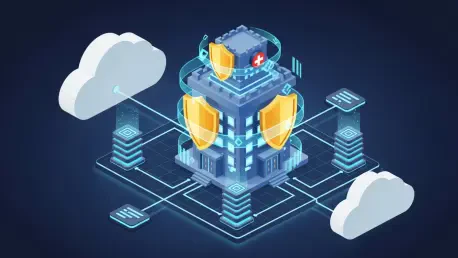
This methodology naturally leads to the creation of an “onion-like” security architecture where data is protected by multiple, independent layers of defense. In such an environment, the database hosting sensitive patient records is tucked away within a private subnet, completely isolated from the public internet and accessible only through a strictly controlled application layer. Traffic between these layers is filtered by security groups that act as intelligent firewalls, allowing only specific, pre-approved communications to pass through. When combined with rigorous logging of every administrative action, this structure provides a comprehensive trail of accountability. If an unauthorized attempt to access a secret occurs, the system can trigger immediate alerts, allowing the practice to respond to a potential threat before it escalates into a full-scale breach. This level of granular control, once reserved for enterprise-level data centers, is now accessible to small clinics through cloud-native DevSecOps tools.
Infrastructure Resilience and Cloud Strategy
Transitioning to a Recovery-First Mindset
A common misconception among small medical providers is that a daily backup job is a sufficient insurance policy against data loss or ransomware. However, the true measure of a practice’s resilience is not the existence of a backup, but the verified ability to restore that data into a functional environment within a reasonable timeframe. A DevSecOps approach shifts the focus from simple data preservation to a “recovery-first” mindset, where restoration procedures are treated as a critical operational capability that must be regularly exercised. This involves conducting scheduled recovery drills that simulate various failure scenarios, from a localized server crash to a complete regional outage of a cloud provider. By practicing these responses, the practice ensures that its technical staff knows exactly how to rebuild the environment and reconnect patient services, minimizing the potentially devastating impact of downtime on both clinical outcomes and the practice’s professional reputation.
Furthermore, a resilient infrastructure must be built on the concept of immutability, where servers and services are not “patched” in place but are instead replaced by fresh, updated versions. This prevents the “configuration drift” that often occurs over time in traditional IT environments, where small, undocumented changes can create hidden security holes. In a DevSecOps framework, the entire environment is defined by code, allowing it to be redeployed from scratch in minutes if a compromise is suspected. This ability to “nuke and pave” the digital infrastructure provides a level of certainty that is impossible to achieve with manual server management. When a practice can prove that its backup and recovery systems are not just theoretical but are tested and repeatable, it fulfills the HIPAA requirement for a contingency plan while providing the peace of mind that patient care can continue regardless of the technical challenges faced.
Avoiding the Pitfalls of Over-Engineering
The allure of cutting-edge technology often leads small IT teams to adopt overly complex architectures, such as Kubernetes clusters or sprawling microservices, which they lack the resources to manage effectively. For a small medical practice, these complex systems often introduce more security risks than they solve because every additional component expands the attack surface and increases the likelihood of a misconfiguration. A more sustainable and secure path involves utilizing managed services like AWS ECS or Fargate, which handle much of the underlying operational “heavy lifting” while providing robust security by default. By choosing simpler, more manageable deployment models, a practice can focus its limited resources on securing the application itself rather than struggling with the intricacies of managing a complex container orchestration platform. This strategic simplicity ensures that the security posture remains tight and understandable for the people responsible for maintaining it.
Cloud infrastructure serves as a powerful facilitator for HIPAA compliance, but it is not a “plug-and-play” solution that grants automatic certification. While providers like AWS or Azure offer high-level encryption at rest and in transit, these features must be intentionally configured and monitored to meet the specific demands of healthcare regulations. A small practice must actively manage its “shared responsibility” by ensuring that logging is enabled, encryption keys are properly managed, and network permissions are as restrictive as possible. By leveraging Infrastructure as Code (IaC), these configurations can be standardized and applied consistently across all environments, eliminating the human error inherent in manual setup. This disciplined approach to cloud strategy allows a small clinic to benefit from enterprise-grade security tools while keeping the overall system architecture lean, transparent, and significantly easier to defend against the evolving landscape of digital threats.
Continuous Compliance and Visibility
Implementing the Shift-Left Movement
The “shift-left” philosophy is a cornerstone of modern DevSecOps, advocating for the integration of security checks at the very beginning of the software development process rather than treating them as a final inspection. For a medical practice, this means that before a single line of code is deployed to a patient portal or an internal scheduling tool, it must pass through an automated Continuous Integration and Continuous Deployment (CI/CD) pipeline. These pipelines act as rigorous digital checkpoints that automatically scan for known vulnerabilities, exposed secrets, or deviations from security best practices. By catching these issues in the development stage, the practice avoids the high cost and risk of fixing security flaws in a live environment where patient data is actively at stake. This automation ensures that security is a constant, invisible companion to every update, providing a level of oversight that a manual review process could never hope to achieve.
Integrating these automated scans also serves to educate the technical team, as they receive immediate feedback on the security implications of their work. Rather than waiting for a biannual audit to discover that a database was left open to the public, the CI/CD pipeline will flag the error the moment the configuration is written. This rapid feedback loop transforms security from a reactive burden into a proactive habit, fostering a sense of shared responsibility for data protection. Moreover, because these checks are automated, they can be scaled effortlessly as the practice grows or as the complexity of its software increases. The result is a robust, self-correcting system where only code that meets a predefined security baseline is allowed to touch PHI. This methodology effectively bridges the gap between fast-paced software updates and the stringent, slow-moving requirements of HIPAA compliance, ensuring that innovation never comes at the expense of patient privacy.
Generating Audit Trails Through Automation
A central pillar of HIPAA compliance is the ability to provide a comprehensive audit trail that details every access request and every modification made to the system handling patient data. In a traditional setting, gathering this information for an auditor can be a grueling, manual process that takes weeks and is prone to errors or omissions. However, by using Infrastructure as Code (IaC), a small practice can generate these records as an effortless byproduct of its daily operations. Since every change to the infrastructure is recorded in a version-controlled repository, the practice has a permanent, unalterable history of who authorized a change, what the change was, and when it was implemented. This level of transparency not only satisfies regulatory requirements but also provides an invaluable forensic tool in the event of a security incident, allowing the team to quickly identify and roll back unauthorized modifications.
The combination of automated logging and real-time visibility ensures that the practice is never “flying blind” when it comes to the security of its digital assets. Services like AWS CloudTrail or Azure Monitor can be configured to capture every API call and administrative login, funneling this data into a centralized dashboard where anomalies can be detected through automated alerts. For a small practice, this means that an unusual login attempt from an unrecognized location or an unexpected spike in data egress can be flagged immediately, often before a breach can fully materialize. This marriage of automation and visibility proves that achieving high-level security does not require a massive budget; it requires a commitment to technical discipline and the smart application of modern DevSecOps tools. By turning compliance from a manual chore into an automated reality, small medical practices can maintain the trust of their patients while focusing their energy on the primary goal of providing high-quality healthcare.
The transition toward a DevSecOps framework represented a fundamental shift in how small medical practices perceived their digital responsibilities, moving away from a model of reactive “firefighting” toward one of proactive, built-in resilience. By the time the implementation matured, the practice had successfully automated the most tedious aspects of HIPAA compliance, allowing the technical team to focus on improving patient care tools rather than manual auditing. Moving forward, the most effective next step for any independent clinic is to conduct a thorough audit of their current identity management and backup procedures, identifying the “zombie” accounts and untested recovery plans that represent the highest immediate risks. Small practices should prioritize the adoption of a basic CI/CD pipeline and centralized secret management, as these foundational elements provide the highest return on investment for both security and regulatory alignment. Ultimately, the sustained success of this approach depends on a culture of continuous improvement where security is treated as a core component of the medical service itself, ensuring that patient data remains protected in an increasingly interconnected and volatile digital world.