
The meticulous process of manual sample handling has traditionally acted as a persistent barrier to rapid innovation in the field of organic electronics. For decades, researchers have been tethered to gloveboxes, carefully navigating the fragile intersection of material science and environmental stability. This era of fragmented, labor-intensive routines is finally giving way to a more integrated future. Through the SMut project, a collaboration between the Fraunhofer Institute for Photonic Microsystems IPMS, Credoxys, and SweepMe! has established an automated ecosystem that transforms how delicate thin-film materials are characterized and refined.
The Shift From Manual Labor to Precision Robotics in the Lab
Modern laboratories are moving away from the “stop-and-go” nature of traditional material testing. In the past, characterizing organic electronics required constant human intervention to monitor environmental shifts and move samples between different measurement stations. This manual approach was not only slow but also introduced human error into highly sensitive data sets.
The introduction of modular hardware and intelligent software allows for a unified standard in the lab. By delegating repetitive tasks to a collaborative robotic framework, researchers are no longer bound by the physical constraints of sample manipulation. This transition ensures that the transition from fabrication to testing remains seamless, allowing for a higher volume of experiments without sacrificing the quality of the results.
Why Thin-Film Characterization Needs an Automated Overhaul
Thin-film materials, such as those found in cutting-edge OLEDs and gas sensors, possess an extreme sensitivity to external elements like oxygen and moisture. Even a brief exposure during the transfer between a fabrication unit and a testing station can lead to sample degradation, rendering hours of work useless. Moreover, understanding the long-term stability of these materials requires measurements that span several weeks, a timeline that is nearly impossible for human operators to manage manually.
Automation provides the necessary solution by maintaining a strict, constant environment. By removing the variability of human interaction, the system ensures that every measurement is performed under identical conditions. This level of repeatability is essential for isolating the performance of the material itself rather than reflecting fluctuations in the laboratory climate.
Core Components of the SMut Automated Measurement System
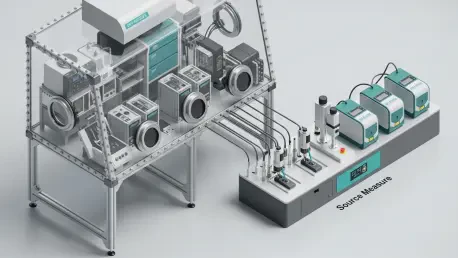
The advancement is centered on a hardware-software synergy that connects physical samples to digital analysis. Specialized portable sample carriers serve as protective vessels, allowing materials to be transported through glovebox environments without breaking the inert gas seal. These carriers dock directly into a base station capable of adjusting gas concentrations, pressure, and temperature with high precision.
On the digital side, the SweepMe! software platform acts as a universal interface for diverse laboratory instruments. Instead of requiring researchers to write unique code for every device, the platform offers an intuitive setup that syncs spectrometers, source measure units, and temperature controllers. This “out-of-the-box” capability allows for the creation of complex, autonomous measurement routines that run for weeks with minimal oversight.
Insights from the Field: Solving the Reproducibility Crisis
Experts in the industry, particularly those developing materials at Credoxys, emphasize that the true value of this automation is the elimination of the reproducibility crisis. In organic electronics, minor environmental changes can lead to vastly different performance metrics, making it difficult to verify results across different labs. The SMut project addresses this by standardizing the testing environment and the execution of measurement protocols.
During recent industry showcases, it became clear that this system does more than just collect data; it changes the role of the material scientist. By automating the mechanical aspects of testing, scientists can dedicate their energy to high-level analysis and creative problem-solving. This shift from “data gatherer” to “data interpreter” accelerates the development cycle for next-generation electronic components.
Implementing Automated Characterization in Organic Electronics Research
Transitioning to an automated model requires a strategic focus on environmental continuity. The first priority for any facility is ensuring that sample carriers are fully integrated with existing glovebox setups. This ensures that the material is protected from oxidation from the moment it is fabricated until the final data point is recorded.
Once the hardware is in place, the focus shifts to standardizing multi-device workflows through modular software. By synchronizing various measurement tools into a single, autonomous cycle, labs can execute “set-it-and-forget-it” testing. This approach not only maximizes the efficiency of the equipment but also provides a deeper look into the degradation patterns of materials over time, leading to more durable and efficient electronic devices.
In summary, the integration of these automated systems successfully bypassed the limitations of manual testing by providing a stable, repeatable environment for long-term study. This evolution moved the industry toward a standardized diagnostic framework that supported faster commercialization. Future efforts will likely focus on incorporating machine learning to predict material failure before it occurs, further refining the efficiency of organic electronics research.