
The landscape of enterprise software has undergone a seismic shift since the SolarWinds compromise of 2020. That event wasn’t just a technical failure; it was a wake-up call that exposed the industry’s collective habit of trusting software artifacts without any real verification. Our expert today, Vijay Raina, brings a deep background in SaaS technology and software architecture to help us navigate this new reality. He has spent years analyzing how organizations can move beyond the “blind trust” model and build resilient, transparent supply chains that can withstand modern adversarial tactics.
The following discussion explores the evolution of the Software Bill of Materials (SBOM) from a mere concept to a foundational security requirement. We dive into the technical hurdles of implementing cryptographic signing, the practical realities of reaching higher levels of build integrity through frameworks like SLSA, and the organizational challenges of enforcing these standards across diverse environments. Throughout our conversation, the focus remains on transforming security from a reactive compliance exercise into a proactive, automated capability that fundamentally changes how software is delivered and deployed.
Many organizations currently rely on implicit trust when deploying container images, assuming the integrity of base images and dependencies. How do you evaluate these hidden trust relationships, and what technical steps are required to transition from a “pull and run” model to automated verification at deployment?
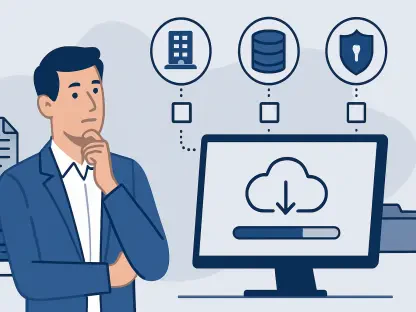
When an engineer pulls a container image from a registry today, they aren’t just running a small piece of code; they are placing their full confidence in a massive, invisible web of dependencies and build processes. You are implicitly trusting every library pulled during the build, the integrity of the CI/CD pipeline, and the registry itself, yet in most shops, none of these relationships are actually verified. To move away from this fragile “pull and run” model, organizations must first realize that container registries do not provide cryptographic guarantees by default. The transition requires a move toward automated verification where an admission controller or a similar gatekeeper sits at the edge of the production environment. This technical shift ensures that no image is allowed to execute unless it carries a valid, verifiable signature that proves it originated from an authorized pipeline and hasn’t been tampered with since its creation.
Using tools like Syft to generate a Software Bill of Materials can reduce vulnerability triage time by as much as 70%. How should engineering teams integrate these tools into CI/CD pipelines to ensure SBOMs are actionable artifacts, and what metrics best demonstrate the value of this automation?
Integrating tools like Syft shouldn’t be treated as an extra chore for developers; it needs to be baked directly into the platform templates so it happens automatically for every artifact. When a build runs, the tool analyzes the container image or filesystem and produces a complete SBOM in a standard format like SPDX or CycloneDX, which is then stored alongside the image. The real magic happens when a major vulnerability like Log4Shell hits—instead of manual triage that takes weeks, you can run a single query across your repository to see exactly which services are affected in seconds. One healthcare technology company saw their triage time drop by 70% after implementing this, proving that the best metric for success is the reduction in “mean time to identify” during a crisis. While remediation like rebuilding and redeploying still takes effort, having that immediate, granular visibility transforms a week of panic into an hour of organized action.
Traditional cryptographic signing is often neglected due to the overhead of long-lived key management. How do ephemeral keys and transparency logs change the operational burden for developers, and what specific workflows allow a pipeline to prove an artifact’s provenance without manual intervention?
For years, the sheer weight of managing GPG keys and distribution lists meant that most organizations simply skipped signing altogether because the overhead was too high. Projects like Sigstore have changed the game by utilizing ephemeral keys tied to OIDC identity, which essentially means the CI pipeline itself has an identity that signs the artifact. These signatures are then recorded in a transparency log like Rekor, creating a tamper-evident audit trail that doesn’t require developers to juggle long-lived private keys. The workflow is elegantly simple: the pipeline builds the artifact, generates the SBOM, signs both using its temporary identity, and pushes the whole package to the registry. This setup effectively closes the attack path where a malicious actor might try to substitute a “poisoned” artifact after the build, because the deployment gatekeeper will see the signature mismatch and block the execution instantly.
While frameworks like SLSA provide a roadmap for build integrity, many enterprises struggle with legacy services that lack modern build pipelines. What is a realistic strategy for scaling enforcement across a diverse environment, and how do you handle services that cannot meet high-level provenance requirements?
The reality on the ground is that most organizations are nowhere near SLSA Level 3, which requires isolated build environments and non-forgeable provenance. While modern platforms like GitHub Actions have made this more achievable recently, legacy systems remain a significant anchor that prevents a uniform rollout. A realistic strategy involves creating a tiered enforcement policy where modern services are held to high standards while legacy services are sequestered or granted temporary exceptions as they are migrated. You have to be honest about the gap between policy aspiration and operational reality, acknowledging that some teams might still be pulling images from undocumented registries. Scaling this enforcement isn’t just about the technology; it’s about the four-to-six-month slog of identifying every outlier and bringing them into a managed pipeline where at least basic provenance can be documented.
Regulatory mandates have made SBOMs a requirement for many contracts, yet there is a risk of treating them as mere “checkbox” documentation. How can leadership ensure these lists are integrated into active incident response workflows rather than just stored for audits, especially during a critical vulnerability event?
Leadership must guard against the “checkbox” mentality where an SBOM is treated like a dusty file attached to a contract deliverable and then forgotten. If the SBOM isn’t connected to the system that decides whether an image can be deployed, it adds zero value to your actual security posture—it only helps your audit posture. To make these artifacts truly functional, they must be integrated into active vulnerability triage and incident response playbooks so that security teams are querying them daily. You know you’ve succeeded when the SBOM repository is the first place your engineers look during a zero-day event, using that data to prioritize patching based on real-world exposure rather than guesswork. The goal is to move from “we have a list” to “we have a capability,” ensuring that the bill of materials is a living, breathing part of the software lifecycle.
Implementation of signature enforcement often reveals deep-seated issues with unauthorized registries and undocumented build steps. Can you walk through the process of moving from observation to strict enforcement, and what organizational friction should security teams prepare for during this four-to-six-month transition?
The journey to strict enforcement usually begins with a “log-only” mode where you observe how many images would have been blocked without actually stopping production traffic. This phase is almost always a revelation, exposing teams that have been quietly pulling images from public registries or using undocumented build steps that bypass official channels. As you move toward active blocking, expect significant friction from engineering teams who suddenly find their deployments failing because of a missing attestation or an unauthorized source. This transition typically takes four to six months because you aren’t just fixing code; you are changing the culture of how software is built and distributed. Security teams need to be ready to provide a “paved path”—pre-configured templates that make it easier for developers to sign their work than to skip the process entirely.
What is your forecast for software supply chain security?
I believe we are moving toward a future where “unverifiable software” will be treated with the same suspicion we currently reserve for unencrypted web traffic. Within the next few years, the automation of SBOM generation and cryptographic signing will become so invisible and ubiquitous that manual verification will seem like a relic of a primitive era. We will see a shift where the focus moves from simply listing components to verifying the “behavioral provenance” of those components—ensuring not just where code came from, but that it was built in a truly hermetic, tamper-proof environment. The organizations that thrive will be those that stop viewing security as a final gate and instead treat it as a continuous, machine-readable stream of data that informs every deployment decision in real-time. This isn’t just about avoiding the next SolarWinds; it’s about building a foundation of transparency that allows us to innovate at scale without the constant fear of the unknown.