
The rapid evolution of generative artificial intelligence has fundamentally altered how professionals interact with information, yet this convenience often masks a growing crisis regarding the ownership and security of sensitive corporate and personal data. As the initial excitement surrounding cloud-based chatbots matures into a more nuanced understanding of digital infrastructure, a paradigm shift is occurring toward localized, private AI systems. This transition is not merely a technical preference but a fundamental movement toward data sovereignty, where users reclaim control over their digital intelligence. The emergence of tools like AnythingLLM signifies a critical turning point in this evolution, offering a robust framework for document-based AI interactions that do not require an active internet connection or a leap of faith in a third-party provider’s privacy policy. By prioritizing local processing, professionals are now able to leverage the power of large language models without the inherent risks of data exfiltration or unauthorized secondary use of their proprietary information for model training.
The primary catalyst for this migration is the realization that the convenience offered by mainstream cloud AI services often comes at the cost of absolute confidentiality. Many users, from legal practitioners to financial analysts, have historically bypassed the dense legalese of terms-of-service agreements, only to later discover that their sensitive reports, confidential contracts, and internal strategy documents reside on external proprietary servers. This centralized model of AI utility creates a significant vulnerability, as data stored in the cloud remains susceptible to breaches, policy changes, and the opaque training practices of corporate giants. In contrast, adopting a local approach ensures that information remains strictly within the confines of the user’s hardware. This shift transforms the AI from a rented, external service into a private utility, mirroring the historical transition from centralized mainframe computing to the era of personal workstations, but with the added complexity of modern cognitive automation.
Streamlining Local Deployment and Hardware Efficiency
Technical Accessibility and Setup: Breaking the Barrier to Entry
The democratization of local artificial intelligence was previously hindered by the extreme technical complexity required to configure environment variables, manage Python dependencies, and optimize specialized libraries for specific hardware. In 2026, the arrival of streamlined desktop applications like AnythingLLM has fundamentally changed this dynamic by offering automated setup wizards that function with the simplicity of standard consumer software. These installers now automatically detect the presence of specialized hardware, such as NVIDIA GPUs, and handle the background installation of necessary components like CUDA libraries and media processing tools. This progress means that a user can move from a fresh download to a functional, private AI dashboard in less than five minutes, effectively removing the technical gatekeeping that once restricted local LLM usage to a small group of highly specialized developers and researchers.
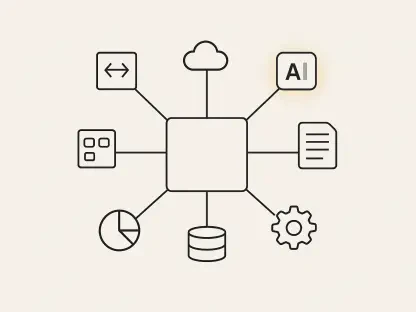
Furthermore, the integration of automated dependency management ensures that the system remains stable without requiring constant manual intervention from the user. For instance, the software seamlessly orchestrates the background processes needed for audio transcription, document parsing, and vector database management. By abstracting these complex layers, the platform allows professionals to focus on their primary tasks—such as auditing legal documents or synthesizing research—rather than troubleshooting the underlying infrastructure. This shift toward a user-centric design philosophy is critical for the widespread adoption of private AI, as it provides a path for organizations that lack dedicated IT departments to implement high-security digital assistants. The ability to deploy a full-stack AI environment locally without a single line of terminal command is perhaps the most significant milestone in making data sovereignty a practical reality for the average business user.
Flexible Performance and Integration: Optimizing Hardware for Private Intelligence
One of the most persistent myths regarding local AI is the requirement for prohibitively expensive, enterprise-grade hardware to achieve usable performance. While high-end GPUs certainly accelerate the speed of inference through parallel processing, the current generation of software is remarkably efficient at utilizing mid-range consumer hardware. Smaller, highly optimized models like Microsoft’s Phi-3 provide surprising depth and reasoning capabilities for standard document-based tasks, allowing users on standard laptops to engage in complex queries without experiencing significant latency. This flexibility ensures that the benefits of private AI are not limited to those with top-tier workstations, but are instead accessible across a wide spectrum of devices including various configurations of Windows, Linux, and macOS systems. The software intelligently allocates resources, ensuring that even systems without dedicated graphics cards can perform reliable analysis through CPU-based inference.
Beyond purely local execution, the system maintains its versatility by allowing users to bridge the gap between absolute privacy and high-speed processing through selective API integration. For scenarios where a user might need the immense reasoning power of a massive model like Llama 3 70B but lacks the local VRAM to run it, the platform supports connections to high-speed inference providers such as Groq. This hybrid approach allows for a “best of both worlds” scenario where less sensitive tasks can be offloaded to fast external APIs while highly confidential data remains strictly on-premises. Crucially, the interface allows for instantaneous switching between different model providers, preventing the vendor lock-in that characterizes most cloud-only ecosystems. This level of adaptability empowers the user to define their own security boundaries, deciding on a file-by-file basis whether to prioritize the speed of an external API or the absolute security of local processing.
Transforming Raw Documents into Actionable Intelligence
Reliable Knowledge Management: Turning Static Data into Interactive Insight
The core utility of a localized AI system lies in its ability to transform a static repository of documents—PDFs, spreadsheets, and text files—into a dynamic, searchable knowledge base. Through a process known as Retrieval-Augmented Generation, the system indexes the user’s local files and allows the AI to reference specific facts from those documents when generating responses. This functionality is particularly vital for professionals who must navigate thousands of pages of technical documentation or historical records. Instead of performing a keyword search and manually reading through dozens of results, the user can simply ask the assistant to summarize specific themes or identify discrepancies between different versions of a contract. This interactive relationship with data significantly reduces the time spent on administrative synthesis and allows for more cognitive resources to be dedicated to high-level decision-making and strategic planning.
To mitigate the risk of AI hallucinations—a common problem where models confidently state incorrect information—modern local systems implement robust citation frameworks. Every answer generated by the assistant is accompanied by traceable links that point directly to the specific page and paragraph of the source document used to formulate the response. This transparency is a critical requirement for academic, legal, and medical research, where the origin of a fact is just as important as the fact itself. By providing a clear audit trail, the system fosters a higher degree of trust than generic cloud chatbots, which often provide information without any verifiable source. This verifiable intelligence ensures that the local AI acts as a precise extension of the user’s own library, maintaining the integrity of the data while providing the speed of modern linguistic analysis to uncover hidden patterns and insights within the information.
Expanding the Digital Workspace: Integrating AI into Professional Workflows
The evolution of local AI has moved beyond the simple “chat-in-a-box” interface toward a more comprehensive digital workspace that integrates directly with existing professional tools. Advanced features such as autonomous AI agents and specialized command structures allow the system to perform complex, multi-step tasks that go beyond basic question-and-answer sessions. For example, an agent can be tasked with scanning a directory of research papers to find every mention of a specific chemical compound and then organizing those findings into a structured summary. This transition from a passive assistant to an active participant in the workflow is further enhanced by browser extensions and direct integrations with word processing software like Microsoft Word. These tools bring the power of the local knowledge base into the environment where the user is already writing, editing, and researching, creating a seamless and unified experience.
Moreover, the scalability of these systems allows them to transcend individual use, offering a viable path for collaborative team environments without sacrificing data security. Through containerized deployment methods like Docker, small-to-medium enterprises can establish a centralized, local AI instance that serves multiple team members while maintaining strict role-based access controls. This ensures that while the team benefits from a shared knowledge pool, sensitive administrative or financial data remains accessible only to authorized personnel. The ability to “white-label” and customize the workspace further allows organizations to tailor the AI experience to their specific branding and operational requirements. This holistic approach to integration suggests that local AI is not just a niche tool for privacy enthusiasts, but a foundational component of the modern professional infrastructure that enhances productivity while guarding the most valuable asset of the digital age: information.
The transition to localized artificial intelligence represented a decisive victory for individual and corporate data sovereignty in the face of increasingly centralized digital services. By migrating from cloud-dependent platforms to self-hosted systems like AnythingLLM, users successfully mitigated the risks associated with third-party data handling and opaque training practices. This shift demonstrated that the trade-off between sophisticated intelligence and absolute privacy was a false dilemma, as modern hardware and optimized models provided the necessary performance for professional-grade analysis. Organizations that prioritized these local configurations effectively immunized themselves against the vulnerabilities of external server outages and potential data breaches, establishing a more resilient and secure operational foundation. The ability to own rather than rent digital intelligence became the new standard for professional excellence and data security.
Moving forward, the focus for professionals and organizations should be on the strategic expansion of these local knowledge bases and the refinement of internal AI governance. To maximize the benefits of this technology, users ought to prioritize the digitization of their physical archives and the structured organization of their digital repositories to feed more accurate data into their private models. Investing in hardware with dedicated AI accelerators will further enhance the responsiveness of these systems, making them indistinguishable from cloud services in terms of speed. As local AI continues to evolve, maintaining a proactive stance on software updates and model optimization will ensure that the private digital workspace remains both cutting-edge and secure. The era of unquestioned reliance on the cloud concluded, leaving behind a more empowered, secure, and independent professional landscape.