
The relentless acceleration of software delivery, propelled by the widespread adoption of agentic AI and complex cloud-native architectures, has introduced a critical challenge for modern development teams. While the pace of innovation has never been faster, the underlying systems have become exponentially more intricate, creating new vectors of risk that traditional monitoring tools are ill-equipped to handle. The industry is rapidly moving beyond the need for passive visibility, which simply reports on problems after they occur, toward a paradigm of active, intelligent control that can preemptively manage and automate the entire software lifecycle. This evolution demands a platform that not only observes but also understands context, predicts issues, and enables secure, automated actions, transforming observability from a reactive diagnostic tool into a proactive control plane for developers. Dynatrace has responded to this industry-wide shift by announcing a significant expansion of its platform, introducing a suite of developer-centric tools and agentic AI capabilities aimed at providing this new level of intelligent control.
From Passive Monitoring to Active Management
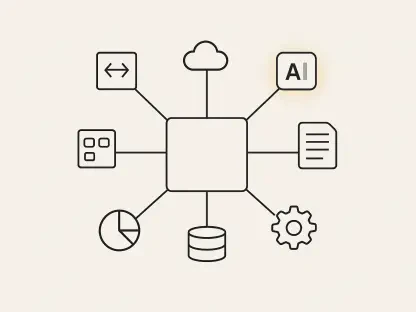
To bridge the gap between development and production, the platform now provides a unified, developer-centric experience that consolidates telemetry from the frontend, backend, AI workloads, and underlying infrastructure. This holistic approach is exemplified by a modernization of the frontend and mobile developer experience, which now bundles Real User Monitoring (RUM) data directly within its Grail data lakehouse. This integration powers new applications like Error Inspector, designed to offer profoundly deeper insights into user behavior and session details. For mobile development teams, a renewed focus on diagnostics will help them more rapidly identify, prioritize, and resolve critical issues such as Application Not Responding (ANR) events and crashes that directly impact user satisfaction. By centralizing these disparate data sources into a single, coherent view, developers gain the ability to trace issues seamlessly from a user-facing error on a mobile device all the way back to its root cause in the backend infrastructure, eliminating the siloed analysis that has historically plagued complex troubleshooting efforts.
Integrating Runtime Controls and AI-Driven Automation
A cornerstone of this strategic expansion is the integration of feature-level runtime controls, a capability enhanced by the recent acquisition of DevCycle. This allows development teams to move beyond simple monitoring and actively manage feature behavior throughout the entire delivery pipeline. Teams can now continuously validate new features, manage associated risks with precision, and even configure automated responses to issues that arise in production environments. Complementing this is a new focus on the burgeoning complexity of AI-driven applications. The platform now introduces end-to-end traces that meticulously connect AI service calls with their related application services, databases, and cloud infrastructure, demystifying the often-opaque operations of AI models in production. This enhanced clarity is crucial for debugging, optimizing performance, and ensuring the reliability of increasingly intelligent software systems.
A New Era of Automated and Secure Action
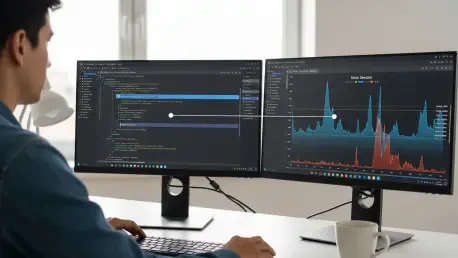
The ultimate goal of this platform evolution is to empower both developers and AI agents to securely act on real-time observability data, transitioning from insight to automated resolution. This is achieved through the introduction of new agentic workflows and the Dynatrace MCP Server, which serve as a secure gateway for executing actions based on live data. To facilitate this, the platform now integrates with major AI ecosystems, including Claude, AWS Bedrock AgentCore, and Azure AI Foundry, allowing developers to leverage these powerful AI agents within their operational workflows. Furthermore, the Live Debugger has been integrated directly into various Integrated Development Environments (IDEs), bringing live troubleshooting capabilities into the developer’s native programming environment. This convergence of delivery, runtime control, and actionable insights fundamentally shifted the developer’s role, giving them direct, granular control over how their software behaved in production and enabling them to translate real-world signals into tangible business impact safely and efficiently.