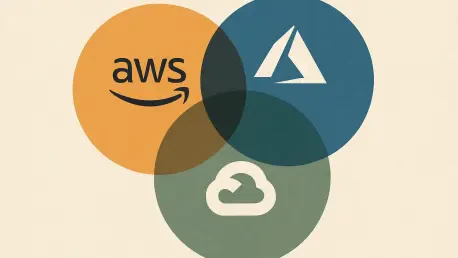

Today, we’re joined by Vijay Raina, a leading expert in enterprise SaaS technology and software architecture. With the rise of distributed systems, developers have been wrestling with a challenge once thought solved by relational databases: ensuring data consistency. The need for atomic writes—the all-or-nothing principle—has returned with a vengeance in the NoSQL world. However, navigating the transactional capabilities of AWS, GCP, Azure, and Alibaba can feel like traversing a minefield of differing rules, limits, and guarantees. Vijay is here to dissect these complexities, exploring the architectural trade-offs between different cloud providers, the practical implications for developers in handling everything from idempotency to retries, and how to build truly portable multi-cloud applications without getting trapped by vendor-specific semantics.
Many developers mistakenly treat batch operations as atomic. Could you explain the critical differences in their primary goals and failure modes, and share a real-world example of how this confusion could lead to subtle data corruption?
This is one of the most common and dangerous misconceptions I see. The confusion is understandable because both operations group multiple writes together, but their core philosophies are polar opposites. A batch write is all about performance. Its primary goal is to stuff as many operations as possible into a single network call to reduce latency. It’s a fire-and-forget missile. If one of the 50 updates in your batch fails, the other 49 might still succeed, leaving your data in a partially updated, inconsistent state. An atomic write, or a transaction, is obsessed with consistency. Its promise is simple and powerful: everything succeeds, or everything is rolled back as if it never happened.
Imagine an e-commerce platform processing an order. You need to decrease the inventory count for a product and create a new order record for the customer. If you use a batch write, it’s entirely possible for the order record to be created successfully while the inventory update fails due to a conflict. The system now shows the customer has a valid order, but the inventory was never decremented. You’ve just sold an item you don’t have, and tracking down this kind of “zombie” record is a complete nightmare for support and engineering teams. That subtle data corruption is precisely the risk you take when you choose a batch operation for a process that demands integrity.
AWS DynamoDB and GCP Firestore support cross-table atomic writes, while Azure Cosmos DB and Alibaba Tablestore restrict them to a single partition key. What are the performance trade-offs of each approach, and how should a team design its data model to ensure true multi-cloud portability?
This is the fundamental architectural fork in the road for NoSQL transactions. DynamoDB and Firestore give you incredible flexibility. You can atomically update a user profile in one table and their latest activity log in another, all in one go. This allows your business logic to directly drive your data model without painful constraints. However, this flexibility comes with a performance cost. To coordinate a transaction across different partitions, and potentially different physical servers, the database has to perform a complex two-phase commit protocol, which introduces higher latency and a greater chance of contention.
On the other hand, Cosmos DB and Tablestore prioritize speed and predictability above all else. By restricting transactions to a single partition key, they guarantee that the entire operation happens on a single physical server. There’s no cross-server network chatter, making the transaction incredibly fast and reliable. The trade-off is rigidity. Your data model is now constrained by this rule; if two items need to be updated together, they must share the same partition key. For multi-cloud portability, the only safe path is to design for the lowest common denominator, which is the single-partition model. It feels restrictive, but it ensures that if you ever need to migrate from AWS to Azure, you won’t have to re-architect your entire data access layer from scratch.
DynamoDB provides built-in idempotency tokens for transactions, but this is not standard. For a system processing financial data on Azure Cosmos DB, what specific steps would you take in the application code to prevent duplicate writes during a network retry?
This is a critical safety net, and building it yourself on a platform like Cosmos DB requires discipline. For any financial operation, you absolutely cannot risk a double-spend or double-credit scenario caused by a simple network timeout and a client-side retry. The first step is to generate a unique idempotency key—a UUID or a unique request ID— in the client application before the transaction is ever attempted. This key represents that specific, single operation.
Next, you must store this key within the data itself. For example, when creating a ledger entry, you’d include an attribute like transactionId with your idempotency key. The core of the solution is to make the write conditional. Inside your TransactionalBatch on Cosmos DB, your logic isn’t just “add this new ledger item.” It’s “add this new ledger item only if an item with this transactionId doesn’t already exist.” This check-and-write operation must be performed atomically within the same batch. It turns a simple write into a more complex operation, but without this application-level enforcement, you’re flying blind, and it’s only a matter of time before a transient network blip leads to serious data corruption.
Firestore’s SDK handles transaction retries automatically, whereas with Cosmos DB, developers must implement their own logic. Could you walk through the practical differences this creates in application code and the risks of getting manual retry logic wrong, especially when handling throttling errors?
The developer experience between these two is night and day. With Firestore, the process feels almost magical. You write a function containing your read and write logic, and you pass it to the SDK’s transaction runner. If there’s a conflict or a transient error, the SDK intelligently and automatically re-invokes your entire function. As a developer, you can focus purely on the business logic, feeling confident that the SDK is handling the messy details of contention and retries.
In the Cosmos DB world, you are handed all of that responsibility. Your code has to be wrapped in an explicit try-catch block. You need to inspect the exception, check if the status code is 429 for throttling, and then implement your own retry loop, often with exponential backoff logic. The risks here are enormous. If your backoff is too aggressive, you could exacerbate the throttling problem, creating a vicious cycle that brings your application to a crawl. If you don’t correctly identify which errors are transient and safe to retry, you could end up retrying a permanent failure indefinitely. Getting this manual logic wrong leads to applications that are either brittle and fail too often or are overly aggressive and contribute to their own performance issues.
Alibaba Tablestore uses a stateful transaction model with a 60-second ID validity. What are the benefits of this interactive approach, and what specific failure scenarios, like a long garbage collection pause in a Java app, must developers guard against to prevent data loss or orphaned locks?
Tablestore’s interactive model is a bit of a throwback to traditional database systems, but it’s powerful in specific scenarios. The main benefit is that you can have complex, stateful logic running in your application between the reads and writes of a single transaction. You can start a transaction, read a value, perform some sophisticated calculations or call another service, and then use that result to write a new value, all while the database holds the locks for you. It gives you a 60-second window to orchestrate this logic.
However, this statefulness is also its greatest risk. The client holds the “key” to the transaction, and if the client falters, the transaction is in jeopardy. A long garbage collection pause in a Java application is a perfect example of this danger. If your application freezes for more than 60 seconds, that Transaction ID becomes invalid. When your code finally unpauses and tries to commit, the operation will fail, and any work done is lost. Worse, you must be extremely diligent about calling AbortTransaction in your error handling. If your application crashes without explicitly aborting, the locks on those rows remain active until the 60-second timeout expires, potentially blocking other processes.
What is your forecast for atomic transactions in NoSQL? Do you expect to see a convergence of features across major cloud providers, or will these fundamental architectural differences in granularity and consistency persist for the foreseeable future?
I believe these fundamental differences are here to stay. While we might see some minor feature convergence, the core architectural philosophies behind these databases are deeply entrenched. AWS designed DynamoDB for massive, flexible, cross-domain workloads, and its cross-table transaction model reflects that. Azure built Cosmos DB for globally distributed applications that demand predictable, single-digit-millisecond latency, which its partition-scoped model is engineered to deliver. These aren’t just features that can be easily added or changed; they are foundational trade-offs between flexibility and raw performance.
Therefore, I don’t foresee a future where you can write one piece of transactional code and expect it to run optimally and identically across all clouds without an abstraction layer. The burden will continue to fall on architects and developers to understand these trade-offs and either choose the platform that best fits their consistency model or invest in tools and design patterns—like designing for the lowest common denominator—that allow for true multi-cloud portability. The dream of a universally consistent NoSQL transaction is powerful, but the reality of competing cloud architectures will likely keep it just out of reach.