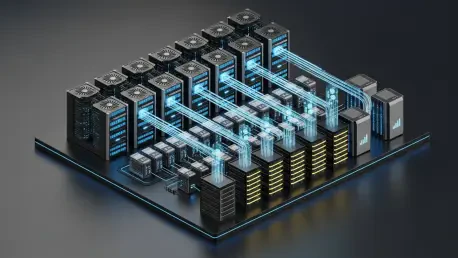

The traditional responsibilities of maintaining high availability for web servers have been completely overshadowed by the rigorous demands of orchestrating massive clusters of specialized graphical processors for machine learning tasks. Cloud engineers must recognize that the transition from general-purpose computing to specialized artificial intelligence infrastructure requires a fundamental shift in technical perspective and operational priority. In earlier years, success was measured by balancing central processing unit loads and scaling web traffic, but the modern environment demands a deep understanding of hardware constraints that are far more rigid and unforgiving. If an infrastructure professional fails to optimize the underlying system, even the millions of dollars invested in high-end hardware can become effectively useless. Modern cloud professionals are moving beyond being simple resource providers to becoming performance architects who understand exactly how hardware interconnects impact model training efficiency and overall business value.
Navigating the Evolution of Compute Resources
In a standard cloud environment, right-sizing usually involves adjusting CPU cores and memory allocations, but artificial intelligence infrastructure flips this focus entirely toward the Graphics Processing Unit. The GPU operates on thousands of small, specialized cores designed for massive parallel tasks rather than the sequential logic typically handled by a standard CPU architecture. A common pitfall in these high-performance environments is the phenomenon of GPU starvation, where the processor sits idle because the surrounding systems cannot deliver data fast enough to keep it engaged. Engineers must realize that the GPU is rarely the performance bottleneck itself in a modern setup; instead, it is often a victim of poor infrastructure design that fails to keep it fed with information. Achieving peak performance requires a shift in focus from individual node health to the throughput of the entire pipeline, ensuring that every cycle is spent on computation rather than waiting for input.
Navigating the various families of available compute is vital for balancing the delicate relationship between cost and performance in high-scale projects. On platforms like Azure, the distinction between the NC-series and the ND-series is critical, as the former is often sufficient for lighter tasks like model fine-tuning while the latter is built for heavy-duty distributed training. These high-end nodes group multiple GPUs together using specialized interconnects like NVLink and InfiniBand to allow for near-instantaneous communication between hardware components. Without these specific communication fabrics, using standard Ethernet for multi-node training can cause a massive drop in bandwidth, leading to wasted financial spend and significantly longer training times. Cloud engineers are now tasked with selecting the specific SKU that matches the mathematical requirements of the model while ensuring the network fabric is capable of supporting the resulting traffic.
Engineering Storage for Massive Throughput
Storage requirements for artificial intelligence are defined by the need for extreme throughput and low latency, especially during the training phase where models read massive datasets in repeated cycles. Traditional cloud storage options, which were designed for general file hosting or database backups, often struggle to meet these demands, providing speeds that are far slower than what a modern GPU requires to remain active. To bridge this performance gap, engineers must implement high-performance file systems like Azure Managed Lustre, which is specifically built to deliver data at the velocity needed to maintain peak hardware utilization across an entire cluster. The challenge lies in configuring these storage solutions to scale dynamically with the compute nodes, ensuring that as more GPUs are added to a training job, the storage backend does not become a bottleneck that limits the overall speed of the machine learning operations.
Effective storage management also involves a heavy focus on financial discipline through the rigorous use of model checkpoints during the development lifecycle. These files, which save the specific state of a model during training to allow for recovery from failures, can quickly grow to dozens of gigabytes each, leading to significant storage overhead. If a training job runs for several days and saves its state frequently without oversight, it can generate terabytes of redundant data that drives up monthly costs without adding long-term value. Implementing aggressive lifecycle policies to automatically remove old or redundant checkpoints is now a mandatory step for any engineer looking to prevent cost traps that catch financial teams off guard. By balancing the need for data persistence with the reality of storage costs, engineers can maintain a sustainable infrastructure that supports rapid iteration without breaking the budget.
Networking for Performance and Protection
Networking in an artificial intelligence context presents a dual challenge of high-speed performance and rigid security protocols that must work in tandem. During distributed training, GPUs must constantly synchronize through a process known as AllReduce, where they share gradient updates across the entire cluster to maintain model consistency. If the network latency is too high or the bandwidth is insufficient, the entire cluster slows down to the speed of the slowest connection, often leading machine learning teams to incorrectly blame the model code. Ensuring low-latency paths via InfiniBand is essential for keeping these synchronization tasks from becoming a drag on the overall training timeline. Engineers must treat the network not just as a connection between servers, but as an extension of the GPU memory bus itself, where every millisecond of delay directly translates into increased operational costs and delayed time-to-market.
Beyond the technical performance of the network, securing artificial intelligence services is a top priority for enterprises operating in regulated sectors like healthcare and finance. Tools like Azure Private Link allow engineers to shield sensitive AI environments from the public internet, though this often introduces complex DNS resolution issues that require advanced troubleshooting skills. A successful cloud engineer must be able to resolve these two seemingly opposing needs: maintaining the highest possible communication speeds for hardware performance while ensuring the entire environment remains isolated. This involves creating multi-layered security architectures that inspect traffic without adding significant latency to the training or inference process. The goal is to create a “secure fortress” that still allows the data to flow at lightning speeds between the high-performance compute nodes and the storage layers.
Managing Deployment: Economics and Reliability
While many modern artificial intelligence services are marketed as managed solutions, the cloud engineer remains responsible for the complex underlying infrastructure plumbing. For instance, Azure OpenAI utilizes Provisioned Throughput Units to reserve specific capacity and guarantee performance for high-demand applications, requiring engineers to accurately forecast usage patterns. Choosing the right deployment platform is equally critical, often favoring Azure Kubernetes Service over simpler container apps to avoid the cold start delays that can ruin the user experience in production. This level of granular control is necessary to meet the strict Service Level Agreements required by enterprise-grade AI applications that cannot afford intermittent performance drops. Engineers must master the orchestration of these containers to ensure that models are served efficiently and can scale up or down based on real-time demand.
The financial stakes of artificial intelligence infrastructure are incredibly high, with specialized clusters costing significant amounts of money for every hour of operation. Effective cost management requires a proactive approach, such as monitoring GPU utilization in real-time to ensure the organization is not paying for idle hardware that is not contributing to training. Using Spot Instances can offer dramatic savings of up to ninety percent, but this strategy only works if the engineer has coordinated with the development team to ensure the training process can recover gracefully from interruptions. This requires a robust checkpointing logic and an automated deployment pipeline that can restart jobs on new instances as they become available. By treating the cloud spend as a variable that must be optimized alongside model accuracy, the cloud engineer becomes a vital partner in the financial health of the technology organization.
Sustaining Long-Term Value and Governance
The security landscape is shifting as artificial intelligence introduces unique threats like prompt injection, where malicious inputs trick a model into bypassing its safety filters or leaking sensitive data. Standard firewalls are largely ineffective against these types of attacks because the threat is contained within the semantic meaning of the text rather than the network packets themselves. Consequently, engineers must configure specialized content safety tools to scan both inputs and outputs for malicious intent before they reach the model or the end user. This requires a new layer of the stack dedicated to “AI-aware” security that understands the context of the interaction and can apply governance policies in real-time. Without these safeguards, an organization risks significant reputational damage and potential legal liabilities if the model produces harmful or unauthorized information.
Maintaining a clear audit trail is essential for compliance in highly regulated industries where every decision made by an automated system must be explainable. Every interaction with the model must be logged, indexed, and stored according to a predefined retention schema, ensuring the system remains both transparent and protected from future scrutiny. Cloud engineers are responsible for building these logging pipelines, which must handle the high volume of data generated by thousands of concurrent model inferences. This data is not just for compliance; it also serves as a goldmine for improving model performance over time through fine-tuning and feedback loops. By establishing a rigorous governance framework, engineers ensure that the artificial intelligence infrastructure is not only powerful and efficient but also ethically sound and fully compliant with the evolving legal landscape of the current decade.
Building a resilient artificial intelligence infrastructure required engineers to look beyond traditional virtualization and embrace hardware-centric optimization strategies. The most successful professionals were those who mastered the intricacies of GPU interconnects and implemented high-throughput storage systems like Lustre to eliminate performance bottlenecks. They moved away from reactive troubleshooting and instead focused on proactive cost governance, utilizing spot instances and aggressive checkpointing to maximize the value of every dollar spent on compute. Security protocols were re-imagined to address semantic threats, ensuring that model interactions remained safe without compromising the speed of the user experience. Moving forward, the priority must be the integration of automated observability tools that can predict hardware failures before they interrupt long-running training jobs. Professionals should also focus on refining their deployment pipelines to support seamless model versioning, allowing for rapid iteration as newer, more efficient architectures emerge between 2026 and 2028. Success was found by those who viewed the infrastructure not as a static backdrop, but as a dynamic engine that directly determined the success of the artificial intelligence initiatives.