
The vast and ever-expanding universe of organizational data is increasingly defined by a critical disconnect between the technical production of data assets and the realization of their intended business value. In many companies, the role of the data engineer has traditionally been confined to that of a technical builder, focused on the mechanics of constructing and maintaining pipelines without a deeper connection to the strategic outcomes their work is meant to support. This operational model is undergoing a profound and necessary transformation. The field is rapidly evolving beyond simply moving bytes from source to destination; it now demands that engineers adopt the strategic, customer-centric mindset of a product manager. This paradigm shift reframes data not as a transient output of a technical process but as a durable business product—a core asset with a defined lifecycle, specific customers, and measurable impact. To remain relevant and drive genuine value, engineers must transition from being reactive order-takers to becoming proactive architects of the data-driven enterprise.
A Fundamental Shift from Projects to Products
The conventional project-based workflow, where an engineer builds a pipeline for a specific request and then moves on to the next ticket, is proving to be an obsolete and inefficient model for the modern data stack. This reactionary approach often results in the creation of data outputs that are siloed, poorly documented, and fundamentally disconnected from the broader business objectives they were intended to serve. The consequence is a sprawling, fragmented data landscape where trust is low, adoption is minimal, and engineering resources are perpetually consumed by rework and maintenance. This method treats the symptom—a request for data—without diagnosing or solving the underlying business problem. To break this costly cycle, leading organizations are embracing the “data as a product” philosophy, a cornerstone of modern architectural concepts like the Data Mesh. This mindset compels engineers to reframe their work by asking critical, product-oriented questions that elevate their role from technical implementer to strategic enabler, transforming a simple data pipeline into an authoritative and reusable data product designed for long-term strategic impact.
Adopting a product-centric approach triggers a powerful and immediate change in how data engineers perceive their responsibilities, fostering a culture of holistic ownership and accountability. In this model, every dataset, stream, or data asset is treated as a product with a designated owner—the engineer—who is responsible for its entire lifecycle. This stewardship extends far beyond the initial build, encompassing its accuracy, reliability, usability, and ultimate business impact. Such a framework effectively dismantles the pervasive culture of blame, where failures in data quality or delivery are often passed between source teams, engineering, and end-users. Instead, direct ownership instills a proactive commitment to the quality and value of the data product. The engineer becomes directly accountable for its success, motivated to not only build the asset but also to ensure it is trusted, adopted, and effectively utilized by its intended consumers to drive tangible business outcomes, thereby aligning their technical work directly with the organization’s strategic goals.
Redefining the User and the Experience
A core tenet of the product management discipline is a relentless focus on the customer, and this principle is paramount in the evolution of data engineering. It is a fundamental truth that data without consumers is merely digital noise, holding no intrinsic value. Adopting a product mindset forces engineers to begin their process by identifying and deeply understanding their end-users, who are rarely a monolithic group. These customers can range from data analysts running ad hoc queries and data scientists building machine learning models to business executives consuming high-level dashboards. Each of these user personas has distinct needs, workflows, and expectations regarding data freshness, schema design, and access methods. By building with the end-user in mind from the outset, engineers can make informed technical decisions that create more effective, efficient, and valuable systems. This customer-centricity dramatically reduces the need for future rework and modifications, as the data product is designed from day one to solve a specific, well-understood problem for a defined audience.
Just as a software application with a confusing interface will be abandoned by users, a data product fails if it cannot be easily discovered, understood, and trusted. Product-focused data engineers therefore become champions of usability and documentation, treating data quality as a critical component of the user experience (UX). They draw a powerful analogy: a dataset is like an API, and if its purpose, structure, and limitations are not clearly communicated, it is effectively broken. This perspective drives them to ensure that every table, stream, or data asset is accompanied by rich, accessible, and up-to-date metadata that provides essential context, including its lineage, schema definitions, and intended use cases. Issues such as missing values, inconsistent keys, or poor data freshness are no longer seen as mere technical glitches but as critical usability flaws that erode user trust. By implementing “Data UX principles” like automated data unit tests and transparent health dashboards, engineers work to build and maintain that trust, which is the foundational currency of any successful data product.
Integrating Product Thinking into Daily Operations
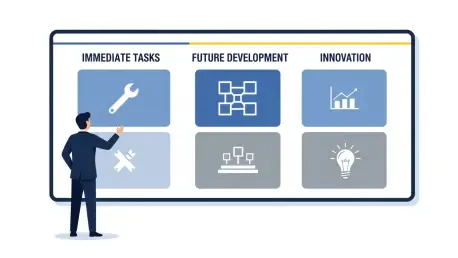
This strategic reorientation has a tangible impact on the daily workflows and operational rhythms of data teams. The endless, reactionary ticket backlog—a hallmark of the project-based model—is replaced with a forward-looking and strategic product roadmap. By implementing a prioritization framework such as “Now, Next, Later,” teams can achieve a healthy balance between addressing immediate needs, building foundational capabilities, and pursuing long-term innovation. The “Now” category typically includes critical bug fixes and data quality issues that are immediate blockers for users. “Next” focuses on building reusable, tiered data models and common features that will serve a wide range of future needs. “Later” is reserved for experimentation and innovation, such as developing new predictive insights or exploring advanced data processing technologies. This strategic approach provides crucial transparency to stakeholders and empowers the engineering team to move from a reactive posture to proactively architecting a cohesive and scalable data ecosystem that anticipates future business demands.
Furthermore, this mindset elevates the importance of establishing continuous feedback loops and practicing responsible lifecycle management. Instead of considering their work complete once a pipeline is deployed, product-minded engineers actively seek feedback to iterate and improve their data assets. This feedback comes in various forms, from quantitative usage telemetry that tracks query frequency and the number of unique users to qualitative comments gathered from direct communication channels. A dataset that is underutilized is not viewed as a failure but as a crucial piece of feedback signaling that the product needs to be refined, better marketed, or potentially deprecated. This leads to the critical practice of managing the entire lifecycle of a dataset, including its eventual retirement. The common habit of retaining old, unused tables “just in case” leads to data sprawl, which clutters data catalogs and creates confusion. A product approach involves establishing clear deprecation timelines and providing transparent migration paths, ensuring the data landscape remains clean, relevant, and valuable.
Architecting Value in a Data-Driven Organization
The evolution of the data engineer’s role from a technical specialist to a product-oriented strategist was an essential maturation for the profession. Organizations that successfully navigated the complexities of their growing data ecosystems were those that embraced this paradigm shift. It was observed that companies clinging to a traditional, project-based model often found themselves mired in data sprawl, battling duplicated engineering efforts, and contending with a pervasive lack of trust in their internal data assets. The product management mindset provided a structured and effective solution to these challenges by instilling a culture of direct responsibility, guaranteeing higher standards of reliability, and promoting the systemic reusability of data products. The most accomplished and impactful data engineers became those who transcended their technical roots to function as strategic partners to the business. Their success was ultimately measured not by the sheer volume of data they processed, but by the unwavering trust they built among users and the superior quality of decision-making they enabled across the enterprise.