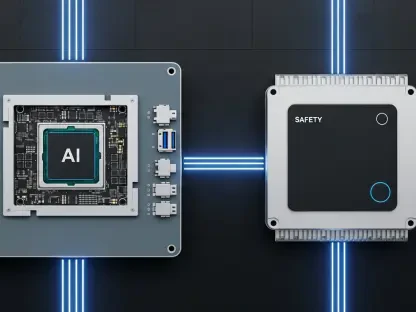

The prevailing industry solution for grounding Large Language Models in factual enterprise data, Retrieval-Augmented Generation (RAG), is now confronting its own foundational limitations built upon a significant architectural flaw. While widely adopted to combat model hallucinations, the conventional RAG framework operates less like a truly integrated cognitive system and more like a superficial assembly, where a search engine is simply attached to a generative model. This “grafted” approach results in a mere functional coexistence of two distinct components rather than a synergistic fusion. This inherent separation creates a structural weakness that has consistently capped the potential, efficiency, and learning capacity of these systems, signaling an urgent need for a fundamental evolution in AI architecture toward a more unified and intelligent design. The era of simply bolting components together is giving way to a more sophisticated paradigm where retrieval and reasoning are two sides of the same coin, learned and optimized as a single, cohesive process.
The Flaws of Assembled RAG
The Architectural Disconnect
Traditional RAG systems are fundamentally hampered by the fact that their core modules operate in separate, disconnected worlds. The retriever and the generator function within what experts term “inconsistent representation spaces,” effectively meaning they lack a shared conceptual language. This structural division prevents the entire system from being optimized as a single, cohesive unit. This flaw manifests in several critical inefficiencies, most notably redundant text processing. Information is encoded once by the retriever to find relevant documents and then encoded again by the generator to understand and synthesize them. This duplication not only drives up inference costs and increases latency but also heightens the risk of context window overflow. Consequently, the core promise of an AI that can seamlessly access and reason over vast stores of enterprise knowledge is compromised by this deep-seated architectural schism, which treats two deeply related tasks as entirely independent problems.
This core failure has given rise to what can be described as the “Dialogue of the Deaf” syndrome, a persistent state of disjointed optimization where the system’s two halves are unable to learn from one another. The retrieval component is typically optimized for a simple, narrow task: identifying documents based on surface-level keyword similarity. It frequently falls into a “correlation trap,” selecting passages of text that share vocabulary with a user’s query but critically lack the deeper causal relationships or contextual nuances that the generative model requires to formulate an accurate and insightful response. The retriever’s process is a one-way street; it makes a binary, frozen decision on relevance and passes its findings along without any genuine comprehension of the complex reasoning task that follows. On the receiving end, the generative model is left to make sense of these fragments in a feedback vacuum, doing its best to fill in the gaps but unable to signal when the provided context is irrelevant or insufficient.
The Industry’s Patchwork Response
In response to these deep-seated limitations, the prevailing industry trend has not been to re-architect the system from the ground up but rather to apply a series of superficial, patchwork fixes. This approach, which can be termed “modular overkill,” involves layering additional complexity onto the already flawed pipeline in an attempt to mitigate its symptoms rather than cure the underlying disease. Common but ultimately inadequate solutions include inserting expensive reranking models after the initial retrieval step to re-sort documents and compensate for the primary retriever’s imprecision. Another popular tactic involves using brute-force computational power to increase the size and complexity of vectors, with the hope that sheer scale might capture more semantic nuance. However, these fixes fail to address the root cause of the problem: the systemic disconnection between the modules that prevents true end-to-end learning and optimization.
This siloed approach to improvement perpetuates the core architectural flaw by continuing to optimize each component in isolation. Efforts are focused on training the retriever to become slightly better at spotting surface similarities or teaching the generator to become more adept at ignoring noisy, irrelevant context. This methodology reinforces the entire architecture as a mere assembly of inefficient bricks that are never truly trained to work together. It relies on simplistic assumptions, such as the statistical independence of documents, and further fragments vital context through arbitrary chunking strategies. By failing to create a communication channel between the system’s two halves, this patchwork strategy only adds cost and complexity without ever allowing the retriever to learn what the generator truly needs to reason effectively, thus ensuring the system remains fundamentally suboptimal.
The Paradigm Shift to Unified Reasoning
Introducing the CLaRa Framework
A revolutionary solution is emerging in the form of the CLaRa (Continuous Latent Reasoning) framework, which moves beyond incremental fixes to achieve a true, deep fusion of retrieval and generation. Instead of maintaining two separate operational worlds, CLaRa unifies them into a single, cohesive “continuous latent space.” This paradigm shift dissolves the artificial boundary between the retriever and the generator, enabling them to function and learn as a single, end-to-end intelligent system. The first key innovation driving this transformation is the framework’s reliance on compressed representations over raw text. CLaRa completely discards the inefficient and costly process of feeding massive, unprocessed text segments into the model’s context window. Instead, it operates on “dense state vectors” or “memory tokens,” which are highly compact mathematical signatures that encapsulate the essential semantic richness of a document in a fixed, efficient numerical format.
The second, and arguably most critical, technical breakthrough of the CLaRa framework is its implementation of “differentiable retrieval.” This sophisticated mechanism finally bridges the communication gap that has long plagued assembled RAG systems by creating a robust, bidirectional feedback loop. Using a technique known as a straight-through estimator, the error signals generated during the reasoning process can now flow backward—or backpropagate—all the way from the generator to the retriever. For instance, if the generator fails to accurately predict the next word in its response because the provided context is poor, this error is not contained. It propagates back to fundamentally adjust how the retriever selects and compresses information for future queries. As a result, the retriever is no longer optimizing for a vague and often misleading goal like “keyword similarity.” Instead, it learns to optimize for the ultimate, most important objective: improving the quality and factual accuracy of the final generated response. The entire system learns as one.
Intelligent Pre-Training and Strategic Advantages
The intelligent design of the CLaRa framework is inspired by the highly efficient cognitive principle of digestion. When a person reads a book, they do not attempt to memorize every single word or sentence; instead, they extract and store the core concepts, logical arguments, and essential meanings. CLaRa effectively mimics this biological process through a sophisticated pre-training phase called Salient Compressor Pretraining (SCP). Before the system even begins to answer user queries, it first “pre-digests” the entire corpus of raw documents. This is accomplished by training a specialized compressor model on two distinct but complementary tasks: question answering, which forces the model to retain the substantive, salient information required to address inquiries about the text, and paraphrasing, which teaches the model to separate the core meaning of the text from its specific syntactic form. The output of this process is a refined set of “memory tokens” that have been pre-stripped of noise.
The strategic implications of this unified, bio-inspired approach were profound for enterprise deployment. By operating on highly compressed vectors instead of cumbersome raw text, CLaRa demonstrated frugal efficiency, reducing the required context window by a factor of 16. This directly translated to substantially lower infrastructure costs and reduced latency, all without sacrificing performance. Furthermore, the framework granted enterprises greater strategic data autonomy. Traditional RAG systems often required thousands of expensive, human-annotated examples to train the retriever effectively. CLaRa, however, was capable of self-optimizing its retrieval and generation alignment through weak supervision, delivering “data-free” performance that reduced reliance on costly data-labeling efforts. This efficiency proved that intelligent architecture could trump brute force, as modest models like Mistral 7B, when integrated into the CLaRa framework, surpassed the reasoning quality of much larger, more cumbersome systems. This shift made it clear that the era of “assembled RAG” had concluded, paving the way for a future defined by unified reasoning.