
A single, unexpectedly long-running data job can trigger a domino effect across an entire organization, jeopardizing critical business reports and exceeding cloud budgets in a matter of hours. For too long, data platform management has been a reactive discipline, centered on monitoring dashboards and responding to alerts after a failure has already occurred. This paradigm is no longer sufficient in large-scale environments where hundreds of jobs run daily. In these complex ecosystems, even minor miscalculations in job runtime can cause significant downstream disruptions, violate service-level agreements, and lead to substantial cost overruns. The solution lies in shifting from reaction to prediction. This article outlines a practical, telemetry-driven approach that leverages machine learning to forecast Google Cloud Dataflow job durations before they even begin.
Beyond Reactive Monitoring to Proactive Prediction
The traditional approach to managing data pipelines involves observing performance metrics and intervening when something goes wrong. However, in a modern data stack, this reactive stance is inefficient and risky. The goal must be to anticipate issues, allowing teams to optimize resource allocation and prevent bottlenecks proactively. This is especially true for platforms handling vast and fluctuating workloads, where the performance of one job is intricately linked to many others.
The core challenge is the inherent variability of data processing jobs. Execution times can fluctuate based on input data size, resource contention within the cloud environment, and the complexity of the transformations being performed. Relying on static estimates or historical averages alone often fails to capture this dynamic nature, leading to unreliable planning. A more sophisticated method is required to analyze the rich signals already being emitted by these systems.
By harnessing the detailed telemetry from every pipeline component, it becomes possible to build a more accurate picture of expected performance. This telemetry-driven approach uses real-time and historical observability data to train machine learning models, transforming operational data into a powerful forecasting tool. The result is a system that can provide reliable runtime estimates for Google Cloud Dataflow jobs, enabling a truly proactive operational model.
The High Cost of Unpredictable Runtimes
Unpredictable job durations carry significant financial and operational consequences. In cloud environments where resources are billed on a pay-as-you-go basis, an inability to forecast runtimes leads directly to inefficient resource allocation. Teams may overprovision resources to create a buffer for worst-case scenarios, resulting in wasted expenditure. Conversely, under-provisioning to save costs can lead to job failures, delays, and the need for costly manual intervention and reruns.
Beyond direct costs, the ripple effect of a single delayed job can be immense. Many critical business processes depend on a chain of data pipelines, where the output of one job serves as the input for the next. A delay at any point in this chain can cascade through the system, preventing timely delivery of business intelligence reports, customer-facing analytics, and other data-dependent services. This directly impacts an organization’s ability to meet its Service Level Agreements (SLAs) and can erode trust in the data platform.
This unpredictability also creates a significant operational burden on data engineering teams. Instead of focusing on developing new features and improving data products, engineers are often forced into a cycle of “firefighting”—investigating why a job is running long, debugging performance issues, and manually managing pipeline schedules. This constant reactive effort stifles innovation and leads to operational bottlenecks that hinder the entire organization’s agility.
Anatomy of a Telemetry-Driven Prediction Engine
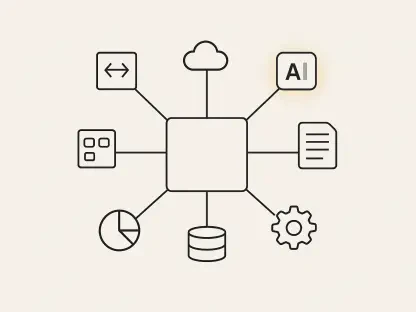
At the heart of a predictive system is a tightly integrated set of tools designed to collect data, train models, and deliver forecasts. This architecture is built upon a foundation of powerful Google Cloud and open-source technologies. The central nervous system for workflow orchestration is Apache Airflow, which programmatically schedules and executes complex data pipelines. It provides the framework for managing job dependencies and triggering actions based on events.
To capture the necessary performance data, OpenTelemetry serves as the vendor-agnostic backbone for collecting high-fidelity traces, metrics, and logs from every component in the pipeline. This framework provides a standardized way to instrument applications, ensuring that detailed operational data is consistently gathered. This telemetry is then funneled into a centralized data warehouse, BigQuery, which is built for scalable analytics.
The intelligence of the system resides in BigQuery ML, a scalable, in-database machine learning engine. Its key advantage is that it eliminates the need for separate ML infrastructure. Models can be trained and predictions can be generated directly within the data warehouse using familiar SQL syntax. This creates a seamless flow where historical telemetry from Airflow and Dataflow jobs is used to train a model, which in turn informs future scheduling decisions within Airflow, creating a virtuous cycle of continuous optimization.
From Raw Telemetry to Accurate Forecasts
The journey from raw observability signals to an accurate runtime prediction involves a methodical, multi-step process. It begins with the systematic collection of detailed telemetry data. Using OpenTelemetry, every stage of a Dataflow job generates “spans,” which are structured logs containing timing information, resource attributes, and other metadata. Because this data is often nested, the first technical step involves using BigQuery’s UNNEST function to flatten these structures, making the individual attributes accessible for analysis and modeling in a simple tabular format.
With the data prepared, the next critical phase is feature engineering, where raw data points are transformed into powerful predictors for the machine learning model. These features fall into several key categories. Job complexity indicators, such as the number of tasks in a DAG or the pipeline’s parallelism, provide insight into the workload’s inherent difficulty. Resource metrics, including CPU utilization, memory footprint, and I/O latency, capture the performance characteristics of past runs. Finally, temporal patterns like the day of the week or hour of execution help the model learn cyclical trends in system load and performance.
The final step is training the predictive model using BigQuery ML. This is accomplished with a simple, SQL-based interface that allows data engineers to train and deploy regression models directly on the prepared telemetry data. The in-database approach offers immense advantages in scalability and operational simplicity by avoiding the complexity and cost of moving large datasets between different systems. While this method may offer fewer algorithm choices than specialized ML platforms, its accessibility and efficiency make it a powerful tool for embedding predictive intelligence directly into data operations.
A Practical Path to Implementation
Putting this predictive system into practice begins with configuring the primary data source. The process is initiated by enabling OpenTelemetry within Apache Airflow’s central configuration file, airflow.cfg. This simple configuration change instructs Airflow to begin exporting crucial performance metrics and traces for every task and DAG run, effectively opening the tap for the flow of observability data that will fuel the machine learning model.
Once telemetry is flowing into BigQuery, the next step is to construct the model itself. This is done entirely within the BigQuery environment using SQL. First, the target variable for the prediction—the job duration—is defined by calculating the difference between the start and end times recorded in the telemetry spans. Following this, a SQL query using the CREATE MODEL statement is executed. This command instructs BigQuery ML to train a regression model, such as linear regression, using the engineered features to predict the target duration.
With a trained model in place, generating forecasts for new jobs becomes a straightforward query. Using the ML.PREDICT function, the system can pass the expected parameters of a new job to the model and receive an estimated runtime in return. This prediction can then be integrated directly into scheduling and capacity planning workflows. For example, an Airflow DAG could query the model before launching a large Dataflow job, and if the predicted runtime exceeds an acceptable threshold, it could defer the job or alert an operator, transforming the entire operational workflow from reactive to proactive.
The development and deployment of this telemetry-driven prediction system marked a fundamental evolution in data platform management. It demonstrated that by treating observability data not just as a diagnostic tool but as a predictive asset, organizations could move beyond the limitations of reactive monitoring. The integration of existing tools like Airflow, OpenTelemetry, and BigQuery ML provided a scalable and operationally simple path to embedding machine learning directly into data workflows. This approach successfully unlocked a new level of operational intelligence, reducing costs and improving reliability. Ultimately, this work laid a practical foundation for more advanced AIOps capabilities, proving that the future of resilient and efficient data operations would be built on prediction, not just observation.