
The relentless narrative of artificial intelligence as a harbinger of job obsolescence and societal disruption often overshadows a quieter, yet profoundly significant, revolution where the same technology is being meticulously engineered to solve humanity’s most intractable problems. While concerns about AI’s impact are valid and deeply felt across industries, a growing collective of innovators is demonstrating that this powerful tool can be aimed not at maximizing profit, but at maximizing human and planetary well-being. This roundup explores the compelling work of organizations pioneering the “AI for good” movement, offering a necessary counterpoint to the prevailing anxiety and showcasing a future where technology serves our highest ideals.
Navigating the AI Paradox From Personal Anxiety to Global Possibility
The prevalent “doom-and-gloom” narrative surrounding artificial intelligence is not without merit. It is grounded in the tangible displacement of workers, the staggering consumption of energy and water required to train sophisticated models, and the subtle warping of our social fabric. For many, the abstract threat of AI has become a concrete reality, fueling widespread apprehension about a future shaped by algorithms that seem to operate beyond human control. This perspective, born from genuine disruption, often dominates the public conversation, painting a picture of an uncontrollable technological force.
However, an essential counter-narrative is emerging from this technological turbulence, one that asks a critical question: can the same disruptive power be deliberately harnessed for purely altruistic goals? This inquiry is the foundational principle of the “AI for good” movement, a burgeoning field dedicated to flipping the script on innovation. Instead of focusing on what AI can take away, its proponents concentrate on what it can give back. This movement is not a theoretical exercise but a practical, results-driven effort to build solutions for the world’s most complex challenges, proving that a tool’s purpose is ultimately determined by its user.
The projects that fall under this umbrella share two defining characteristics. First, artificial intelligence is not merely an add-on but is fundamentally embedded in their operations, enabling a scale or capability that would otherwise be impossible. Second, their mission is exclusively focused on solving humanitarian issues, preserving the environment, or empowering individuals against systemic barriers. It is within this framework that we find tangible examples of technology being used to create a more equitable, sustainable, and healthy world for everyone.
Blueprint for a Better World AI’s Emerging Altruistic Applications
Decoding the Human Voice to Predict Invisible Illnesses
In the realm of healthcare, innovators are proving that AI can create entirely new diagnostic pathways. A prime example is Canary Speech, a company that has developed a groundbreaking method for analyzing vocal biomarkers. Using sophisticated neural networks, its technology processes thousands of subtle, non-linguistic features in a person’s speech—such as pitch, tone, and rhythm—to identify patterns correlated with complex neurological and psychological conditions. This capability exists only because of AI, as the human ear simply cannot perceive or process data at this scale and complexity.
This technology operates as a powerful clinical decision support tool, designed to enhance, not replace, the expertise of healthcare professionals. It offers an objective, data-driven layer of insight that can help clinicians detect conditions like depression, anxiety, Parkinson’s, and Alzheimer’s disease at their earliest stages. For instance, in a postpartum check-up, the tool flagged high-risk indicators for depression in a new mother who verbally reported feeling fine. Prompted by the AI-generated score, her doctor initiated a deeper conversation, leading to a crucial diagnosis and timely intervention. This demonstrates AI’s potential as an early warning system, empowering caregivers to uncover what patients may be unable or unwilling to articulate.
Rewiring a Planet in Peril From Sustainable Farms to Smarter Factories
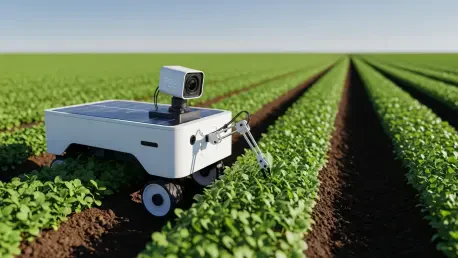
AI is also being deployed to solve critical environmental challenges, from the soil of small farms to the floors of massive factories. Startups like Aigen are at the forefront of this charge, developing autonomous, solar-powered robots to revolutionize agriculture. These robots utilize “physical AI” and edge computing, meaning all data processing occurs on the device itself, allowing them to make millions of real-time decisions as they navigate fields without relying on a cloud connection. Their primary function is mechanical weeding, using advanced computer vision to distinguish between crops and weeds with surgical precision, thereby eliminating the need for chemical herbicides that degrade soil and water quality.
This application of AI democratizes advanced technology for small, family-owned farms that have historically been unable to compete with large-scale industrial agriculture. By providing an affordable and sustainable alternative to expensive manual labor and harmful chemicals, these innovations help preserve multi-generational legacies and promote healthier ecosystems. Similarly, the company Smartex is tackling textile waste in the fast-fashion industry by integrating AI-powered inspection systems directly into knitting machines. The technology detects fabric defects in real time, preventing flawed material from continuing through the resource-intensive dyeing and finishing processes. This proactive approach transforms quality control from a wasteful, reactive checkpoint into a preventative system that saves millions of gallons of water and drastically reduces carbon emissions.
Orchestrating a Global Response to Humanitarian Threats
Beyond individual startups, large-scale initiatives are leveraging AI to orchestrate responses to systemic crises. Microsoft’s AI for Good Lab exemplifies this effort, collaborating with researchers and non-governmental organizations to address sustainability and human rights issues worldwide. These partnerships have produced powerful tools for monitoring illegal deforestation in the Amazon, forecasting hunger crises in Malawi, and mapping extreme-heat zones to protect vulnerable urban communities. AI’s unique capacity to process immense and disparate datasets is the key to these breakthroughs.
By analyzing satellite imagery, climate data, and socioeconomic indicators, these models can identify patterns and predict outcomes with a level of accuracy that was previously unattainable. This predictive power enables proactive interventions that save lives and protect fragile ecosystems. Following natural disasters, such as the earthquakes in Afghanistan or the wildfires in Maui, AI-driven systems have been used to rapidly assess damage and direct relief efforts to the areas of greatest need. This shift from reactive response to predictive preparedness is fundamentally changing how humanitarian aid is delivered, making it faster, more efficient, and more impactful.
The Proactive Revolution Shifting from Reactive Cures to Predictive Intervention
A common thread connects these diverse applications: AI’s unparalleled ability to create early warning and prevention systems. This represents a fundamental paradigm shift away from the traditional model of addressing problems only after they have manifested. Whether it is detecting the onset of a mental health crisis, preventing a defective bolt of fabric from being produced, or forecasting a food shortage before it becomes a famine, AI is enabling a proactive approach to global challenges.
This transition from reactive cures to predictive intervention holds transformative potential across nearly every sector. In public health, it can lead to earlier diagnoses and more personalized treatments, reducing suffering and lowering healthcare costs. In climate resilience, it can help communities anticipate and mitigate the impacts of extreme weather events, protecting infrastructure and saving lives. For social support systems, it can identify individuals at risk and deliver targeted assistance before they fall into crisis. The future potential of this proactive revolution is not just about solving existing problems more efficiently; it is about preventing them from escalating in the first place.
The Core Principles of Purpose-Driven AI
The case studies presented reveal a clear blueprint for successful, purpose-driven AI. A central takeaway is the profound synergy achieved when advanced algorithms are combined with deep, domain-specific human expertise. The technology serves as a magnifier for human intuition and skill, processing data at a scale that allows professionals—whether doctors, farmers, or aid workers—to make better-informed decisions. This collaborative model is essential for building trust and ensuring that AI solutions are both effective and ethically sound.
For innovators looking to enter this space, these examples offer actionable strategies. Designing AI systems for scalability, prevention, and equitable access should be a primary focus. This involves creating technologies that can be deployed globally, are built to anticipate challenges rather than just react to them, and are accessible to the communities that need them most, not just those with the most resources. A useful framework for evaluating “AI for good” projects is to prioritize measurable, real-world impact over mere technological novelty. The ultimate test of any such initiative is not how sophisticated its algorithm is, but how many lives it improves, how much waste it eliminates, or how many crises it averts.
A Call to Action for a More Human-Centered Technological Future
It became clear that the “AI for good” movement was a substantial and necessary force for balancing the technology’s negative consequences. The innovations highlighted demonstrated that a focus on people and the planet could yield powerful, scalable solutions. Supporting, funding, and championing these efforts were recognized as crucial steps toward fostering a more balanced technological ecosystem.
Ultimately, the responsibility for shaping AI’s future did not rest solely with developers or corporations. It was understood that every individual, from an engineer designing an algorithm to a consumer choosing which products to support, played a role in this collective effort. The path forward required active participation in building a future where artificial intelligence solved more problems than it created, ensuring that technology remained a tool in service of humanity’s best interests.