
With the impending 2027 end-of-support deadline for SAP ECC, enterprises worldwide are navigating the complex and high-stakes migration to S/4HANA, a shift that represents far more than a simple database upgrade. This transition is a fundamental transformation of enterprise resource planning (ERP) data models, schemas, and validation logic, where the greatest risk is not found in the application code but in the integrity of the data itself. For developers and quality assurance engineers, the challenge is monumental: validating and reconciling millions of transactional and master data records across systems with non-identical field structures. When handled manually, this process is notoriously slow, exorbitantly expensive, and dangerously prone to errors that can disrupt critical business operations. An innovative approach is needed to bridge this gap, leveraging artificial intelligence to automate reconciliation and provide real-time visibility into the quality of migrated data, transforming a potential crisis into a controlled, reliable process.
1. The Critical Imperative of Data Integrity
For developers and data quality assurance engineers, the technical dependencies of migrating enterprise resource planning systems from SAP ECC to S/4HANA place them at the epicenter of this massive undertaking. The migration involves a colossal volume of records, encompassing everything from customer data and material masters to sensitive financial transactions and intricate supply chain routes. If even a minuscule percentage of this data fails to reconcile correctly, the downstream consequences can be catastrophic, leading to broken reporting, compliance violations, or even a complete halt in production lines. The core challenge for developers extends beyond the sheer volume of data or the inherent schema mismatches; it lies in the translation gap between business rules and system architecture. Business users articulate requirements in plain English, such as, “Compare customer realignment between Sales Org 101 and 102.” Developers must then meticulously translate this directive into complex SQL queries involving multiple joins and transformation rules across various ECC and S/4HANA tables like KNA1, KNVV, and KNVP. Performing this translation manually at scale is not only time-consuming and repetitive but also a breeding ground for human error, introducing significant risk into the migration project.
Understanding the fundamental differences between the two SAP platforms illuminates the complexity of this migration. SAP ECC was engineered decades ago, designed for an era of disk-based databases and traditional, often batch-driven, business processes. Over time, it has evolved into a cumbersome, heavyweight system that is costly to maintain, burdened by thousands of tables, aggregates, and extensive customizations. In stark contrast, S/4HANA is a modern platform built exclusively to run on the SAP HANA in-memory database, enabling real-time processing and analytics. This architectural shift results in a drastically simplified data model with fewer tables and a cleaner structure, delivering significantly faster performance. The user experience is also modernized through SAP Fiori apps, which are mobile-friendly and intuitive, a major departure from the old-style SAP GUI. Furthermore, S/4HANA offers built-in, real-time analytics, eliminating the common reliance on external business intelligence tools. With flexible deployment options—on-premise, cloud, or hybrid—and ongoing updates, S/4HANA represents SAP’s strategic future, pushing customers toward a platform capable of integrating with cutting-edge technologies, including advanced AI solutions. This technological chasm is precisely why a simple lift-and-shift approach is impossible and why data trust is paramount.
2. A Framework for AI-Powered Validation
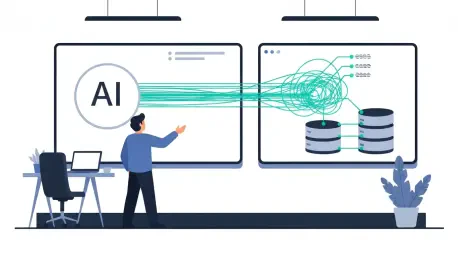
The implementation of an AI-powered data integrity framework begins with a foundational, meticulous step: establishing a comprehensive schema mapping. This initial phase involves capturing the precise relationships between ECC and S/4HANA fields in a structured template, such as an Excel spreadsheet. This document serves as the single source of truth for the migration logic, identifying the primary or referential keys that will be used in subsequent SQL queries. A critical function of this mapping is to account for fields that serve the same business purpose but have different technical names in the source and target systems. For instance, the customer number field KUNNR in the ECC table KNA1 is mapped to CUSTOMER_ID in the S/4HANA BusinessPartner model. Similarly, the vendor number LIFNR from LFA1 is merged into the SUPPLIER_ID field in the new Supplier view. Once this mapping is complete, the next step is to configure an AI agent, such as Microsoft Copilot or an OpenAI model, to convert business prompts into executable SQL. This involves leveraging advanced text-to-SQL Large Language Models (LLMs) that can interpret a plain English requirement, like “Compare customer realignment between Sales Org 101 and 102 using KNVV, KNVP, and KNA1,” and automatically generate an efficient, executable SQL query with the correct joins and field transformations based on the predefined schema map.
With the AI-generated SQL in hand, the framework moves into the execution, reconciliation, and visualization stages. The queries for both the source (ECC) and target (S/4HANA) systems are entered into a specialized data integrity tool’s SQL editor for execution. This tool automates the large-scale data comparison, generating comprehensive reconciliation reports that categorize records into distinct buckets: Matches, Differences, In-Source-Only, and In-Target-Only. This granular analysis provides immediate insight into the state of the migration. To ensure broad accessibility and collaborative problem-solving, these detailed results are then saved into a cloud-based test data management (TDM) system. This centralized repository allows stakeholders from different teams and geographical locations to access, review, and act on data mismatches collaboratively, breaking down information silos. The final step in this automated chain involves feeding the TDM results into powerful visualization dashboards. By configuring a Power BI report connected to the TDM database, the raw reconciliation data is transformed into a user-friendly, real-time dashboard. This visual layer empowers developers and business stakeholders to evaluate data errors at a glance, make informed decisions quickly, and ultimately fix issues that could otherwise lead to significant revenue loss.
3. Tangible Advantages for Development Teams
Adopting an AI-powered end-to-end data integrity framework provides a paradigm shift in how validation is approached, offering significant benefits over traditional reconciliation scripts. A primary advantage is the ability to “shift-left,” integrating data validation much earlier into the development pipeline. Instead of discovering data mismatches during stressful, last-minute cutover weekends, issues are caught and addressed early on. This makes validation an integral part of the continuous integration and continuous delivery (CI/CD) workflow. Developers can integrate reconciliation steps into their automated regression suites, ensuring that data integrity is validated continuously throughout the project lifecycle, not just as a final gate. Another transformative feature is the use of AI-driven SQL generation. Many developers working on ERP projects may not have deep expertise in the intricacies of SAP database schemas. By using a text-to-SQL LLM, a plain English business prompt like “Compare vendor bank details between ECC and S/4HANA” is automatically converted into an optimized, SAP-specific SQL query for both database environments. This capability dramatically shortens development time, prevents common SQL errors, and frees engineers to focus on resolving complex business logic rather than writing boilerplate queries from scratch.
This framework also delivers end-to-end automation, replacing a fragmented and manual process with a cohesive, repeatable pipeline. Traditionally, data validation involves a lengthy and iterative cycle of communication between business users, developers, database administrators, testers, and report builders. This framework automates the entire chain, from translating the initial business prompt into a SQL query, to executing the reconciliation, generating reports, storing results in a cloud TDM, and finally, displaying the outcomes on Power BI dashboards. This creates a predictable and efficient workflow rather than a collection of disconnected, one-off scripts. Furthermore, it fosters unprecedented transparency across teams. Results are no longer buried in local log files or individual query outputs; they are accessible to anyone with clearance via cloud-based systems. This accessibility drastically reduces the need for frequent meetings and lengthy email chains where developers must explain the nuances of their queries. The self-explanatory Power BI reports provide a common language for both technical and non-technical stakeholders. Finally, the framework ensures scalability and reliability. Manual spot-checks can only validate a few hundred records at best, making it impossible to share a comprehensive view of all mismatches. In contrast, this automated approach reconciles millions of records, comparing every row and column to validate every single cell of data, providing developers with the confidence that the migration is thoroughly tested at scale.
4. A Real-World Application in Billing Reconciliation
A compelling use case that highlights the power of this framework is the automation of SAP S/4HANA billing invoice reconciliation. In large enterprise transformations, millions of invoices are generated and must travel seamlessly between various systems to ensure smooth sales, billing, and reporting processes, which are critical for financial audits. Validating billing integrity across legacy and modern systems during an ECC to S/4HANA migration presents a major challenge. Manually comparing billing reports from the new S/4HANA system with outputs from a downstream business intelligence platform like BusinessObjects (BOBJ) is incredibly tedious, time-consuming, and susceptible to human error. To solve this, an AI-powered, end-to-end automation pipeline was constructed using a combination of data integrity tools, Vision AI, and Power BI to reconcile invoice data and eliminate the need for manual regression testing efforts. This automated framework is designed to catch mismatches in invoices and billing documents early in the process, ensuring data trust between systems after downstream jobs are run and providing reliable data for efficient audits.
The integrated flow for this solution demonstrates a sophisticated, multi-stage process. The validation cycle begins with TDM sheets where AI agents, powered by Vision AI and text-to-SQL LLMs, generate the necessary validation prompts. Next, Tosca GUI automation is used to trigger the creation of invoices directly within the SAP S/4HANA system. The automation scripts then generate and fetch the relevant billing reports from both S/4HANA and BOBJ after the data and analytics team has manually run the job to post S/4HANA data to BOBJ. These two reports serve as the inputs for the data reconciliation engine. The framework performs a granular, row-by-column validation across all key metrics within the invoices. Any differences, mismatches, or exceptions are logged and updated in the central TDM sheets, providing stakeholders with real-time insight into the data’s integrity. Finally, this data flows into a Power BI dashboard. This visualization layer updates in real time, presenting the validation outcomes in an easily digestible format that enables stakeholders to make fast, data-driven decisions. This practical application has delivered measurable benefits in production environments for retail and supply chain clients, including a 60% reduction in validation effort, minimized go-live risks, and significantly accelerated migration cycles.
A New Standard for Migration Confidence
The complex engineering challenges presented by SAP migrations marked a significant hurdle for developers in recent years. The enterprise-wide shift from ECC to S/4HANA was never merely about adopting an in-memory database; it was a fundamental transformation of data models to modernize ERP and all integrated systems. In these projects, the most frequently overlooked engineering problem proved to be data integrity and trust. The introduction of an AI-powered automation framework saved countless developers and testers from the arduous tasks of manual SQL writing, navigating endless spreadsheets, and attempting to align disparate validation logic. This framework’s unique combination of features delivered a comprehensive end-to-end solution. The AI-driven SQL generation bridged the critical gap between business requirements and technical implementation, while automated reconciliation engines provided scalable and reliable data comparisons. Centralized storage with cloud-based TDM and real-time Power BI dashboards ensured transparency and facilitated collaborative, data-driven decision-making. Developers were equipped with a repeatable, scalable workflow for ensuring data quality, transforming what was once a conceptual model into a tested, production-ready framework that delivered tangible savings, reduced project risks, and accelerated ERP modernizations in industries where data trust was non-negotiable.