
The landscape of enterprise computing is undergoing a seismic shift as the 2026 Mobile World Congress in Barcelona serves as a backdrop for a new era of technology integration. Lenovo has unveiled a strategic roadmap that moves past the initial novelty of generative models toward a deeply integrated, modular, and trusted infrastructure. This transition represents a significant departure from traditional hardware manufacturing, as the company repositions itself as a primary architect of democratized artificial intelligence. The philosophy of “Trusted AI-Powered Business Computing” is designed to synchronize high-level machine learning with the nuanced, daily demands of global enterprises. By prioritizing productivity alongside ethical and environmental considerations, this roadmap addresses the friction points of a distributed workforce that requires both high-performance tools and sustainable life cycles. The integration of modular hardware and sophisticated security frameworks ensures that these advancements are not just theoretical concepts, but ready for immediate deployment in complex corporate environments. This strategy marks a pivot toward a more human-centric interaction model, where technology acts as an intuitive partner rather than a static tool, effectively bridging the gap between digital potential and operational reality.
The Strategic Pillars of Lenovo’s Innovation
Modular Design and Sustainable Lifecycles
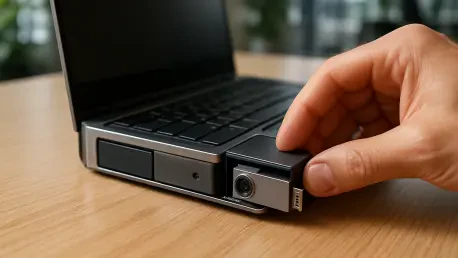
One of the most transformative elements of this strategic shift involves a fundamental commitment to modular hardware architecture. By developing components that are easily swappable and upgradeable, the company directly confronts the challenge of rapid obsolescence that has plagued the technology industry for decades. This approach is not merely an engineering feat but a core economic strategy designed to support a circular economy within the enterprise sector. When individual modules such as cameras, memory, or communication ports can be replaced without discarding the entire chassis, organizations can significantly extend the lifespan of their fleet investments. This leads to a lower total cost of ownership while drastically reducing the environmental footprint of IT operations. Furthermore, this modularity allows for a customized user experience, where hardware can be tailored to specific roles within a company, ensuring that employees have exactly the tools they need without the waste of unnecessary features. As the digital landscape evolves, these devices can be updated to support new standards, keeping the hardware relevant in a fast-paced market.
Beyond the physical longevity of the hardware, modularity introduces a new layer of flexibility in how professionals interact with their computing environment. The move toward modularity suggests a future where a laptop is no longer a fixed entity but a platform for growth. For instance, as new wireless standards or faster processing modules become available, they can be integrated into existing frames, preventing the need for massive hardware refreshes. This strategy aligns with the growing demand for corporate sustainability, as stakeholders increasingly prioritize environmental, social, and governance (ESG) metrics. By facilitating easier repairs and upgrades, the modular design empowers IT departments to maintain high performance levels while adhering to strict sustainability mandates. This evolution from a “disposable” tech culture to a “durable” one represents a sophisticated response to the resource constraints of the modern world. It also builds deep brand loyalty, as users and organizations come to rely on a platform that grows with them rather than forcing them into constant, costly cycles of replacement.
Human-Centric AI and Platform Versatility
The integration of human-centric AI companions represents a shift away from traditional command-line or menu-driven interfaces toward a more natural, conversational relationship between human and machine. These AI entities are designed to interpret natural language, recognize gestures, and maintain spatial awareness, allowing them to assist professionals in a way that minimizes cognitive load. Instead of spending time navigating complex software layers, users can interact with their devices through intuitive prompts and contextual cues. This development is crucial for maintaining productivity in an era where information overload is a constant threat. The AI is programmed to act as a filter, highlighting essential data and automating routine administrative tasks, which allows the human worker to focus on high-level creative and strategic thinking. This focus on human ergonomics ensures that technology remains a supportive element of the workspace, rather than a source of distraction or stress, fostering a more balanced and efficient work environment across diverse professional sectors.
To ensure this human-centric intelligence is accessible across all industries, the strategy emphasizes a silicon-agnostic approach that provides unparalleled platform versatility. By partnering with major architecture providers like Intel, AMD, and Qualcomm, the company ensures that enterprises are not locked into a single ecosystem. This allows IT leaders to select the specific hardware architecture—whether it be the power efficiency of ARM-based Snapdragon processors or the raw performance of the latest x86 chips—that best fits their unique operational requirements. This flexibility is critical for organizations managing a global workforce with varying needs, from mobile field agents to high-end data scientists. Each platform is optimized to run localized AI models, ensuring that data processing remains close to the user for better privacy and lower latency. This diverse hardware portfolio, combined with a heritage of extreme reliability, ensures that the “Think” brand remains the standard for durability in the enterprise world, regardless of the underlying silicon, and provides a stable foundation for the next generation of professional computing.
Redefining Hardware with Modular Concepts
The ThinkBook Modular PC and AI Workmate
The conceptual research being conducted into fluid work environments has led to the development of the ThinkBook Modular AI PC, a device that reimagines the laptop as a versatile, adaptive base. This proof of concept operates on a logic of “carrying small and using big,” featuring a 14-inch ultra-thin frame that can be expanded through interchangeable modules. Users have the ability to swap out the traditional keyboard for a secondary display, effectively doubling the screen real estate to 19 inches, or attach specific I/O ports tailored to their immediate environment. This level of customization is particularly beneficial for professionals who move between home offices, client sites, and public transit hubs, as it allows the hardware to transform to meet the spatial and functional demands of each location. The use of pogo-pin connectors and magnetic mounts makes these transitions seamless, ensuring that the physical interface is never a bottleneck for productivity. This modular approach signals a future where a single device can replace the need for multiple specialized machines, offering a streamlined yet powerful solution for the modern professional.
Complementing this physical flexibility is the AI Workmate concept, which explores the emotional and contextual dimensions of digital assistance. Envisioned as an “always-on” desk companion, this device moves beyond being a passive tool to becoming an active participant in the professional workflow. It utilizes local processing to ensure that sensitive business conversations and data remain private, while its sensors allow it to respond to voice, gestures, and even spatial movements. This allows for a more immersive interaction where the AI can anticipate the user’s needs based on their current task or physical orientation. For example, during a collaborative session, the Workmate can project relevant digital content onto physical surfaces like desks or walls, effectively expanding the workspace beyond the glass screen of a traditional monitor. This fusion of physical and digital environments represents a significant step toward the realization of “Calm Tech,” where the technology fades into the background until it is needed, providing support without demanding constant attention, and creating a more harmonious and focused office environment.
Contextual Assistance and Spatial Expansion
The ability of the AI Workmate to act as a bridge between human intent and digital execution is further enhanced by its advanced document summarization and organizational capabilities. By processing information in real-time, it can assist in creative tasks such as building presentations or organizing meeting notes, acting as a sophisticated administrative assistant that is always available. This contextual awareness means the device understands the relationship between different projects and can surface relevant information exactly when it is needed. This reduces the time spent searching through folders or email chains, allowing professionals to maintain their “flow state” for longer periods. The spatial projection technology is not just a visual gimmick; it serves as a functional tool for multi-tasking and collaborative brainstorming. By turning a physical tabletop into a touch-sensitive interface, the AI Workmate allows multiple users to interact with digital assets simultaneously, fostering a more interactive and engaging collaborative experience that traditional screens simply cannot match.
These innovations highlight a broader trend toward designing technology that respects human boundaries and cognitive limits. Through the use of tactile and auditory cues, these devices provide clear status updates without requiring the user to constantly check a screen, which is a core tenet of the “Calm Tech” philosophy. Attention management tools are integrated into the hardware to help users stay focused on their primary objectives, with the AI acting as a guardian of the user’s time. For instance, the system can automatically silence non-essential notifications during high-focus tasks or suggest breaks when it detects signs of cognitive fatigue. This holistic approach to hardware and software design ensures that the workspace is not just more productive, but also more conducive to long-term mental well-being. By providing an environment that fosters deep work and reduces friction, these modular concepts suggest a future where technology is a seamless extension of human capability, allowing professionals to achieve more with less effort while maintaining a high degree of portability and flexibility.
Extending Reliability to the Frontline
Ruggedized Solutions and the ThinkTab X11
The expansion of the “Think” brand into industrial and frontline environments is spearheaded by the introduction of the ThinkTab X11, a ruggedized Android tablet designed for the harshest working conditions. Engineered for sectors like manufacturing, logistics, and energy, this device brings enterprise-grade security and manageability to locations where traditional laptops would fail. It features an IP68 rating for dust and water resistance and has undergone rigorous MIL-STD-810H testing to ensure it can withstand drops, vibrations, and extreme temperatures. This durability is paired with specialized functional features, such as a display that remains responsive when used with gloves or in wet conditions, and front-mounted NFC for rapid data capture and access control. By addressing the specific needs of field workers, the X11 ensures that the digital transformation is not limited to the office, but reaches every corner of the global supply chain. This move into the rugged market demonstrates a commitment to providing reliable tools for every type of professional, regardless of their physical workspace.
Operational continuity is a primary focus for the ThinkTab X11, as downtime in industrial settings can lead to significant financial losses. To prevent this, the tablet includes a screwless removable battery that allows for quick swaps during long shifts, as well as a “battery-less mode” for fixed mounting in vehicles or machinery. This ensures that the device can operate continuously without the risk of battery swelling or failure in high-heat environments. Dual USB-C ports allow for the simultaneous use of peripherals and charging, which is essential for specialized tasks like inventory scanning or onsite diagnostic testing. The inclusion of the Snapdragon 7s Gen 3 platform provides the necessary processing power for localized AI tasks, such as real-time inventory recognition or augmented reality overlays for equipment repair. By combining extreme physical resilience with advanced digital capabilities, the X11 serves as a critical link between field operations and the centralized corporate intelligence network, empowering frontline workers with the same level of trusted AI support enjoyed by their office-based colleagues.
The ThinkPad T-Series and Repairability Leadership
The ThinkPad T-Series continues to serve as the backbone of the commercial fleet, but for this generation, it has been completely reimagined as a “Copilot+ PC” that balances cutting-edge AI with legendary durability. A significant achievement for this series is the attainment of perfect 10/10 repairability scores from iFixit for the T14 and T16 models. This was accomplished through a total redesign of the internal architecture, featuring simplified layouts, expanded use of customer-replaceable units, and clear labeling on internal components to guide technicians. This focus on repairability is a strategic move to lower the total cost of ownership for large organizations, as it allows internal IT teams to perform quick fixes rather than shipping units back for service. By making the battery, keyboard, and even the USB-C ports easy to replace, the company ensures that these workhorse devices can stay in service for longer, maximizing the return on investment for enterprise clients.
In addition to being easy to maintain, the T-Series is designed to provide a distraction-free and ergonomic user experience, earning “Calm Tech” Platinum certification. This involves the use of low blue light displays, physical camera shutters for privacy, and tactile cues that assist users with visual impairments. The series offers a wide variety of configurations, including the ultra-lightweight T14s, which weighs just 1.1 kilograms while maintaining a high-density 58Wh battery. This model is particularly notable for being available across three major processing platforms—Intel, AMD, and Snapdragon—allowing users to prioritize either raw computational power or extreme energy efficiency for long-distance travel. The T14s 2-in-1 also offers a versatile convertible format for those who require pen-based input, making it an ideal tool for creative professionals and mobile executives. This combination of repairability, AI-driven performance, and human-centric design reaffirms the T-Series as the gold standard for corporate computing, providing a reliable and future-proof platform for the modern workforce.
Versatility for Mobile Professionals and Small Businesses
Specialty Platforms and the X13 Detachable
For professionals who demand the ultimate in mobility without compromising on performance, the ThinkPad X13 Detachable offers a unique and powerful solution. This device is positioned as a “no-compromise” platform that functions as both a high-performance tablet and a fully capable workstation. It supports up to 64GB of memory and the latest high-performance processors, ensuring that resource-heavy tasks like data analysis or video editing can be performed on the go. The detachable keyboard is engineered to maintain the same 1.5mm key travel found on traditional ThinkPads, providing a superior typing experience that is often missing from other hybrid devices. Furthermore, the inclusion of a full-size ergonomic pen that recharges while docked makes it a perfect tool for designers and engineers who need to capture ideas quickly. This focus on professional-grade interfaces ensures that the X13 Detachable is not just a secondary mobile device, but a primary tool capable of handling the most demanding workloads in any location.
The X13 Detachable also carries forward the commitment to serviceability and longevity seen throughout the rest of the professional portfolio. It features field-replaceable components, including the battery and critical ports, which is a rarity for such a compact and integrated form factor. This ensures that a minor hardware failure does not result in extended downtime for a mobile professional, as many repairs can be performed quickly on-site. The enterprise-grade security features, such as biometric authentication and self-healing BIOS, provide a secure environment for sensitive data, even when the user is working from a remote or public location. This blend of workstation-class power, extreme portability, and rugged reliability makes the X13 Detachable an essential tool for the modern elite professional. By providing a device that adapts to the user’s physical needs while maintaining high standards of performance and security, the company is effectively redefining what is possible in the mobile workstation category.
SMB Solutions and the Magic Bay Ecosystem
The small and medium-sized business (SMB) market is addressed with the ThinkBook 14 2-in-1, which emphasizes smart collaboration and versatile design for growing companies. This device utilizes local AI acceleration to improve the quality of virtual meetings through advanced noise cancellation and background blurring, which is essential for businesses that rely on a hybrid work model. A standout feature of this model is the introduction of the “Magic Bay Tiko” module, an attachable AI-powered peripheral that provides contextual information and surfaces relevant data to help users navigate complex digital workflows. This modular approach to peripherals allows SMBs to add specific functionalities as their needs evolve, without having to purchase entirely new systems. This flexibility is a key advantage for smaller organizations that need to be agile and cost-effective with their technology investments, providing them with access to the same high-level AI tools used by much larger corporations.
To complement these versatile laptops, the ThinkVision M16 portable monitor provides a high-quality second screen for professionals working in temporary environments. This 16-inch display connects via a single USB-C cable with power pass-through, allowing users to extend their workspace in a hotel room, a cafe, or a client’s office without the need for multiple power bricks. This ecosystem approach recognizes that productivity is not just about the laptop itself, but about the entire environment in which the user operates. By providing lightweight, high-performance peripherals that integrate seamlessly with the main device, the company ensures that a professional-grade workspace is available anywhere. This focus on a cohesive and portable ecosystem helps distributed teams maintain a high level of performance and collaboration, regardless of where they are located. The combination of smart hardware, modular peripherals, and portable displays creates a comprehensive solution that empowers the modern SMB to compete effectively in an increasingly digital and globalized marketplace.
The Foundation of Enterprise Security
Security Suites and Subscription Management
As artificial intelligence begins to handle increasingly sensitive corporate data, the importance of a robust security infrastructure cannot be overstated. The ThinkShield security suite provides a multi-layered defense that protects devices from the moment they leave the factory through their entire operational lifecycle. This system includes specialized firmware and software safeguards that are designed to detect and mitigate emerging threats, including those powered by AI itself. By securing the supply chain and providing regular, automated updates, the company ensures that the hardware remains a “trusted” environment for business operations. This foundation of trust is essential for organizations that are looking to scale their AI implementations, as it provides the confidence that data integrity and privacy will be maintained. The security suite is designed to be invisible to the user, providing protection without impacting performance or complicating the daily workflow, which is a critical factor for maintaining high levels of productivity.
To help businesses manage these advanced technologies more effectively, the TruScale Device as a Service (DaaS) model offers a flexible, subscription-based approach to hardware acquisition. This allows enterprises to treat their technology investments as an operating expense rather than a massive initial capital expenditure, which is particularly beneficial for companies navigating the rapid evolution of AI technology. TruScale simplifies the process of upgrading to the latest hardware, ensuring that employees always have access to the most efficient and secure tools. It also provides IT departments with a centralized management platform, making it easier to monitor the health and security of the entire device fleet. This as-a-service model reflects a broader shift in the corporate world toward flexibility and scalability, allowing organizations to adjust their technology needs in real-time based on their current growth or market conditions. By combining secure hardware with a flexible management model, the company provides a comprehensive solution that addresses both the technical and financial challenges of modern enterprise computing.
AI Readiness and Professional Services
The transition to an AI-driven workspace requires more than just new hardware; it requires a strategic understanding of how these tools can be applied to achieve measurable business outcomes. To support this, specialized professional services have been introduced to help organizations assess their “AI readiness” and develop tailored implementation strategies. These services include evaluating current data infrastructures, identifying high-impact use cases for AI, and training employees on how to interact with their new human-centric companions. By providing expert guidance, the company ensures that its clients are not just buying technology, but are actually transforming their operations for the better. This holistic approach ensures that the deployment of modular and trusted AI is a success from both a technical and a cultural perspective, helping companies to realize the full potential of their digital transformation efforts. This consultative relationship builds a deeper partnership between the technology provider and the enterprise, moving beyond a simple transaction to a shared commitment to long-term operational success.
The strategic roadmap presented at the 2026 Mobile World Congress demonstrated a mature and comprehensive vision for the future of professional computing. By focusing on high repairability scores and modular designs, the company positioned itself as a leader in sustainable technology, effectively lowering the total cost of ownership for its global partners. The introduction of human-centric AI and a diverse range of hardware platforms showed a deep understanding of the varied needs of the modern workforce, from the office to the industrial frontline. The implementation of robust security through ThinkShield and flexible management via TruScale provided the necessary foundation of trust for businesses to embrace artificial intelligence at scale. As these innovations moved from concepts to real-world applications, they represented a significant step toward a more efficient, intelligent, and sustainable professional landscape. Organizations that adopted these modular and trusted AI solutions found themselves better equipped to handle the complexities of the modern world, enjoying a more productive and focused environment that was built for long-term resilience and growth.