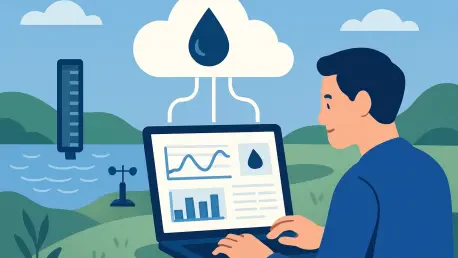

In response to escalating concerns over the nation’s water usage and the increasing complexity of managing this vital resource, researchers at the University of New Hampshire are spearheading the development of a groundbreaking open-source computational system. This initiative, backed by a significant $600,000 grant from the National Science Foundation, represents a collaborative effort between UNH and Purdue University. The project’s core mission is to create the OpenGHM platform, a system designed to democratize access to critical water resource data and thereby accelerate innovation in hydrological research. By moving complex modeling and massive datasets to the cloud, the platform aims to dismantle long-standing barriers that have hindered rapid scientific progress. The ultimate objective is to empower a wider community of scientists and decision-makers with the tools needed to address pressing environmental challenges, ensuring that the management of water resources is both data-driven and forward-thinking in an era of unprecedented change. This strategic shift promises to redefine how researchers interact with hydrological information.
Addressing Inefficiencies in Global Hydrologic Models
The central challenge that the OpenGHM platform is designed to overcome lies in the inherent inefficiency of current Global Hydrologic Models (GHMs). These models are indispensable tools for studying large-scale changes to water resources, as they compile and process vast amounts of disparate data, including weather patterns, soil composition, vegetation coverage, and the multifaceted impacts of human activity. However, the conventional methodology for utilizing these models is profoundly cumbersome and resource-intensive. Researchers are typically required to download massive, terabyte-scale datasets to local storage, run complex simulations on high-performance local computers, and then upload the results for analysis and dissemination. This entire process can take days to complete, creating a significant bottleneck that slows the pace of discovery and erects a substantial barrier to entry for scientists and institutions that lack access to powerful, dedicated computing infrastructure. OpenGHM will effectively eliminate this bottleneck by leveraging the power and scalability of existing cloud-based computing resources, allowing for a more streamlined and accessible scientific workflow.
Fostering a New Era of Collaboration
The development of the OpenGHM platform is driven by the primary goal of delivering reliable and timely information to a broad spectrum of stakeholders, enabling more informed decisions to protect essential water supplies, maintain food and energy production, and safeguard critical infrastructure. The initiative will also significantly enhance scientific transparency by simplifying the process for researchers to reproduce data and verify complex analytical workflows. This open-access framework is intended to foster greater collaboration across the scientific community, paving the way for more effective and collective science dedicated to studying the planet’s ever-changing hydrology. By removing technical and financial barriers, the platform will empower a more diverse group of experts to contribute their insights, leading to a more comprehensive understanding of global water systems. The project will ultimately establish a new standard for hydrological research, one where data accessibility and collaborative innovation are the cornerstones of progress.