
In an era where artificial intelligence promises to revolutionize software development, many enterprises find themselves grappling with a fundamental paradox: their most advanced AI tools remain blind to the unique internal knowledge that defines their competitive advantage. These AI assistants, trained on the vast expanse of the public internet, can generate code and answer general queries with impressive fluency, yet they falter when faced with proprietary frameworks, internal security protocols, or the nuanced “tribal knowledge” that accumulates within a large organization. This context gap transforms powerful AI from a potential strategic partner into a mere tactical assistant. The challenge, therefore, is not simply to adopt AI but to effectively teach it the institutional language it needs to speak. It is this critical challenge that the Stack Overflow Model Context Protocol (MCP) Server aims to solve.
Defining the Review’s Purpose and Scope
This review assesses the strategic value of the Stack Overflow MCP Server within the demanding environment of a large enterprise. To provide a grounded, real-world perspective, this analysis uses HP’s implementation as a comprehensive case study. The technology giant, with its thousands of developers and complex internal ecosystem, represents an ideal testbed for evaluating solutions designed to break down knowledge silos and enhance developer productivity. The primary objective is to evaluate the server’s effectiveness in solving these critical knowledge management challenges, which have long hindered efficiency and collaboration.
Furthermore, the scope of this review extends beyond a simple feature analysis. It examines the Stack Overflow MCP Server’s role as a catalyst for modernizing the entire software development lifecycle (SDLC). The evaluation will explore whether the product serves as a viable proof of concept for a more ambitious vision: an “agentic” AI-driven development model, where human developers transition from tactical executors to strategic directors of automated work. Ultimately, this review seeks to determine if the server represents a worthwhile and pivotal investment for large organizations looking to navigate this next frontier of software engineering.
Understanding the Stack Overflow MCP Server
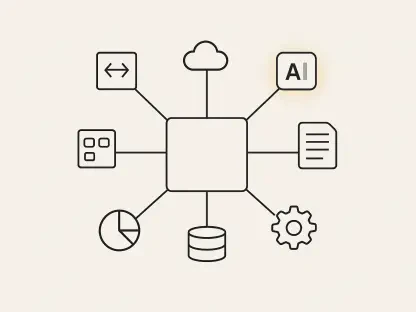
At its core, the Model Context Protocol (MCP) is a standardized framework designed to create a common language between AI agents and diverse sources of information. It provides a structured way for AI to request and receive specific, relevant context needed to perform complex tasks. This protocol addresses a foundational limitation of large language models, which traditionally lack access to private, real-time, or specialized data. MCP acts as the bridge, allowing AI to query enterprise knowledge bases, APIs, and other internal systems in a secure and scalable manner, transforming them from generalists into highly informed specialists.
The Stack Overflow MCP Server is a specific and powerful implementation of this protocol, engineered to make the validated, structured knowledge within an enterprise’s private Stack Overflow for Teams instance systematically addressable for AI tools. It effectively turns a company’s internal Q&A platform into an intelligent, queryable brain for its AI agents. The unique selling point of this server lies in its source material. The question-and-answer format, with its upvoted solutions and accepted answers, represents a “democratized source of well-validated” content that is naturally suited for the conversational queries of AI. This structured, human-curated knowledge base provides a robust foundation of truth that is far more reliable than unstructured documents or fragmented wikis.
Real-World Performance and Impact at HP
The practical application of the Stack Overflow MCP Server at HP provided a clear and compelling demonstration of its capabilities across several key criteria. Most significantly, it served as a highly successful proof of concept, validating the viability of the entire MCP framework for the organization. Before committing significant resources to building a complex internal infrastructure, HP needed to confirm that the protocol could deliver on its promise. The Stack Overflow server provided that confirmation, demonstrating tangible, real-world potential and justifying the strategic investment required to pursue a fully agentic SDLC. Its seamless integration and immediate utility gave HP’s leadership the confidence to move forward with a broader, more ambitious AI strategy.
Functionally, the server proved to be an invaluable knowledge source, effectively bridging the context gaps that had previously limited HP’s AI assistants. It provided agents with reliable, high-quality information on a vast range of internal topics, from specific coding solutions and best practices for internal frameworks to complex corporate security and privacy standards that are non-negotiable within the enterprise. Beyond its role as a data provider, the server’s intuitive and effective performance set a high standard for user experience. For HP’s internal teams tasked with developing their own specialized MCP servers, the Stack Overflow implementation became a crucial quality benchmark, offering a clear vision of what a well-executed MCP integration “looks like when it feels right.”
This successful implementation also served as a strategic enabler for HP’s larger vision of a multi-source MCP ecosystem. The company’s goal was never to rely on a single source of truth but to create a brokered system where AI agents could draw context from numerous specialized servers. The positive experience with the Stack Overflow server validated this brokered approach, confirming that managing multiple context sources was a sound and scalable strategy. It demonstrated that third-party and internal MCP servers could coexist and complement one another, reinforcing HP’s roadmap to orchestrate a comprehensive knowledge network that empowers its AI agents to their fullest potential.
Key Strengths and Strategic Considerations
The Stack Overflow MCP Server exhibits several powerful strengths that position it as a key technology for enterprise AI adoption. Its most significant advantage is its role as a catalyst for innovation. For organizations contemplating a shift toward an agentic development model, the server provides a functional, high-quality implementation out of the box, allowing them to quickly validate their strategy without a massive upfront investment in custom infrastructure. It provides a “robust source of truth” by leveraging the inherently structured and validated Q&A format of Stack Overflow, a format that is uniquely suited for consumption by AI. Moreover, by setting a clear benchmark for performance and user experience, it guides and elevates the development of a broader, internal MCP infrastructure, ensuring that subsequent solutions meet a high standard of quality. Ultimately, it directly addresses the core limitation of modern AI assistants by furnishing them with the essential, proprietary enterprise context they need to perform meaningful work.
However, prospective adopters must also weigh several important strategic considerations. The server’s value is intrinsically tied to the quality, depth, and relevance of the knowledge base within the connected Stack Overflow for Teams instance. An underutilized or poorly maintained instance will yield limited benefits, as the AI can only be as smart as the information it is fed. It is also crucial to recognize that the server is not a standalone, all-encompassing solution. Instead, it is one vital component of a larger enterprise strategy that will likely require an internal broker and other specialized MCP servers to achieve comprehensive coverage across all necessary knowledge domains. Finally, a successful implementation demands a rigorous “trust but verify” governance and security framework. Integrating any system that provides AI with access to proprietary data requires meticulous oversight to meet the stringent security and compliance standards of a modern enterprise.
Overall Assessment and Final Verdict
In summary, the Stack Overflow MCP Server proves to be much more than a software product; it is a strategic enabler for enterprises committed to embracing the next generation of software development. Its value extends far beyond simply connecting a knowledge base to an AI. As powerfully demonstrated by HP’s experience, it serves as an exceptional tool for validating the MCP framework at an enterprise scale, providing a tangible and low-risk pathway for organizations to explore the potential of agentic AI. It effectively delivers high-quality, reliable context to AI agents, transforming them from generic tools into knowledgeable partners capable of understanding and navigating a complex corporate environment.
The final verdict is that the server is a pivotal and well-executed technology that successfully addresses one of the most critical challenges in enterprise AI today: making institutional knowledge accessible and useful to automated systems. For companies looking to accelerate their journey toward an agentic SDLC, it offers a clear, effective, and strategically sound starting point. The server’s ability to leverage an existing, human-validated source of truth in a format that is ideal for AI consumption makes it a uniquely powerful solution in a rapidly evolving market. It stands as a benchmark for how to responsibly and effectively bridge the gap between AI potential and enterprise reality.
Recommendations for Adoption
The Stack Overflow MCP Server was found to be most beneficial for large organizations grappling with knowledge silos and seeking to unlock the full potential of their AI development tools. Its architecture and purpose are tailored for complex environments where proprietary information is fragmented and difficult for both humans and machines to access efficiently. It is highly recommended for technology leaders who are aiming to execute a strategic transition for their development teams, shifting them from tactical executors of code to strategic directors of AI-driven work. By automating access to institutional knowledge, the server lays the groundwork for this fundamental evolution in the developer’s role.
Before full-scale adoption, organizations should have considered using it as a foundational proof of concept to validate and inform a broader, multi-source MCP strategy, just as HP did. This approach mitigates risk and ensures that the technology aligns with the company’s long-term vision. It was also essential that a robust AI governance model was in place to oversee the flow of proprietary information and ensure compliance with strict security standards. Finally, adopters had planned from the outset to augment its knowledge base with other specialized, internal context sources over time. When implemented as part of this holistic strategy, the Stack Overflow MCP Server performed as a powerful and indispensable catalyst for enterprise transformation.