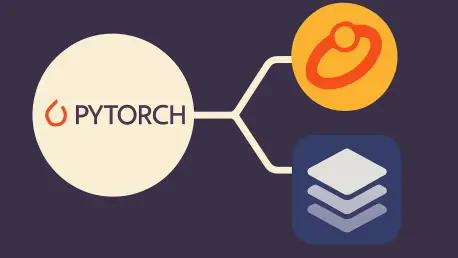

The formal expansion of the PyTorch Foundation to include the Helion and Safetensors projects represents a fundamental shift in how the industry approaches the stabilization of the open-source artificial intelligence stack. This announcement, delivered during the proceedings of KubeCon Europe, signals a definitive transition from the experimental and often fragmented “lab” phase of AI development toward a more mature, enterprise-ready era of production. As the technological landscape experiences an unprecedented surge in the deployment of open-weight models, these two strategic integrations address critical gaps in security, hardware portability, and developmental accessibility that have historically been overlooked. By fortifying the infrastructure that supports modern computing, the PyTorch Foundation is not simply expanding its portfolio but is actively creating a standardized framework for the next generation of digital intelligence. This evolution ensures that the complex layers of the AI stack are robust enough to handle the rigorous demands of global enterprise operations, moving away from niche research tools toward reliable, widespread deployment across diverse industries and hardware environments.
Revolutionizing GPU Programming through Abstraction
Overcoming the Scarcity: Specialized Engineering Talent
The primary bottleneck currently hampering the rapid expansion of the AI industry is the extreme scarcity of GPU programming expertise, a specialized field that remains a significant barrier to entry. At the foundational level of AI computation, kernels act as the essential, highly specialized units of code that dictate how mathematical operations are executed on specific hardware. Historically, writing efficient kernels has been considered an arcane discipline, requiring a profound understanding of chip memory architecture, parallelization strategies, and hardware-specific throughput optimization. Currently, the global population of engineers capable of performing this task at an elite level is remarkably small, often estimated to be in the low hundreds. This talent gap has meant that high-performance optimization was a luxury available only to the largest technology firms with the resources to employ these rare specialists. Consequently, many innovative organizations have struggled to extract the full potential of their hardware investments, leading to a reliance on pre-optimized but less flexible software solutions that do not always meet their unique operational needs.
Helion serves as a critical abstraction layer that allows a vastly larger pool of developers, consisting of millions of Python users, to describe GPU computations in a familiar and accessible syntax. While earlier tools like the Triton compiler were significant steps forward, they remained largely within the domain of specialists who understood the nuances of intermediate representation. As a Python-embedded Domain-Specific Language, Helion simplifies the process of kernel authoring by bridging the gap between high-level logic and low-level hardware execution. This shift ensures that high-performance AI is no longer a closed club reserved for organizations with elite hardware engineers, effectively lowering the barrier to entry for software development across the entire industry. By empowering a broader demographic of software engineers to write and maintain high-performance code, the project democratizes access to the underlying power of modern silicon. This accessibility is vital for fostering innovation in smaller research labs and startups that previously lacked the technical overhead to compete with established giants in the computational field.
Performance Gains: Automated Autotuning
A standout feature of Helion is its autotuning capability, which automates the optimization process that developers previously had to handle through laborious manual testing and iteration. In traditional workflows, engineers must manually test and tweak kernel configurations to find the most efficient execution path for a specific chip, a process that can take weeks of fine-tuning. Helion automates this by testing hundreds of candidate implementations and selecting the optimal one for the target hardware in a fraction of the time. This automation is particularly vital in the current market, where the dominance of a single hardware provider is being challenged by a fragmented landscape of diverse AI accelerators. As organizations increasingly adopt heterogeneous computing environments, the ability to automatically optimize code for different architectures becomes a competitive necessity. This feature significantly reduces the time-to-market for new AI models, allowing teams to focus on architectural innovation rather than the tedious details of hardware-specific performance tuning.
The portability offered by Helion is essential for a future where hardware neutrality is a fundamental requirement for enterprise infrastructure. By making kernel authoring simpler and more adaptable, the tool ensures that AI applications can run efficiently on various silicon platforms, including AWS Trainium, Google TPUs, and various emerging silicon startups. This flexibility allows developers to focus on higher-level innovation rather than the minutiae of hardware-specific optimizations that often lock them into a single vendor’s ecosystem. The integration of Helion into the PyTorch Foundation reinforces the move toward a more inclusive and high-performing AI ecosystem where software is no longer a prisoner of the hardware it runs on. As the industry moves toward 2027 and beyond, the capability to seamlessly transition workloads between different cloud providers and on-premises accelerators will be a hallmark of a mature technological stack. This hardware independence fosters a more competitive market, driving down costs and encouraging chip manufacturers to compete on the merits of their silicon rather than the stickiness of their proprietary software libraries.
Securing the AI Supply Chain with Safetensors
The Security Challenge: Eliminating Legacy Vulnerabilities
While performance is a key pillar of growth, Safetensors addresses the critical need for security within the AI supply chain by replacing inherently dangerous legacy formats. For years, the AI community relied on Python’s pickle format for sharing model weights, despite its fundamental security flaws that allowed for the execution of arbitrary code during the file-loading process. This vulnerability meant that a developer downloading a popular model from a public repository could inadvertently run malicious code on their local system without any prior warning or detection. Safetensors, originally developed by the team at Hugging Face, provides a robust solution to this problem by strictly separating metadata from the numerical weights. This structural change ensures that the file remains inert and cannot be used as a vector for cyberattacks. By functioning as a structured table of contents for model data, Safetensors transforms model weights into safe, verifiable data files. This move is a necessity for enterprise-grade applications where basic cybersecurity hygiene and supply chain integrity are non-negotiable.
The adoption of Safetensors by the PyTorch Foundation indicates that the AI industry is finally prioritizing the safety of the model supply chain over convenience and legacy compatibility. This move away from vulnerable formats is a prerequisite for the widespread adoption of artificial intelligence in sensitive and regulated industries such as finance, healthcare, and government defense. In these sectors, the risk of a “Trojan horse” model weight file is a significant barrier to the deployment of open-weight models. By standardizing a format that is secure by design, the foundation provides the necessary assurance for security officers and compliance teams to approve the use of external models. This shift also encourages a more transparent ecosystem where the integrity of a model can be verified independently of the code used to load it. As the complexity of cyber threats continues to evolve, having a serialization format that is immune to code injection becomes a foundational requirement for any organization serious about its digital security posture. This security-first approach is essential for building public trust in the AI systems that are becoming increasingly integrated into daily life and critical infrastructure.
Production Readiness: Speed and Scalability
Beyond its security features, Safetensors offers significant performance advantages that are crucial for modern enterprise environments and large-scale deployments. It is engineered specifically for efficient, parallel loading, which is a requirement for multi-GPU and multi-node systems that power the world’s most advanced large language models. Unlike general-purpose serialization methods that often introduce significant overhead, Safetensors enables zero-copy loading, meaning the data can be mapped directly into memory without unnecessary intermediate steps. This efficiency is an essential tool for scaling models across massive data centers where every millisecond of loading time contributes to overall system latency and operational costs. For organizations running thousands of inference instances, the cumulative time saved through zero-copy loading translates into substantial cost reductions and improved user experiences. This performance boost demonstrates that security does not have to come at the expense of speed, but can instead be a catalyst for more streamlined and efficient technical architectures.
The performance benefits of Safetensors complement its security features, creating a comprehensive solution for model distribution that meets the needs of both developers and infrastructure engineers. By reducing the overhead associated with loading massive datasets and models, it allows organizations to deploy AI more rapidly and reliably across distributed networks. This focus on both safety and speed illustrates the maturation of the AI stack, moving beyond theoretical research into the realm of practical, high-speed infrastructure that can support real-time applications. As models continue to grow in size and complexity, reaching parameters into the trillions, such optimized serialization formats will become even more indispensable for maintaining system stability. The integration of this format into the PyTorch ecosystem ensures that these benefits are available to the widest possible audience, further solidifying the foundation’s role as the curator of the industry’s most critical tools. This development reflects a broader understanding that the success of AI in production depends as much on the reliability of the data transfer as it does on the mathematical accuracy of the underlying algorithms.
Promoting Stability through Neutral Governance
Standardizing Growth: Transitioning to Community Governance
A recurring theme in the foundation’s recent activity is the strategic shift of critical infrastructure from private corporate ownership to neutral, community-driven governance models. Both Helion and Safetensors originated in the private sector, with Helion beginning at Meta and Safetensors at Hugging Face, but their move to the PyTorch Foundation ensures their long-term longevity. Enterprise security teams and infrastructure architects require standards that are durable, transparent, and free from the whims of a single corporate entity. Placing these projects under a neutral foundation provides the institutional permanence necessary for large-scale adoption by global corporations that plan their technology cycles years in advance. This transition allows these tools to gain a neutral trademark and an open governance model, protecting them from risks such as sudden changes in licensing or shifts in corporate strategy. By establishing a neutral ground for development, the foundation fosters an environment where competitors can collaborate on the underlying plumbing of the AI stack while competing on the actual applications and models.
The role of neutral governance is to provide a stable foundation where industry standards can flourish without the constraints and biases of proprietary silos. This move allowed global enterprises to build on a community-standard foundation with the confidence that the tools would remain accessible and compatible across different cloud and hardware ecosystems. It reduced the “key person risk” associated with individual companies and ensured that the collective wisdom of the entire community could be applied to solving common problems. Furthermore, the move to the PyTorch Foundation signaled to the broader market that these projects were no longer experimental features but core components of the modern technical infrastructure. This institutional support is vital for encouraging third-party vendors and service providers to build their own offerings on top of these tools, creating a rich ecosystem of compatible products. As the industry moves into the late 2020s, the importance of vendor-neutral foundations in maintaining the health and openness of the technological landscape cannot be overstated, as they prevent the monopolization of the most fundamental building blocks of intelligence.
Accessibility: Democratizing the AI Infrastructure Stack
The addition of these technologies highlights a broader trend toward the democratization of the AI stack, aiming to level the playing field for smaller organizations and research institutions. By providing tools that work across different chips and ensuring that models can be shared without fear of cyberattacks, the PyTorch Foundation is making high-end AI capabilities more accessible to a global audience. This move ensures that the future of artificial intelligence remains open and competitive, rather than being dominated by a handful of entities with the most specialized resources. The focus on accessibility extends beyond just technical ease of use; it encompasses the creation of an environment where innovation can happen anywhere, regardless of an organization’s size or budget. By lowering the cost and complexity of building and deploying secure, high-performance models, the foundation is fostering a more diverse and vibrant technological community. This democratization is essential for ensuring that the benefits of AI are distributed widely and that the technology is developed in a way that reflects a broad range of perspectives and needs.
In conclusion, the integration of Helion and Safetensors represented a sophisticated maturation of the open AI stack that fundamentally shifted the landscape of machine learning development. These projects solved the foundational problems of security, performance, and usability that had historically hindered the transition of AI from research labs to reliable production environments. By fostering a stack that was more secure and easier to navigate, the PyTorch Foundation ensured that the global developer community could continue to innovate without being bogged down by specialized hardware constraints or security risks. The professional rigor and safety introduced through these projects made the open AI stack a formidable and reliable choice for the future of enterprise software, moving it into a new era of industrial-scale application. Moving forward, organizations should prioritize the migration of their legacy model formats to Safetensors to mitigate supply chain risks while exploring Helion to optimize their cross-hardware performance. These steps will be essential for staying competitive in an environment where speed, security, and hardware flexibility have become the primary benchmarks for successful artificial intelligence implementation.