
As modular synthesis enters a new era of computational power in 2026, the demand for high-density utility modules has forced designers to rethink the limits of existing open-source hardware frameworks. The Ornament & Crime platform has long served as a foundational element in many systems, but the transition to the T4.1 O.R.N.8 architecture marks a significant departure from its predecessor’s constraints. By moving to the robust Teensy 4.1 processor, the module effectively eliminates the processing bottlenecks that once limited the complexity of real-time control voltage generation. This hardware evolution is not merely an incremental update; it represents a fundamental shift in how digital modules interact with the analog world of Eurorack. Producers are no longer forced to choose between a dedicated quantizer or a simple envelope generator when a single 12HP unit can now manage significantly more intensive tasks without breaking a sweat. This shift reflects a broader trend toward high-performance computing within the modular ecosystem.
Hardware Architectural Enhancements and Memory Expansion
The integration of the Teensy 4.1 processor provides a substantial increase in clock speed and efficiency, allowing the module to handle high-resolution signals with minimal latency. Beyond the raw speed of the central processing unit, the inclusion of an 8MB SRAM chip stands as the most transformative physical upgrade for this specific iteration. This additional memory allows the module to store and manipulate much larger datasets, which directly translates into expanded functionality for time-based operations that were previously impossible on the older hardware. For instance, the system can now facilitate up to twelve seconds of high-quality delay or perform complex CV recording sequences that span multiple measures without running out of buffer space. Such a dramatic increase in available memory transforms the unit from a simple logic and math tool into a capable storage and manipulation hub. This enables a level of depth in patch programming that requires fewer external support modules to achieve complex, evolving results.
A critical design choice in the T4.1 O.R.N.8 is the inclusion of dedicated audio inputs and outputs, which significantly broadens the scope of the module’s utility within a rack. While the original Ornament & Crime was primarily recognized as a control voltage processor, the updated hardware path allows it to function as a legitimate stereo audio processor. This transition is supported by a redesigned signal path that maintains the precision required for pitch-perfect CV while offering the bandwidth necessary for clean audio signals. Consequently, the module can now inhabit multiple roles simultaneously, such as acting as a digital oscillator in one section while providing granular effects or filtering in another. This versatility is essential for smaller “skiff” setups where every millimeter of space must be utilized for maximum functional output. By bridging the gap between a control utility and an audio effect, the hardware provides a unified solution that simplifies the overall signal flow of a modular performance system.
Software Flexibility and Multitasking Capabilities
The operational heart of this hardware evolution is the Phazerville firmware, which leverages the increased processing power to run multiple applications at the same time. Unlike earlier versions that required the user to commit to a single “app” for the entire module, the T4.1 variant supports the simultaneous execution of four distinct apps or applets. This multitasking capability effectively turns one physical module into four independent virtual modules, each capable of handling different tasks like Euclidean sequencing, probability-based quantization, or complex envelope generation. The ability to route internal signals between these virtual components allows for a level of self-contained patch logic that was once the exclusive domain of large, expensive computer-integrated systems. By utilizing a modular software approach within a modular hardware environment, users can create highly customized workflows that adapt to the specific needs of a composition or a live performance set without needing to swap cables.
Furthermore, the expansive library of available applications within the Phazerville ecosystem ensures that the module remains relevant as synthesis techniques continue to evolve from 2026 onward. The software suite includes everything from traditional digital logic gates and shift registers to more contemporary drum synthesis algorithms and intricate random voltage generators. Because the firmware is open-source, it benefits from a continuous stream of community-driven updates that introduce new features and refine existing ones. This collaborative development model means that the T4.1 O.R.N.8 is not a static product but a growing platform that can take on new personalities as different synthesis trends emerge. For the modular enthusiast, this represents a future-proof investment that can replace several single-function modules. The depth of the software options ensures that the hardware is rarely the limiting factor in a creative setup, provided the user is willing to navigate the extensive menu structures.
Connectivity Standards and User Experience Improvements
Connectivity has been modernized to meet the expectations of contemporary musicians, featuring a native USB-C port that facilitates both data transfer and advanced interface options. One of the standout features of this new connection is the “display capture” functionality, which allows the module’s internal screen to be mirrored on a laptop or desktop computer. This serves as a vital bridge for users who find the small on-module OLED screen difficult to navigate during complex programming sessions. Additionally, the inclusion of MIDI support via 3.5mm minijacks and the I2C protocol allows the module to communicate seamlessly with external controllers and other smart modules in the rack. This level of integration is further enhanced by an SD card slot, which provides convenient storage for user presets, custom scales, and recorded CV data. These features collectively reduce the friction often associated with high-functionality digital modules, making the extensive feature set more accessible to a wider range of users.
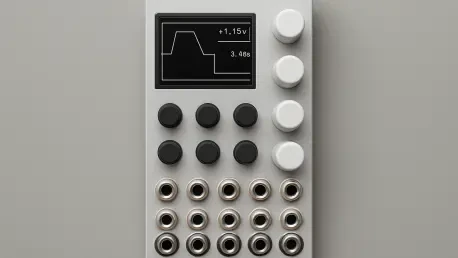
The physical implementation of the module, particularly the 12HP version popularized by boutique builders like TuneFish Modular, strikes a balance between ergonomics and space efficiency. It incorporates USB MIDI and USB Host capabilities directly into the front panel, which is a significant upgrade for those who wish to connect external MIDI keyboards or controllers without additional interface modules. While the module still relies on a menu-heavy navigation system, the tactile feedback of the encoders and the clarity of the updated display make it more intuitive than other high-density alternatives. In the current market, where the unit is priced competitively between 299€ and 349€, it offers an unparalleled ratio of functions per dollar. This economic and functional efficiency has made it a staple for performers who need a reliable “utility belt” that can solve almost any patching problem. The hardware’s ability to act as a bridge between the digital and analog worlds ensures its place as a central hub in modern Eurorack systems.
Future Considerations and Strategic Implementation
The successful integration of the T4.1 O.R.N.8 into a professional modular workflow required a deliberate shift toward understanding multi-functional signal paths. Owners of this module moved away from treating it as a static component and instead viewed it as a dynamic resource that could be reconfigured for every unique patch. To maximize the utility of the hardware, it became standard practice to map the I2C connectivity to external controllers, thereby bypassing the small screen for real-time performance adjustments. This approach allowed the module to serve as the hidden brain of the system, handling the complex mathematical heavy lifting while the performer focused on tactile interaction. The transition to this more powerful platform demonstrated that the bottleneck in modular synthesis was no longer the hardware’s processing speed, but rather the user’s ability to conceptualize complex internal routings. This realization prompted many to invest more time in learning the nuances of the Phazerville firmware.
Looking ahead, the logical next step for users involved the creation of personalized application presets that could be swapped instantly via the SD card to suit different musical genres. The community moved toward sharing these “patch states,” which effectively standardized certain complex behaviors across different systems. As the hardware matured, the emphasis shifted toward using the audio processing capabilities for high-fidelity spatial effects and granular textures, proving that the move to a more powerful processor was justified. Developers focused on optimizing the code to leverage the 8MB SRAM even further, introducing more sophisticated looping and buffer-mangling algorithms. This evolution ensured that the module remained a centerpiece of the rack, evolving alongside the user’s needs. The strategy for any serious synthesist became clear: master the depth of the T4.1 architecture to reduce the physical footprint of the rack without sacrificing the complexity or the quality of the sonic output.