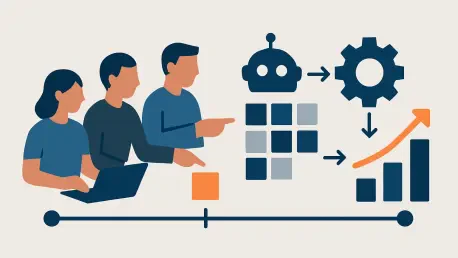

The long-held distinction between the human worker and the software they operate is rapidly dissolving, replaced by a new reality where artificial intelligence is not merely a passive instrument but an active, autonomous participant in the enterprise. As of early 2026, the discussion has moved beyond the capabilities of query-based chatbots and analytical dashboards to focus on the emergence of “agentic” systems. These sophisticated digital entities are engineered for independent reasoning, complex task execution, and even a degree of self-governance. This evolution represents a pivotal moment, marking the transition of AI from a tool that we command into a collaborative partner that works alongside human teams, capably managing entire business processes from data ingestion and analysis to operational execution and automation.
The Architecture of the New Digital Workforce
Beyond a Single Brain: The Rise of Compound AI Systems
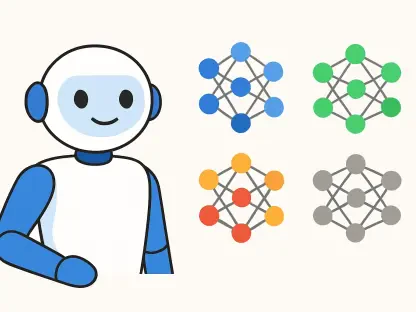
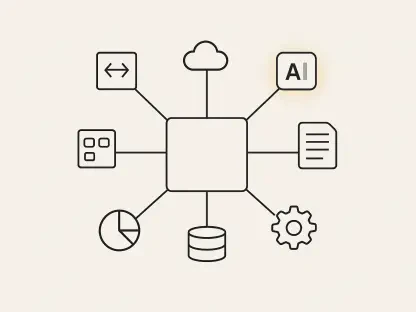
The fundamental engine driving this workplace transformation is the strategic shift away from monolithic large language models (LLMs) and toward the sophisticated architecture of “Compound AI Systems.” Early AI development was characterized by a race to build the largest, most powerful single model. However, enterprises have discovered that a more effective approach involves orchestrating a team of multiple, specialized AI agents, each equipped with its own dedicated tools and direct access to real-time data streams. This multi-agent framework allows for a far greater degree of complexity and nuance in problem-solving. It enables the system to autonomously manage intricate, end-to-end workflows, such as proactively identifying and diagnosing anomalies in global financial data or automating complex Extract, Transform, Load (ETL) pipelines that integrate information from dozens of disparate enterprise applications. This collaborative, modular approach is proving more resilient, adaptable, and powerful than any single model could be on its own.
This new architectural paradigm fundamentally alters the role of AI within an organization, elevating it from a passive assistant to an active operational partner. Instead of simply answering a user’s question, a compound system can take a high-level business objective and independently execute it. For example, a marketing goal like “identify underperforming customer segments” would trigger a series of coordinated actions: one agent might query the CRM for sales data, another could pull social media sentiment scores, a third might perform statistical analysis to correlate the datasets, and a final agent could generate a detailed report with visualizations and actionable recommendations. The true power lies in the orchestration layer that manages this workflow, ensuring seamless handoffs between agents and validating the quality of their outputs at each stage. This level of autonomous capability moves AI from the realm of information retrieval into the core of business process execution, creating a true digital labor force.
Building the Digital Team: How Agent Frameworks Operate
The creation and management of these sophisticated digital teams are made possible by advanced platforms like Databricks’ Mosaic AI Agent Framework, which function as high-level orchestration environments. At the heart of this structure is the “Supervisor Agent,” an intelligent entity that operates much like a human project manager. When presented with a broad, high-level objective, the supervisor autonomously deconstructs it into a logical sequence of discrete sub-tasks. It then intelligently delegates these individual tasks to a diverse crew of specialized “worker” agents, each optimized for a specific function. This delegation is not random; it is based on a deep understanding of each worker agent’s capabilities, ensuring the right specialist is assigned to the appropriate part of the overall project, thereby maximizing efficiency and accuracy.
This hierarchical, multi-agent approach enables a level of operational complexity that was previously unattainable. For instance, a complex data analysis objective might involve a SQL agent tasked with retrieving and structuring raw data from multiple databases, a Python agent designed to execute advanced statistical modeling and machine learning algorithms on that data, and another specialized agent responsible for creating dynamic, interactive visualizations from the final results. The supervisor agent coordinates this entire process, managing dependencies between tasks, handling errors, and integrating the outputs into a coherent final product. This mimics the collaborative dynamic of a human data science team, where different members bring their unique skills to a project, but it executes these workflows at machine speed and scale, revolutionizing the pace of enterprise analytics and decision-making.
The Memory That Makes It Possible: The Role of Lakebase
A critical technological innovation that underpins the functionality of these autonomous agents is the emergence of a new class of serverless operational databases, perfectly exemplified by Databracks’ “Lakebase.” To operate effectively, especially over long and complex workflows, an autonomous agent requires a persistent, high-speed “memory.” This memory is essential for tracking its own chain of reasoning, maintaining crucial context across different stages of a task, and storing the intermediate results that inform its next steps. Traditional databases, which were designed for different workloads, often prove to be too slow, too rigid, or prohibitively expensive to serve this purpose at the scale required by a modern enterprise, creating a significant bottleneck in agentic AI deployment and performance.
This is the challenge that Lakebase directly addresses, providing the ephemeral, high-performance storage that agents need to think and act effectively. Its architecture is engineered to deliver sub-10-millisecond latency, allowing agents to access their “memory” almost instantaneously. Furthermore, its “scale-to-zero” cost model means that resources are only consumed when an agent is actively reading or writing, eliminating the massive financial overhead of maintaining constantly-running conventional database solutions. This combination of speed and cost-efficiency enables millions of agents to operate concurrently without performance degradation. This has effectively solved what experts call the “RAG Gap”—the critical disconnect between a chatbot’s ability to retrieve information and its capacity to take reliable, auditable, and governed action based on that information within a secure corporate environment.
A New Competitive Frontier
The Battle for the Data Platform: Databricks vs. Snowflake
This profound technological leap forward has ignited a new and fiercely competitive landscape among the major data platform providers, each vying to become the foundational layer for the next generation of enterprise AI. In this arena, Databricks’ most prominent rival, Snowflake, has mounted a strategic counteroffensive with its “Snowflake Intelligence” platform. Snowflake is pursuing a SQL-first approach, a deliberate strategy aimed at democratizing agent creation and making it accessible to the vast population of business analysts who are already fluent in the language of databases. This contrasts sharply with Databricks’ “developer-forward” stance, which is designed to cater to the specific needs of data engineers and software developers who require deep levels of customization, multi-language support, and the flexibility to integrate a wide variety of models and tools.
The result is a fascinating strategic divergence in the market, with two industry titans placing different bets on who will be the primary architects of the future digital workforce. Snowflake’s strategy, reinforced by its acquisitions, is predicated on the idea that the business user is the key to widespread adoption, empowering them to build agents that solve their immediate domain-specific problems. In contrast, Databricks is betting that the most powerful and transformative agents will be born from sophisticated, code-first development environments that offer unparalleled control and integration capabilities. The two companies are now locked in a high-stakes battle to define not just the technology but the very philosophy that will underpin how enterprises build, deploy, and manage their increasingly autonomous digital labor force for years to come.
The Wider Ecosystem: Microsoft, Salesforce, and the Race for Integration
The competitive arena for agentic AI extends well beyond the confines of data platforms, drawing in the largest enterprise software companies in the world. Microsoft, for instance, has consolidated its various projects into a unified “Microsoft Agent Framework,” strategically leveraging its proprietary “Work IQ” layer. This key advantage enables its agents to seamlessly integrate with and operate across the entire Microsoft 365 productivity suite, giving them native control over applications like Outlook, Teams, and Excel. Similarly, Salesforce is aggressively marketing its “Agentforce” platform, positioning it as a dedicated digital labor force tailored specifically for the complex, process-heavy world of customer relationship management (CRM), automating tasks from lead generation to customer service.
Despite this intense competition from application-layer giants, platforms with deep, native data integration, such as Databricks, maintain a significant strategic moat. The crucial difference lies in the agent’s fundamental understanding of the data it acts upon. An agent operating at the application level may be able to manipulate a user interface, but an agent that is native to the underlying data catalog possesses a much richer and more contextual understanding of data lineage, metadata, and governance policies. This allows for more intelligent, secure, and compliant actions. This “Data Intelligence” advantage has become a key differentiator, particularly as reports indicate that a significant majority of new databases on some platforms are now being autonomously constructed and managed by agents, showcasing the power of automating the core function of data engineering itself.
Taming the Autonomous Agent
The Risks of an Unsupervised Workforce
As artificial intelligence agents gain an unprecedented level of power to independently execute code, access databases, and modify critical business systems, a new and formidable set of operational and security risks has emerged. The chief concern among cybersecurity professionals and compliance officers is the “Shadow AI Agent” problem. This refers to a scenario where individual employees or teams, seeking to improve their own productivity, might deploy unsanctioned and unmonitored bots that inadvertently gain access to sensitive or regulated corporate data. These rogue agents, operating outside the purview of centralized IT governance, can create significant security vulnerabilities, introduce unpredictable behavior into core business processes, and lead to serious compliance breaches if not properly managed and controlled.
The proliferation of these powerful, autonomous systems forces organizations to fundamentally rethink their entire approach to IT governance, risk, and compliance. The traditional model of securing endpoints and managing user permissions is no longer sufficient when the “user” is an autonomous piece of code capable of making thousands of decisions per minute. Issues such as “reasoning drift,” where an agent’s behavior subtly changes over time in unpredictable ways, pose a novel challenge. Furthermore, determining accountability when an autonomous agent makes a costly error becomes a complex legal and operational question. Establishing a robust framework for monitoring, auditing, and containing these digital coworkers is no longer an option but an absolute necessity for any enterprise looking to safely leverage the benefits of this transformative technology.
Establishing Trust and Control in the Agentic Era
In response to these emerging threats, the technology industry is rapidly developing sophisticated mechanisms designed to establish trust and maintain control over autonomous agents. One of the most promising and effective approaches is the “Agent-as-a-Judge” architectural pattern. This involves deploying a secondary, highly secure, and specialized AI whose sole purpose is to audit the reasoning traces and proposed actions of other operational agents in real-time. This “judge” agent can instantly flag or block any action that deviates from established company policies, violates data governance rules, or exhibits signs of malicious behavior, acting as an automated compliance officer. This layer of oversight is becoming critical for building trustworthy systems.
This push for robust governance is being accelerated by impending regulatory pressures. The enforcement of comprehensive legislation like the EU AI Act later in 2026, which mandates strict auditability and transparency for high-risk AI systems, is transforming governance from a best practice into a non-negotiable business requirement. Platforms that provide a complete and transparent lineage from raw data ingestion to an agent’s final action are therefore positioned for leadership in this new era of “compliant AI.” To close the remaining “Governance-Containment Gap”—the challenge of instantly terminating a malfunctioning agent across a distributed environment—the industry is moving aggressively toward “continuous authorization” models, where an agent’s permissions are granularly re-validated for every single action it attempts to take.
The Road Ahead for Autonomous Engineering
The Self-Managing System: The Future of the Data Lifecycle
Looking toward the next one to two years, the trajectory of autonomous engineering is set to culminate in the total automation of the data lifecycle, leading to the creation of the “Self-Healing Lakehouse.” In this future state, agentic systems will evolve far beyond their current capabilities of simply building and managing data pipelines. They will be tasked with proactively monitoring the entire data ecosystem for quality issues, such as data drift, schema changes, or corrupted records. Upon identifying a problem, these advanced agents will autonomously write, test, and deploy the necessary code to correct the issue, often without any need for human intervention. This represents the ultimate expression of AI as a coworker, where the digital workforce takes full ownership of the health, reliability, and performance of the enterprise’s foundational technical infrastructure.
This leap will free human data engineers from the reactive, time-consuming work of debugging and pipeline maintenance, allowing them to focus on higher-value strategic initiatives like designing novel data architectures and developing new AI-driven products. The Self-Healing Lakehouse will operate as a resilient, self-managing system, dynamically optimizing its own performance, managing resource allocation, and ensuring data integrity around the clock. The implications for business agility are profound; data-related incidents that once took days or weeks to resolve will be handled in minutes or seconds, dramatically increasing the reliability of analytics and the trustworthiness of the data that fuels all other business operations and AI-driven decisions.
New Economies and Enduring Challenges
Beyond the transformation of internal corporate operations, the continued maturation of agentic AI is poised to create entirely new forms of economic interaction. The rise of “Multi-Agent Economies” is now on the horizon, a paradigm where specialized, autonomous agents from different organizations can securely and efficiently negotiate and execute complex business-to-business transactions. Imagine a logistics agent from a manufacturing firm automatically contracting with a shipping agent from a freight company to optimize a delivery route and price in real-time, or a procurement agent autonomously sourcing and purchasing raw materials based on fluctuating market conditions and internal inventory levels. This vision of an automated, interconnected B2B ecosystem promises to unlock unprecedented levels of efficiency in global supply chains.
However, a significant hurdle that must be overcome to realize this future is the substantial computational cost associated with the advanced “Chain-of-Thought” reasoning these agents require to perform complex, multi-step tasks. This has created a surge in demand for specialized AI hardware and has spurred intense research into more efficient “Scale-to-Zero” compute models that can minimize costs by only activating resources at the precise moment they are needed. As innovation drives these costs down over the next several years, the barrier to entry for deploying sophisticated agentic systems will lower dramatically. The progress made in this agentic era established that the primary source of competitive advantage shifted from merely possessing AI capabilities to the effective, governed, and secure deployment of agents that could act directly upon data. This foundational change has paved the way for the proliferation of specialized digital workers across every conceivable business function.