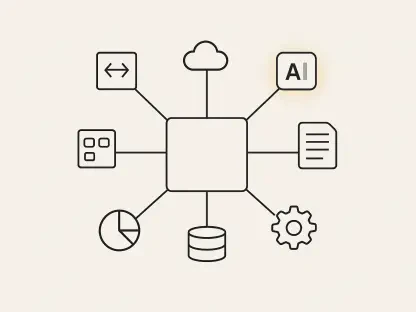

The rapid integration of artificial intelligence into the global enterprise software landscape has created a pivotal moment where data extraction and physical logistics are no longer viewed as separate silos but as a unified, intelligent ecosystem. In the current business environment of 2026, the convergence of machine learning and large-scale data analytics is redefining the foundational layers of how organizations operate, moving beyond simple automation toward a state of autonomous decision-making. This transformation is particularly evident in the evolution of text mining and freight software, two sectors that have historically struggled with the sheer volume and complexity of unstructured information. As companies face an era of unprecedented digital noise, the ability to synthesize high-quality intelligence from “dark data” while simultaneously optimizing the movement of physical goods has become a primary competitive differentiator. This shift is not merely about incremental improvements in speed; it represents a fundamental rethinking of the digital infrastructure required to navigate the intricacies of a volatile global market. By leveraging sophisticated algorithms, modern enterprises are now capable of transforming vast repositories of emails, social media interactions, and legal documents into actionable strategies that directly inform supply chain logistics and customer engagement.
The Critical Challenge: Navigating the Sea of Unstructured Data
The text mining software market is positioned for a decade of robust expansion, with projections indicating that its global valuation will climb from approximately USD 2.5 billion today to a staggering USD 6.2 billion by 2033. This impressive growth is primarily fueled by a growing realization among corporate leaders that more than 80 percent of all enterprise data is currently unstructured, existing in formats that traditional relational databases simply cannot interpret or process effectively. As organizations struggle to manage the overwhelming volume of digital communications, the demand for automated extraction tools has transitioned from an experimental luxury into a fundamental operational necessity. This surge in volume is particularly pronounced in the legal and financial sectors, where the need to verify compliance and mitigate risk requires the constant scanning of thousands of documents. Modern text mining platforms are addressing this by utilizing advanced neural networks that can identify patterns and anomalies with a level of precision that was previously unattainable through manual labor, thereby allowing human workers to focus on higher-level strategic analysis rather than rote data entry.
Furthermore, the technological capabilities of modern text mining have moved far beyond simple keyword identification thanks to recent breakthroughs in natural language processing and semantic analysis. Today’s software does not just look for specific words; it seeks to understand the broader context, the underlying sentiment, and the specific intent behind every piece of communication it encounters. For instance, in customer service applications, these tools can distinguish between a user who is mildly frustrated and one who is on the verge of canceling a subscription, allowing for immediate and personalized intervention. By integrating these sophisticated solutions into broader automation workflows, companies are successfully processing complex invoices, insurance claims, and multi-party contracts with significantly higher speed and accuracy than ever before. This systemic integration reduces human error and substantially lowers operational costs, creating a more resilient business model that is capable of scaling rapidly without a corresponding increase in administrative overhead. The ability to mine these deep insights from previously ignored data sources is providing a new level of transparency that influences everything from product development to long-term financial forecasting.
Strategic Applications: Transforming IT and Telecommunications
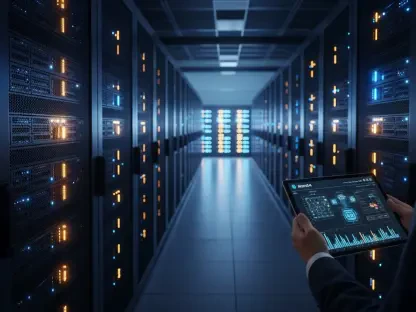
The information technology and telecommunications sectors have emerged as the primary drivers for the rapid adoption of text mining solutions in 2026. These industries generate massive, unrelenting volumes of logs, service tickets, and customer interaction data that require constant, real-time monitoring to maintain service integrity. Telecom providers, in particular, are utilizing these advanced tools to analyze network logs and chat data in order to predict potential outages or service degradations before they can impact the broader user base. By identifying subtle linguistic cues or technical patterns that precede a failure, these organizations can deploy maintenance teams proactively, shifting from a reactive “fix-it” mentality to a predictive model that ensures maximum uptime for their customers. This capability is essential in a world where constant connectivity is expected and any disruption can lead to significant financial losses and damage to brand reputation. The deployment of AI-driven text mining in these contexts acts as an early-warning system that safeguards the digital infrastructure of modern society.
In addition to maintenance and service reliability, these tools play an increasingly critical role in the realms of cybersecurity and internal knowledge management. Modern IT departments are leveraging text mining for sophisticated threat detection, identifying subtle patterns in internal and external communications that may indicate social engineering attacks or potential data breaches. For example, by analyzing the sentiment and structure of incoming emails, AI can flag suspicious messages that might bypass traditional spam filters but exhibit the hallmarks of a phishing campaign. Beyond security, large-scale firms are also using these platforms to organize and index vast internal documentation libraries, which often contain decades of technical knowledge. By applying semantic search capabilities, engineers can find specific technical solutions or historical project data within seconds, rather than spending hours sifting through poorly categorized folders. This efficient retrieval of internal expertise accelerates the pace of innovation and ensures that valuable institutional knowledge is not lost when experienced employees transition out of the workforce, creating a more agile and informed corporate environment.
Technological Shifts: Modernizing Global Freight Infrastructure
The freight software market is experiencing a parallel and equally significant evolution, driven by the persistent “Amazon effect” and the resulting heightening of expectations for delivery speed and operational transparency. The logistics industry is rapidly moving away from legacy, on-premises installations toward sophisticated cloud-native platforms that offer the flexibility required for modern global trade. This fundamental shift facilitates seamless, real-time collaboration between shippers, carriers, and third-party logistics providers, ensuring that every stakeholder in the supply chain has access to a single, accurate source of shipment data. This level of synchronization is vital for managing the complexities of multimodal transport, where a single shipment may transition between ships, trains, and trucks across multiple international borders. By eliminating the data silos that previously plagued the industry, modern freight software allows companies to respond more dynamically to disruptions, such as port strikes or extreme weather events, minimizing the downstream impact on the end consumer and maintaining the flow of global commerce.
Innovation in the logistics space is further accelerated by the deep integration of the Internet of Things and blockchain technology into freight management systems. IoT sensors now allow for the continuous, granular monitoring of cargo, providing data on location, temperature, humidity, and even physical shock for sensitive goods like pharmaceuticals and perishable food items. This real-time data is fed directly into freight software, which can automatically trigger alerts or reroute shipments if environmental conditions threaten the integrity of the cargo. Simultaneously, blockchain technology is being adopted to create immutable, transparent ledgers for every freight transaction, effectively reducing billing disputes and streamlining the arduous process of customs clearance. By providing verifiable digital documentation and an unchangeable audit trail, blockchain eliminates much of the paperwork and bureaucratic friction that traditionally slowed down international trade. These technologies, when combined with AI-driven analytics, are turning the supply chain into a highly visible and predictable asset, rather than a black box of logistical uncertainty.
Operational Efficiency: Predictive Analytics and Green Logistics
Freight software platforms are now incorporating advanced artificial intelligence to forecast demand and optimize delivery routes with a level of precision that was unimaginable just a few years ago. By analyzing massive datasets that include historical traffic patterns, real-time weather information, and current port congestion levels, these systems can suggest the most efficient transit paths for any given shipment. This predictive capability has become the standard for companies looking to maintain high service levels in an increasingly volatile global market where fuel costs and labor shortages are constant pressures. The ability to anticipate delays and automatically adjust routing not only saves time but also significantly reduces fuel consumption and operational overhead. For large-scale logistics providers, even a one percent improvement in route efficiency can translate into millions of dollars in annual savings, making these AI tools indispensable for maintaining profitability and staying competitive in a crowded marketplace.
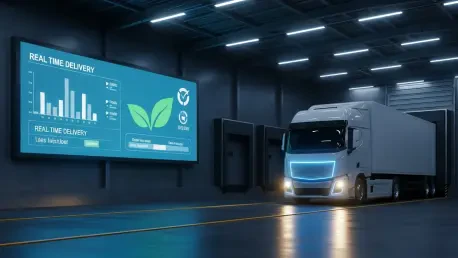
Sustainability has also transitioned from a secondary corporate social responsibility concern to a primary driver of software innovation and selection. Modern freight platforms are increasingly judged on their capacity to support “green logistics” through rigorous route optimization and detailed emissions tracking. New software modules are being developed specifically to help enterprises meet tightening global regulatory standards and to manage the complex transition to electric or hydrogen-powered transport fleets. These tools allow companies to calculate the carbon footprint of every shipment in real-time, providing the data necessary to make more environmentally conscious decisions and to report their progress to shareholders and regulatory bodies. As consumers and governments alike demand greater accountability for the environmental impact of global trade, the integration of sustainability metrics into freight software is becoming a non-negotiable requirement. This focus on green logistics is not just about compliance; it is about future-proofing the supply chain against the rising costs of carbon and the inevitable shift toward a low-emission global economy.
Regional Dynamics: Leadership and Emerging Growth Drivers
North America currently maintains its position as the global leader in both text mining and freight software adoption, supported by exceptionally high investment levels in artificial intelligence research and development. The presence of major technology giants and a strong corporate culture that prioritizes data-driven decision-making have solidified the region as a central innovation hub for these technologies. In this market, the focus is often on maximizing efficiency and extracting every possible ounce of value from existing data streams to maintain a competitive edge. However, the European market is also showing significant strength, though its trajectory is often shaped by a heavy emphasis on data privacy and environmental regulations. European companies are leading the way in developing software that complies with strict GDPR standards while also pioneering the use of freight software for comprehensive sustainability reporting. This regulatory environment has fostered a niche for high-security and high-compliance software solutions that are now being exported to other parts of the world.
In contrast, the Asia-Pacific region is projected to experience the highest growth rate through 2033, driven by the rapid digitization of major economies like India, China, and various Southeast Asian nations. The massive expansion of online retail in this region has created an insatiable demand for sophisticated logistics and freight management solutions to keep pace with an exploding middle class of consumers. Governments in the region are making significant investments in 5G and cloud infrastructure, providing the necessary foundation for the deployment of advanced AI-driven software at a massive scale. This digital-first approach allows many companies in Asia to “leapfrog” older legacy systems and move directly into cloud-native, AI-integrated environments. The combination of high consumer demand, favorable infrastructure investment, and a rapidly evolving tech workforce makes the Asia-Pacific region the most dynamic frontier for the next generation of enterprise software, where new business models are being tested and scaled with remarkable speed.
The Competitive Landscape: Consolidation and Niche Innovation
The current market is being shaped by a complex interplay between established enterprise giants, such as SAP and Oracle, and a new wave of specialized innovators like Project44 and MercuryGate. While the larger, more traditional firms are leveraging their existing dominance in the ERP space to provide deeply integrated analytics and logistics modules, specialized providers are focusing on the intricate details of supply chain customization and real-time visibility. This bifurcated competitive environment has led to a significant wave of mergers and acquisitions as larger companies seek to quickly integrate niche technologies—such as blockchain-based tracking or advanced sentiment analysis tools—into their broader platforms. For the customer, this means more choices and more comprehensive solutions, but it also requires a careful evaluation of which providers can offer the best balance between deep integration and specialized functionality. The market is increasingly rewarding those who can provide “end-to-end” visibility, where every piece of data is connected from the moment a customer sends an inquiry to the final delivery of their order.
Strategic maneuvers within the industry are also increasingly focused on aggressive research and development regarding 5G connectivity and edge computing. Software providers are reinvesting significant portions of their revenue to explore how faster, lower-latency data transmission can enhance real-time tracking and the processing of high-volume text data from mobile devices. The goal is to move the intelligence closer to where the data is generated, whether that is on a delivery truck, in a warehouse, or at a remote cell tower. This shift toward edge computing reduces the burden on central servers and allows for even faster decision-making, which is critical for autonomous systems and high-frequency logistics operations. As these technologies mature, the barrier to entry for new competitors continues to rise, favoring established players with the capital and technical expertise to maintain a constant state of innovation. This focus on the “bleeding edge” ensures that the software remains capable of handling the ever-increasing complexity of the global economy while providing the reliability that large enterprises demand.
Implementation Strategy: Overcoming Barriers to Widespread Adoption
Looking toward the next decade, several transformative technologies are expected to reach full maturity, including the widespread use of “digital twins” in both data and physical logistics. These virtual replicas of physical supply chains allow companies to simulate various disruption scenarios, such as a major storm or a sudden surge in demand, and optimize their responses in a risk-free virtual environment before any changes are made in the real world. This capability is becoming a cornerstone of strategic planning, providing a level of foresight that was previously impossible. Additionally, freight software is being redesigned to eventually manage autonomous trucking fleets and drone delivery systems, representing the next major frontier in the quest for logistical efficiency. As these autonomous systems move from the testing phase into broader commercial use, the software that manages them will need to become even more sophisticated, balancing complex routing logic with real-time safety and regulatory compliance.
Despite these optimistic projections and the clear benefits of adoption, several significant challenges remain for widespread implementation across all sectors. Data security remains a paramount concern, as increasingly digitized logistics networks and massive text repositories become more attractive and lucrative targets for sophisticated cyberattacks. A single breach could not only expose sensitive corporate strategy but also physically disrupt the flow of essential goods. Furthermore, many traditional enterprises still struggle with serious interoperability issues when trying to integrate modern, AI-driven software with aging, “siloed” legacy systems that were never designed to share data. This highlights a growing need for specialized skills and the development of standardized data protocols that can facilitate communication between disparate platforms. Organizations that successfully navigate these implementation hurdles by investing in both the technology and the talent required to manage it will be the ones that thrive in the increasingly complex digital landscape of the future.
Final Analysis: Actionable Strategies for an Intelligent Future
The strategic evolution of text mining and freight software throughout this period has demonstrated that success in the modern economy is inextricably linked to the ability to synthesize information and movement. Organizations that recognized the value of unstructured data early on and integrated it into their logistics operations were able to build more resilient and responsive supply chains. By utilizing AI to bridge the gap between digital communication and physical distribution, these businesses moved beyond simple efficiency gains and entered a state of proactive market participation. The integration of 5G and IoT infrastructure was not just a technical upgrade but a fundamental shift in how visibility is maintained across global networks. This transition was marked by a move toward transparency, where the environmental and social impacts of business activities became as measurable and significant as financial returns. The most successful actors in this landscape were those who embraced a cloud-native, data-first philosophy, allowing them to scale their operations while maintaining the agility required to navigate sudden geopolitical and economic shifts.
Stakeholders across all industries took note of how the convergence of these technologies created a new blueprint for the “Intelligent Enterprise.” The transition involved more than just purchasing new software; it required a cultural shift toward data literacy and a willingness to break down the traditional walls between IT, logistics, and customer service. As the market moved toward 2033, the focus shifted from merely collecting data to mastering the context and timing of its application. Companies that prioritized interoperability and invested in the security of their digital assets found themselves better protected against the volatility of a hyper-connected world. The lessons learned during this period of intense transformation provided a clear roadmap for future innovation, emphasizing that the most valuable asset any company can possess is the ability to turn raw information into strategic action. This period of rapid advancement ultimately proved that when physical logistics are guided by deep digital insights, the resulting synergy can drive sustainable growth and create a more efficient, transparent, and connected global economy.