
Vijay Raina is a distinguished expert in enterprise SaaS technology and software architecture, specializing in the design of high-scale, event-driven systems. With a deep focus on how real-time data streaming transforms retail and commerce, he has become a leading voice in helping organizations move away from legacy batch processing toward agile, unified platforms. In this discussion, he explores the intersection of mobile POS innovation, cloud-native data architectures, and the emerging role of autonomous AI in the modern retail landscape.
The following conversation delves into the technical evolution of commerce, covering the strategic integration of inventory and payments, the architectural trade-offs of edge versus cloud processing, and the implementation of Apache Kafka and Flink to achieve global scalability.
Modern POS platforms now integrate payment processing, inventory management, and staff scheduling into a single mobile interface. How do these combined capabilities help micro-merchants compete with enterprise retailers, and what specific steps are required to migrate complex legacy data into these unified systems?
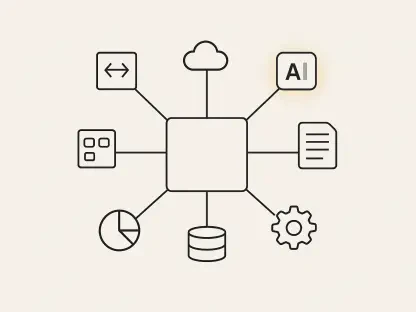
The integration of these disparate functions into a single mobile interface democratizes retail by giving a small boutique the same operational “nervous system” as a massive big-box chain. By unifying payments and inventory, a micro-merchant avoids the trap of selling an item online that was just bought in-store, a synchronization that previously required expensive ERP systems. To migrate to these unified platforms, the first step involves auditing legacy data silos to ensure field mapping is consistent across product SKUs and employee records. From there, merchants must perform a clean extraction of historical sales data, often using middleware or connectors to feed that data into the new system’s API. Finally, a “pilot” phase is essential where the unified system runs in parallel with legacy tools to ensure that real-time inventory updates and staff shifts are triggering correctly without data loss.
Transitioning from batch processing to real-time streaming allows for immediate stock replenishment and fraud alerts. What are the key technical trade-offs between low-latency edge processing and centralized cloud management, and how do these choices affect a merchant’s ability to handle seasonal sales spikes?
Choosing between the edge and the cloud is a balancing act between speed and oversight. Edge processing provides ultra-low latency, which is critical for instant fraud detection at the physical terminal where every millisecond counts for the customer experience. However, edge deployments can be difficult to manage and update across hundreds of locations simultaneously. Centralized cloud management, such as using a fully managed Confluent Cloud, offers superior scalability and simplified governance, allowing a merchant to handle massive seasonal spikes by dynamically allocating resources. While the cloud might introduce a slight increase in latency compared to the edge, its ability to aggregate data from 30 different countries into a single view makes it the preferred choice for global retailers who need a holistic view of their operations.
Unified commerce seeks to merge physical stores, mobile apps, and social marketplaces into one data foundation. What architectural strategies ensure that pricing and loyalty balances remain consistent across every touchpoint, and how does this connectivity influence real-time supply chain monitoring during unexpected disruptions?
The most effective strategy for unified commerce is an event-driven architecture where every sale, regardless of the channel, is treated as a single “source of truth” event in a backbone like Apache Kafka. By using a centralized event log, a loyalty point redemption on a mobile app is instantly broadcast to the physical POS, preventing double-spending and ensuring the customer sees a consistent balance. This connectivity is a lifesaver during supply chain disruptions because it allows for omnichannel inventory visibility; if a shipment is delayed, the system can automatically reroute store-bound stock to fulfill online orders. This real-time visibility transforms a fragmented retail tech stack into a single, connected ecosystem that can pivot its pricing and logistics strategy in seconds rather than days.
Modern payment providers often utilize event-driven architectures to process millions of global transactions daily. How does providing “event data as a service” accelerate internal development cycles, and what are the practical implications of using real-time streams to maintain compliance with diverse international payment regulations?
When a company like SumUp treats event data as a service, it removes the “data silo” bottleneck, allowing over 20 different internal teams to subscribe to the same transaction streams simultaneously. For example, the CRM team can use the stream to update customer profiles while the Risk team uses that same data for fraud modeling, all without building new integrations. Regarding international compliance, real-time streams allow for regionalized data processing where transactions can be filtered and stored according to the specific laws of the country where they originated. This architecture ensures that sensitive payment data is handled with the required durability and replayability, which is vital for passing audits and maintaining high availability across different legal jurisdictions.
Integrating standardized data into machine learning models allows for more accurate risk assessments and personalized recommendations. Can you describe the workflow of moving a transaction from a POS scan to an ML-driven decision, and what metrics best measure the success of these real-time models?
The workflow begins at the moment of the POS scan, where the transaction is captured as an event and ingested into a streaming platform. From there, Apache Flink can be used to enrich this raw data with historical customer context before feeding it into a machine learning model for a real-time risk assessment or a personalized upsell recommendation. The model processes this “fresh” data and sends a decision back to the terminal in milliseconds, either approving the sale or suggesting a related product to the cashier. To measure success, we look at metrics like “model freshness,” which tracks the age of the data used for the decision, and “conversion uplift,” which measures how often an ML-driven recommendation leads to an additional sale.
Agentic AI is expected to transform POS terminals into autonomous hubs capable of predictive ordering and personalized upselling. How will proactive decision-making change the checkout experience for the average shopper, and what role do Apache Kafka and Flink play in ensuring these AI agents act on the freshest data?
Agentic AI will shift the checkout from a passive transaction to an active, personalized interaction where the system might suggest a discount on a product the shopper frequently buys but hasn’t picked up today. This proactive decision-making means the shopper experiences fewer out-of-stock frustrations, as the AI has already autonomously placed replenishment orders based on predictive trends. For these AI agents to be effective, they must operate on the “live” state of the business, which is exactly what Kafka and Flink provide by processing events the moment they occur. Without this real-time data foundation, an AI agent might make a recommendation based on yesterday’s inventory or last week’s prices, which would destroy customer trust and operational efficiency.
What is your forecast for the future of Point-of-Sale technology?
I believe the POS will evolve from a simple payment endpoint into a “connected intelligence hub” that serves as the primary brain for small and medium-sized businesses. We will see a total disappearance of the line between online and offline commerce, where every terminal is an autonomous participant in the global supply chain, capable of self-healing inventory levels and real-time fraud prevention. As Agentic AI matures and is fueled by real-time streaming data, even the smallest street-side merchant will have access to the predictive power and operational agility that used to be the exclusive domain of the world’s largest enterprise retailers. Ultimately, the future of POS is not just about making payments easier, but about making business smarter, more automated, and deeply personalized for every single customer.